Thinking Machines Lab
Thinking Machines Lab is the company Mira Murati started after leaving OpenAI, staffed at launch by about 30 researchers, most of them from OpenAI. Its bet is customization rather than one general assistant: Tinker, a service for fine-tuning open-weight models, and Inkling, its own open-weight model family released in July 2026. It is privately held, raised a 2 billion dollar seed round in July 2025 and took an Nvidia investment in 2026. It matters here for its case for open weights and for AI shaped by its users, and for how many of its founders left within eighteen months.
History
A lab built from OpenAI
Mira Murati resigned as OpenAI's chief technology officer on 25 September 2024 to "do my own exploration." The same day Sam Altman announced that chief research officer Bob McGrew and Barret Zoph, a vice president of research who ran post-training, were leaving too. On 18 February 2025 Murati introduced Thinking Machines Lab with Zoph as CTO, OpenAI co-founder John Schulman as chief scientist, and 29 staff listed on its site, most from OpenAI and others from Character.ai and Google DeepMind. Lilian Weng, Luke Metz and Andrew Tulloch were also among the co-founders. In March the company added McGrew and Alec Radford, lead author of the first GPT paper, as advisers.
The launch statement diagnosed three problems: that "the scientific community's understanding of frontier AI systems lags behind rapidly advancing capabilities," that knowledge of how these systems are trained "is concentrated within the top research labs," and that they "remain difficult for people to customize." It promised to publish often and to build "multimodal systems that work with people collaboratively" rather than only autonomous ones.
Investors paid for the pedigree before any product existed. On 15 July 2025 the company closed a 2 billion dollar seed round at a 12 billion dollar valuation, one of the largest first rounds in Silicon Valley history. Andreessen Horowitz led it, with Nvidia, Accel, ServiceNow, Cisco, AMD and Jane Street participating. Murati said then that the first product would come within months and include "a significant open source offering."
Tinker and Connectionism
The research came first. In September 2025 the company started a research blog called Connectionism. Its first post, by Horace He, traced why language models give different answers to the same prompt even at temperature zero, to the way inference kernels change the order of floating-point additions depending on batch size, and showed how to make them batch-invariant. Jeremy Bernstein's "Modular Manifolds" followed, then Schulman's "LoRA Without Regret," which found that low-rank adapters match full fine-tuning in most post-training settings when a few details are right, among them a learning rate about ten times higher, and in October Kevin Lu's "On-Policy Distillation."
The LoRA result underpinned the first product. On 1 October 2025 the company launched Tinker, an API for fine-tuning open-weight models, including large mixture-of-experts models such as Alibaba's Qwen3-235B. Customers write the training loop and choose the data and loss function; Thinking Machines runs the distributed training on its own clusters and uses LoRA so that many customers' jobs can share the same hardware. Princeton's Goedel theorem-proving team, a Stanford chemistry group, Berkeley's SkyRL group and Redwood Research were early users, and an open-source Tinker Cookbook supplied standard post-training recipes. The company opened Tinker to everyone on 12 December 2025, added Moonshot's trillion-parameter Kimi K2 Thinking and image input, and funded research and teaching grants. In September 2026 The Information reported that the company was earning at least a few hundred million dollars a year in annualized revenue, mostly from selling customization tools to businesses.
Founders leave
In August 2025 the Wall Street Journal reported that Mark Zuckerberg had tried to buy Thinking Machines, and after Murati declined had offered Tulloch a package that could reach 1.5 billion dollars over six years. Meta called that description "inaccurate and ridiculous." In October Tulloch left for Meta; a company spokesperson said Tulloch had "decided to pursue a different path for personal reasons." In November Bloomberg reported talks to raise money at about 50 billion dollars; no round was announced.
The largest break came on 14 January 2026. Murati posted that the company had "parted ways with Barret Zoph" and named Soumith Chintala, a co-creator of PyTorch, as CTO. Within the hour OpenAI's Fidji Simo announced that Zoph, Metz and Sam Schoenholz were returning to OpenAI, a move "in the works for several weeks." The two sides told different stories. Murati told staff Zoph had been fired for "unethical conduct," and a source close to the company told Wired that Zoph had shared confidential information with competitors, a claim Wired could not verify. Simo wrote to OpenAI staff that OpenAI did not share those concerns. Zoph's account, later reported by the Wall Street Journal, was that Murati dismissed Zoph only after being told of plans to leave.
The losses continued. Joshua Gross, the founding engineer who built Tinker, joined Meta Superintelligence Labs in March 2026 and Devendra Chaplot left for xAI, and by April 2026 The Next Web counted five founding-team members at Meta and three back at OpenAI. On 27 July 2026 Weng announced a departure from the company, writing, "I don't feel I'm able to continue at the pace a startup requires"; OpenAI said days later that Weng would rejoin it to lead a team speeding up its internal research.
Inkling and the case for open weights
On 10 March 2026 Thinking Machines and Nvidia announced a multi-year partnership to deploy at least one gigawatt of Nvidia's Vera Rubin systems for its training, targeted for early 2027, together with an Nvidia investment of undisclosed size. In May the company previewed interaction models, trained from scratch to take in audio, video and text continuously and respond in real time, instead of waiting for a user to finish a turn.
On 10 July it published "The Future Worth Building Is Human," which restated the mission as building "AI that extends human will and judgment" and argued, citing Friedrich Hayek on dispersed knowledge, that AI trained in a few places and then frozen cannot capture the tacit knowledge inside each organization. Five days later it released Inkling, a mixture-of-experts model with 975 billion parameters (41 billion active), pretrained on 45 trillion tokens of text, images, audio and video, with weights under the Apache 2.0 license. The company wrote that it was "not the strongest overall model available today, open or closed," and pitched it as a base for customization on Tinker. Inkling-Small, with 276 billion parameters and 12 billion active, followed on 30 July.
A day later the company set out its release policy in "A Safe Path to Open Weights." It said internal tests, red-teaming by Scale AI, Handshake AI, FAR.AI and Apollo Research, and fine-tuning designed to strip the models' refusals had found no meaningful uplift beyond existing open models, and proposed staged access (inference API, then hosted fine-tuning, then weights) for more capable future models. In August it announced safety research grants. In September The Information reported, citing unnamed sources, that Accel was considering leading a round of 5 to 6 billion dollars at a valuation of at least 40 billion before the investment, with Nvidia separately discussing an investment of about 2.5 billion dollars.
Timeline
-
Sep 2024
Murati, McGrew and Zoph leave OpenAI
OpenAI's CTO resigns to "do my own exploration," and two research leaders announce their departures the same day. Source
-
Feb 2025
Thinking Machines Lab launches
Murati introduces the company with Zoph as CTO, John Schulman as chief scientist and about 30 staff. Source
-
Mar 2025
Bob McGrew and Alec Radford become advisers
The two former OpenAI research leaders are added to the company's website. Source
-
Jul 2025
2 billion dollar seed round
Andreessen Horowitz leads a round at a 12 billion dollar valuation, with Nvidia, AMD and Cisco among the investors. Source
-
Sep 2025
Connectionism blog begins
The first post shows how to make language model inference reproducible by making kernels batch-invariant. Source
-
Sep 2025
"LoRA Without Regret"
Schulman and colleagues find low-rank adapters can match full fine-tuning for most post-training. Source
-
Oct 2025
Tinker launches
A fine-tuning API for open-weight models opens as a private beta, with an open-source cookbook of recipes. Source
-
Oct 2025
Andrew Tulloch leaves for Meta
The co-founder joins Meta after turning down its first offer; the company cites personal reasons. Source
-
Nov 2025
Reported talks at about 50 billion dollars
Bloomberg reports early fundraising talks at roughly four times the July valuation; no round follows. Source
-
Dec 2025
Tinker opens to everyone
The waitlist ends, and Kimi K2 Thinking and vision input are added. Source
-
Jan 2026
Zoph fired; three return to OpenAI
Soumith Chintala becomes CTO as Zoph, Luke Metz and Sam Schoenholz rejoin OpenAI within the hour. Source
-
Mar 2026
Gigawatt partnership with Nvidia
At least one gigawatt of Vera Rubin systems for training, plus an Nvidia investment. Source
-
May 2026
Interaction models previewed
A model trained from scratch to listen, watch and respond in real time rather than in turns. Source
-
Jul 2026
"The Future Worth Building Is Human"
The company restates its mission as AI that extends human will and judgment and argues for decentralized alignment. Source
-
Jul 2026
Inkling released with open weights
A 975-billion-parameter multimodal model under Apache 2.0, available to fine-tune on Tinker. Source
-
Jul 2026
Lilian Weng steps down
The co-founder leaves the company and rejoins OpenAI days later. Source
-
Jul 2026
Inkling-Small released
A 276-billion-parameter model with 12 billion active parameters, trained on Nvidia GB300 systems. Source
-
Jul 2026
"A Safe Path to Open Weights"
The company explains why it judged Inkling safe to release and proposes staged access for stronger models. Source
-
Aug 2026
Safety research grants
Funding and Tinker access for outside work on safer open models, alignment failures and risk forecasting. Source
-
Sep 2026
Reported talks at 40 billion dollars or more
The Information reports Accel may lead a round of 5 to 6 billion dollars, with Nvidia discussing about 2.5 billion. Source
What it built
The main models and products to come out of Thinking Machines Lab, oldest first.
-
Tinker
A fine-tuning API for open-weight models, with an open-source cookbook of post-training recipes.
-
Interaction models
A research preview of a model trained from scratch to listen, watch and respond in real time rather than in turns.
-
Inkling
A 975-billion-parameter multimodal model released with open weights under Apache 2.0, followed by the smaller Inkling-Small.
Where it stands
The lab's own stated positions, from its charters, policies and official statements.
In July 2026 the company called safe open-weight models public goods but said misuse risks and irreversibility rule out releasing weights indiscriminately, and proposed widening access in stages only as evidence about a model and the readiness of defenders allows.
“Safe open-weight models are public goods, as they put AI development and safety work in many hands and make training choices inspectable.”
A Safe Path to Open Weights, 2026 · Compare the people on this
Its July 2026 mission essay argues that the larger danger is concentrated control of AI values, and that alignment should come from many models shaped by their owners rather than one specification set by a few labs.
“A single locus of value alignment, however well run, becomes a locus of power to be captured.”
The Future Worth Building Is Human, 2026 · Compare the people on this
Since its February 2025 launch the company has said it prioritizes AI that collaborates with people over fully autonomous agents, and in May 2026 argued that labs' focus on autonomy pushes humans out of the loop.
“Instead of focusing solely on making fully autonomous AI systems, we are excited to build multimodal systems that work with people collaboratively.”
Thinking Machines Lab founding statement, 2025 · Compare the people on this
The July 2026 essay argues that AI should help organizations cultivate the knowledge of the people who do the work rather than replace it with a standard product, while accepting that the work itself will change.
“The work people do may change, and turn toward more of what only people bring, but the best organizations will make the fullest use of both.”
The Future Worth Building Is Human, 2026 · Compare the people on this
People
Here now
-
John Schulman Brief profile
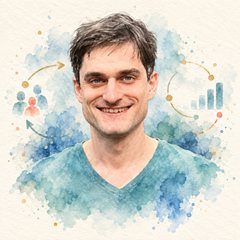
Co-founder and chief scientist, 2025-present
OpenAI co-founder who invented PPO and led the reinforcement learning behind ChatGPT; now at Thinking Machines Lab.
-
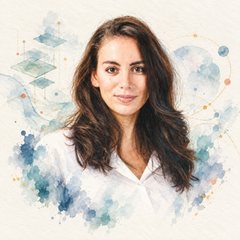
Mira Murati Brief profile
Co-founder and CEO, 2025-present
OpenAI's CTO through ChatGPT and GPT-4, interim CEO in November 2023, then founder of Thinking Machines Lab.
Formerly here
-
Alec Radford Brief profile
Adviser (listed from March 2025), since 2025
Lead author of the original GPT paper, CLIP and Whisper at OpenAI; since 2026 co-builds talkie, a model of 1930.
-
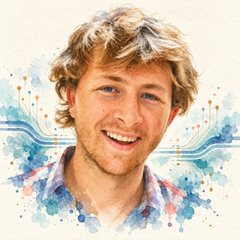
Andrew Tulloch Brief profile
Co-founder, 2025
Training-systems engineer who helped train GPT-4o and o3 at OpenAI, then co-founded Thinking Machines Lab.
-
Barret Zoph Brief profile
Co-founder and chief technology officer, 2025-2026
Automated network design at Google Brain, led OpenAI post-training, co-founded Thinking Machines; now at Google DeepMind.
-
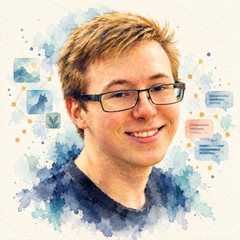
Lilian Weng Brief profile
Co-founder, 2025-2026
Built OpenAI's Safety Systems team, co-founded Thinking Machines Lab, and writes the Lil'Log research blog.
Sources
- Thinking Machines Lab, founding statement and homepage (checked September 2026)
- Announcing Tinker (Thinking Machines Lab, October 2025)
- Thinking Machines Lab and NVIDIA announce long-term gigawatt-scale strategic partnership (Thinking Machines Lab, March 2026)
- The Future Worth Building Is Human (Thinking Machines Lab, July 2026)
- Inkling: Our Open-Weights Model (Thinking Machines Lab, July 2026)
- A Safe Path to Open Weights (Thinking Machines Lab, July 2026)
- Thinking Machines Lab is ex-OpenAI CTO Mira Murati's new startup (TechCrunch, February 2025)
- Mira Murati's Thinking Machines Lab is worth 12 billion dollars in seed round (TechCrunch, July 2025)
- Andrew Tulloch leaves Thinking Machines Lab for Meta (Dataconomy, October 2025)
- Mira Murati's Thinking Machines seeks 50 billion dollar valuation in funding talks (Bloomberg via Yahoo Finance, November 2025)
- Mira Murati's startup Thinking Machines Lab is losing two of its co-founders to OpenAI (TechCrunch, January 2026)
- Sam Altman is tearing apart his former colleague's startup (Gizmodo, January 2026)
- Barret Zoph joining Google DeepMind as research VP (Quartz via Yahoo Finance, August 2026)
- Meta has hired five founding members of Mira Murati's Thinking Machines Lab (The Next Web, April 2026, archived)
- Thinking Machines co-founder Lilian Weng left the company citing health reasons, then joined OpenAI (TechCrunch, July 2026)
- Thinking Machines Lab seeks 40 billion dollar valuation as Nvidia extends its capital allocator role (Yahoo Finance, September 2026)
- Thinking Machines Lab seeks at least 1 billion dollars at a 40 billion dollar valuation (PYMNTS, September 2026)