ChatGPT
OpenAI's free "research preview" chatbot, which reached an estimated 100 million users in two months and within six months had senators opening a hearing with a speech it wrote.
What it was
On 30 November 2022 OpenAI released ChatGPT, a chat interface to a model fine-tuned from its GPT-3.5 series. OpenAI trained it with reinforcement learning from human feedback, "using the same methods as InstructGPT," with human trainers writing and ranking conversations. The announcement called it a research preview, said usage was free during that period, and warned that "ChatGPT sometimes writes plausible-sounding but incorrect or nonsensical answers."
A UBS analyst note reported by Reuters on 1 February 2023 estimated that ChatGPT had reached 100 million monthly active users in January, two months after launch, with about 13 million unique visitors a day.
What it changed
On 16 May 2023 Senator Richard Blumenthal opened the Senate Judiciary subcommittee hearing at which Sam Altman testified by playing an audio clip in his own cloned voice, then explained that "The remarks were written by ChatGPT when it was asked how I would open this hearing." At that hearing Altman proposed a federal agency to license models above a capability threshold. On 14 June 2023 the European Parliament adopted its negotiating position on the AI Act, which the Commission had first proposed in April 2021 before general-purpose chatbots were a consumer product; Parliament's text added obligations for foundation models and for generative systems such as ChatGPT, including disclosing AI-generated content and publishing summaries of copyrighted training data.
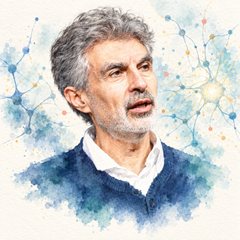
The release also changed minds among researchers. Yoshua Bengio wrote in August 2023 that he had been sceptical at first, but "within a month or two of the release, I grew more and more impressed by how well it performed," and that his estimate for human-level AI had moved from "decades to centuries" to "5 to 20 years with 90% confidence." In March 2023 he signed the Future of Life Institute's pause letter.
The arguments it moved
Who should set the rules for AI?
The European Commission's April 2021 draft of the AI Act sorted rules by how a system was used, from hiring to policing. Within six months of ChatGPT's launch, the Senate Judiciary subcommittee opened the first of its hearings on AI oversight with a speech ChatGPT had written, and OpenAI's chief executive told senators on 16 May 2023, "I would form a new agency that licenses any effort above a certain scale of capabilities." A month later the European Parliament amended the AI Act to cover generative systems like ChatGPT directly. The question was no longer only whether to regulate uses of AI, but whether to regulate the general-purpose models themselves.
How close is human-level AI?
For Bengio, ChatGPT was the reason his forecast moved. His August 2023 essay dated his change of mind to the first months after the release and gave the new range of 5 to 20 years. The shift is documented in his own words; whether ChatGPT's abilities justified it is the substance of the language-models debate.
Positions it bears on
-
Sam Altman, AI regulation
He has moved from proposing a federal licensing agency for large-scale models to arguing for "sensible regulation that does not slow us down" and against any government pre-approval of model releases, whether federal or state.
Altman's May 2023 licensing proposal came at the hearing Blumenthal opened with a ChatGPT-written speech.
-
Yoshua Bengio, Timelines to human-level AI
Believes human-level AI could arrive within two decades and possibly within a few years, and that digital hardware would then give it advantages over humans.
Bengio attributes his shortened estimate, from "decades to centuries" to 5 to 20 years, to what ChatGPT could do in its first months.
-
Yoshua Bengio, Catastrophic risk from AI
Holds that loss of human control to a misaligned AI is a real possibility, that no current system is demonstrably safe against it, and that policy cannot wait for a disaster to prove the point.
Bengio has said that before ChatGPT he wrote mostly about bias and misuse, and that the release turned him to catastrophic risk.
-
Gary Marcus, Regulation and independent oversight
Wants pre-release safety review of high-impact models by independent scientists, post-release audits with power to recall systems, liability for harms and a dedicated agency, nationally and internationally.
Marcus testified beside Altman at the May 2023 hearing that opened with a ChatGPT-written speech, and put an FDA-style pre-release review first among his recommendations.


Sources
- Introducing ChatGPT, OpenAI, 30 November 2022 (Internet Archive copy)
- ChatGPT sets record for fastest-growing user base, analyst note says (Reuters, via The Globe and Mail), 1 February 2023
- Transcript, Senate Judiciary Subcommittee hearing on Oversight of AI, 16 May 2023 (Tech Policy Press)
- MEPs ready to negotiate first-ever rules for safe and transparent AI, European Parliament, 14 June 2023 (Internet Archive copy)
- Proposal for a Regulation laying down harmonised rules on artificial intelligence (COM(2021) 206), European Commission, 21 April 2021
- Personal and psychological dimensions of AI researchers confronting AI catastrophic risks, Yoshua Bengio, 12 August 2023