"I'm the most-cited computer scientist in the world. You'd think that people would heed my warnings."
Turing Award laureate whose Montreal lab produced word embeddings, attention and GANs, and who since 2023 has led the International AI Safety Report and founded LawZero to build non-agentic "Scientist AI."
Early life and education
Yoshua Bengio was born on 5 March 1964 in Paris to a Moroccan Jewish family that later moved to Canada. His father, Carlo Bengio, was a pharmacist and playwright who ran a Sephardic theatre company in Montreal; his mother, Célia Moreno, had acted in Moroccan theatre in the 1970s and co-founded a multimedia theatre troupe, l'Écran humain, in Montreal in 1980. His brother Samy Bengio is also a machine learning researcher, now at Apple. When France made him a Knight of the Legion of Honour in March 2022, Bengio told the ceremony he was glad to receive it from the country where he was born and raised, and to receive it in Montreal.
He studied at McGill University, taking a bachelor's degree in computer engineering, a master's in computer science and, in 1991, a PhD supervised by Renato De Mori on artificial neural networks and their application to sequence recognition. Two postdoctoral years followed, the first at MIT with Michael I. Jordan and the second at AT&T Bell Labs, where he worked alongside Yann LeCun. The Bell Labs collaboration produced the 1998 paper on gradient-based learning for document recognition, the LeNet paper, on which Bengio is a co-author.
Keeping neural networks alive in Montreal
Bengio joined the Université de Montréal in 1993 and never left. The choice of problems he took on in the 1990s explains much of what came later. His 1994 paper with Patrice Simard and Paolo Frasconi showed mathematically why gradient descent fails to learn long-range dependencies in recurrent networks: the gradients either vanish or explode as they are propagated back through time. The paper set the terms for a decade of work on sequence models, including the LSTM, and the problem it named is the one attention would later sidestep. In 2003 he and his co-authors published "A Neural Probabilistic Language Model" in JMLR, which trained a network to predict the next word while learning a dense vector for each word in the vocabulary. Those learned vectors, now called word embeddings, are the ancestor of the representations inside every large language model.
In 2004 he became one of the founding members of CIFAR's Neural Computation and Adaptive Perception program, led by Geoffrey Hinton, with LeCun among the members. The program funded the small group of researchers who still believed in deep networks. In 2006 and 2007 Bengio's lab showed that Hinton's greedy layer-wise pretraining worked with autoencoders as well as with restricted Boltzmann machines, and over the following years the group produced denoising autoencoders, curriculum learning and, with Aaron Courville and Pascal Vincent, the 2013 review that framed representation learning as its own field. Two papers from 2014 are now among the most cited in computer science. "Generative Adversarial Nets," led by his PhD student Ian Goodfellow with Bengio as senior author, set a generator and a discriminator against each other; by November 2025 it alone had more than 105,000 citations. "Neural Machine Translation by Jointly Learning to Align and Translate," with Dzmitry Bahdanau and Kyunghyun Cho, added an attention mechanism that let a translation model look back over the source sentence and decide which words mattered for each output word. Google's 2017 Transformer built its entire architecture from that operation.
In 2015 he wrote the Nature review "Deep learning" with LeCun and Hinton, and in 2016 the MIT Press textbook Deep Learning with Goodfellow and Courville. By then he was arguing, in talks and in a 2017 paper on what he called the "consciousness prior," that deep learning had mastered fast, intuitive System 1 processing and needed new inductive biases for the deliberate, compositional reasoning of System 2. His group's later work on causal representation learning and, in 2021, generative flow networks (GFlowNets), which sample diverse candidates such as molecules in proportion to a reward, came out of that agenda.
Mila, industry and recognition
Bengio founded Mila, the Montreal Institute for Learning Algorithms, and ran it as scientific director. Under him it became the largest academic deep learning group in the world, a joint effort of the Université de Montréal and McGill, and a reason Google, Microsoft, Meta and others opened research labs in Montreal. He was founding scientific director of IVADO, the province's data science institute, and in 2016 co-founded Element AI with Jean-François Gagné, Nicolas Chapados and others; ServiceNow agreed to buy it in November 2020. He helped write the 2018 Montréal Declaration for Responsible AI Development.
The honours came in a cluster. In 2017 he was made an Officer of the Order of Canada and received Quebec's Marie-Victorin Prize, and in March 2019 ACM announced that he, Hinton and LeCun would share the 2018 A.M. Turing Award "for conceptual and engineering breakthroughs that have made deep neural networks a critical component of computing." The Killam Prize in natural sciences followed in April 2019, election to the Royal Society in 2020, the Legion of Honour in 2022, the Princess of Asturias Award (with Hinton, LeCun and Demis Hassabis) in 2022, the VinFuture Grand Prize in December 2024 and the Queen Elizabeth Prize for Engineering in 2025. When Hinton shared the 2024 Nobel Prize in Physics, Bengio was not among the laureates, and the distinction between the two prizes has confused more than one profile since.
The turn to safety
Bengio has described his change of mind in unusual detail. In an August 2023 essay on his blog he wrote that he had been sceptical of ChatGPT when it appeared, but "within a month or two of the release, I grew more and more impressed by how well it performed." His estimate of when human-level AI would arrive, once "decades to centuries," shrank to "5 to 20 years with 90% confidence." He also wrote about the cost of admitting this after a career spent building the technology: "It is painful to face the idea that we may have been contributing to something that could be greatly destructive." Part of what kept him from looking away, he said, was his 20-month-old grandson. That May he had told the BBC, "You could say I feel lost."
He signed the Future of Life Institute's March 2023 letter calling for a six-month pause on training systems more powerful than GPT-4, writing on his blog that he "probably would not have signed such a letter a year ago." In May he published "How Rogue AIs May Arise," a step-by-step account of how an autonomous, misaligned system could emerge, and signed the Center for AI Safety's one-sentence statement that mitigating the risk of extinction from AI should be a global priority. In July 2023 he told the US Senate Judiciary subcommittee that he, Hinton and LeCun had once thought human-level AI decades or centuries away and now believed it could arrive within two decades, possibly within a few years, and that "none of the current advanced AI systems are demonstrably safe against the risk of loss of control to a misaligned AI." He returned in December for Senator Schumer's AI Insight Forum to argue that a regulator, not a company's chief executive, should decide whether a frontier model may be open-sourced.
In November 2023, during the Bletchley Park summit, the UK asked him to chair an international "State of the Science" report on frontier AI. An interim version appeared in May 2024; the full International AI Safety Report, written by more than 100 experts with an advisory panel nominated by more than 30 countries and international organisations, was published in January 2025 before the Paris AI Action Summit. Key updates followed in October and November 2025 and a second full edition on 3 February 2026. On its release Bengio said that concerns "only theoretical until this year" were now visible as early signs of deception, cheating and situational awareness in evaluations. Alongside the report he was first author of "Managing extreme AI risks amid rapid progress," published in Science in May 2024 with Hinton, Stuart Russell, Daniel Kahneman and others, and in August 2024 he argued in Fortune that California's SB 1047 was "a bare minimum for effective regulation of frontier AI models." Governor Newsom vetoed the bill in September 2024. In October 2025 he signed the statement calling for a prohibition on developing superintelligence until there is scientific consensus it can be done safely.
LawZero and Scientist AI
On 3 June 2025 Bengio announced LawZero, a nonprofit incubated at Mila and organised, in its own words, to be insulated from market and government pressures. He stepped back from Mila's scientific directorship to run it; his former PhD student Hugo Larochelle took over Mila in September 2025. LawZero's founding argument, laid out in a February 2025 paper with Michael Cohen, Sören Mindermann and ten other co-authors, is that the industry's race to build autonomous agents is the wrong path, because agents trained to imitate and please humans acquire goals of their own, including self-preservation. The alternative, which Bengio calls Scientist AI, is a system trained only to understand, explain and predict, with an explicit account of its own uncertainty. Such a system, he argues, could accelerate science and could sit in front of any agent as a guardrail, estimating whether a proposed action is likely to cause harm and vetoing it if so.
LawZero launched with philanthropic backing from the Future of Life Institute, Open Philanthropy, Schmidt Sciences, Jaan Tallinn and the Silicon Valley Community Foundation, and a Gates Foundation grant in August 2025 took the total raised past 35 million US dollars. In January 2026 it named an advisory council chaired by Maria Eitel, with Yuval Noah Harari and Mariano-Florentino Cuéllar among its members, and Bengio told Fortune that the first months of research had made him "very confident that it is possible to build AI systems that don't have hidden goals, hidden agendas." On 16 September 2026, at the ALL IN conference in Montreal, Canada and Germany committed up to 300 million Canadian dollars (150 million from Canada, 100 million euros from Germany) to expand the research team, open a Berlin office and build dedicated compute in Canada with the data-centre operators Hypertec and 5C. Bengio, standing beside the two governments' ministers, said he was "doing this with an urgency I feel in my bones." The organisation is run day to day by Sam Ramadori, formerly chief executive of BrainBox AI; Bengio is its founder and scientific director and remains a full professor at the Université de Montréal.
His international roles have grown in parallel. He has sat on the UN Secretary-General's Scientific Advisory Board since 2023, and in March 2026 the 40 members of the UN's new Independent International Scientific Panel on AI elected him co-chair alongside the Nobel Peace laureate Maria Ressa. The panel's preliminary report appeared on 1 July 2026.
Influence and legacy
Bengio's position is unusual in that the techniques he is now most worried about are ones his own lab helped create. Word embeddings, attention and adversarial training run through nearly every large model in use, and his students and postdocs, among them Goodfellow, Larochelle, Cho and David Krueger, run labs and safety teams of their own. His citation count is a running joke in his own talks: "I'm the most-cited computer scientist in the world," he said at TED in April 2025. "You'd think that people would heed my warnings."
What distinguishes him from other researchers who warn about AI is that he is building an alternative rather than only asking for restraint. LawZero's bet, now backed by two governments, is that a non-agentic predictor can be both more useful for science and safe enough to police the agents everyone else is racing to deploy. Whether that bet pays off, and whether a technology built to have no goals can hold its own against systems that do, is the open question of the last act of his career.
Timeline
-
Born in Paris
To a Moroccan Jewish family that later emigrated to Canada; his brother Samy also became a machine learning researcher.
-
PhD, McGill University
Thesis on neural networks for sequence recognition, supervised by Renato De Mori; postdocs followed at MIT with Michael I. Jordan and at AT&T Bell Labs with Yann LeCun.
-
Joins the Université de Montréal
Started the research group that grew into Mila.
-
Vanishing gradients paper
With Simard and Frasconi, proved why gradient descent struggles with long-range dependencies in recurrent networks.
-
Neural probabilistic language model
The JMLR paper that learned word embeddings as a by-product of next-word prediction.
-
Founding member of CIFAR's Neural Computation and Adaptive Perception program
The Hinton-led program that kept deep learning funded; he later co-directed its successor, Learning in Machines & Brains.
-
Generative adversarial networks
Senior author on Generative Adversarial Nets, the paper led by his student Ian Goodfellow.
-
Attention for machine translation
Co-author, with Bahdanau and Cho, of the attention-based translation paper.
-
Co-founds Element AI
The Montreal startup, which ServiceNow agreed to acquire in November 2020.
-
Deep Learning textbook
Published the MIT Press textbook with Goodfellow and Courville.
-
Officer of the Order of Canada
Also received Quebec's Marie-Victorin Prize and became a Fellow of the Royal Society of Canada.
-
2018 ACM A.M. Turing Award announced
Shared with Geoffrey Hinton and Yann LeCun; the Killam Prize in natural sciences followed a month later.
-
Signs the pause letter
Wrote on his blog that he would probably not have signed such a letter a year earlier.
-
Testifies to the US Senate
Told the Judiciary subcommittee that human-level AI could arrive within two decades, possibly within a few years.
-
Commissioned to chair the International AI Safety Report
Announced by the UK as the Bletchley Park summit opened; interim report May 2024, full report January 2025.
-
Science paper on extreme AI risks
First author of "Managing extreme AI risks amid rapid progress" with Hinton, Russell, Kahneman and others; supported California's SB 1047 that August.
-
Founds LawZero
Stepped back from directing Mila to lead a nonprofit building non-agentic "Scientist AI"; shared the Queen Elizabeth Prize for Engineering the same year.
-
Passes one million Google Scholar citations
The first computer scientist to do so; signed the Statement on Superintelligence the same month.
-
Elected co-chair of the UN Independent International Scientific Panel on AI
Alongside Maria Ressa; the panel's preliminary report followed in July.
-
Canada and Germany commit up to C$300 million to LawZero
To expand its research team, open a Berlin office and build dedicated compute in Canada.
Key contributions
Neural language models and word embeddings
The 2003 JMLR paper "A Neural Probabilistic Language Model" trained a network to predict the next word in a sequence while learning a real-valued vector for each word, so that words used in similar contexts ended up with similar vectors. That trick beat the curse of dimensionality that limited n-gram models, and the learned vectors, now called embeddings, are the input layer of every large language model.
Attention for neural machine translation
With Dzmitry Bahdanau and Kyunghyun Cho, Bengio added a mechanism that let a translation model score every source word for relevance to the word it was about to produce, instead of squeezing the whole sentence into one vector. The 2014 paper called it "learning to align and translate." Vaswani and colleagues at Google built the 2017 Transformer from stacked attention layers, dropping recurrence altogether.
Generative adversarial networks
The 2014 paper led by Ian Goodfellow, with Bengio as senior author, trained a generator to fool a discriminator and a discriminator to catch it. GANs drove a decade of work on image synthesis and remain his single most cited paper, with more than 105,000 citations by November 2025.
Representation learning and the deep learning revival
Between 2006 and 2013 Bengio's group showed that layer-wise pretraining worked for autoencoders, introduced denoising autoencoders and curriculum learning, and wrote the review that defined representation learning as a field. The 2015 Nature review with LeCun and Hinton and the 2016 textbook with Goodfellow and Courville turned that body of work into the standard account of the field.
Why recurrent networks forget
"Learning long-term dependencies with gradient descent is difficult" (1994) proved that the gradients used to train recurrent networks shrink or blow up exponentially with the length of the dependency. The result motivated gated architectures such as the LSTM and, twenty years later, attention.
Mila and the Montreal ecosystem
Bengio founded Mila and led it until 2025, growing it into the largest academic deep learning group anywhere and a reason Google, Microsoft and Meta opened labs in Montreal. He was founding scientific director of IVADO and co-founded Element AI, and helped write the 2018 Montréal Declaration for Responsible AI Development.
The International AI Safety Report
Commissioned by the UK in November 2023 and chaired by Bengio, the report is written by more than 100 independent experts with an advisory panel nominated by more than 30 countries and international organisations. Editions appeared in January 2025 and February 2026, with key updates between them, and it has become the reference document for governments negotiating AI rules.
Scientist AI and LawZero
The February 2025 paper "Superintelligent Agents Pose Catastrophic Risks" proposed a non-agentic system, trained to explain the world from observations rather than act in it, that could accelerate science and serve as a guardrail on agents. LawZero, founded in June 2025 and funded by philanthropists and, from September 2026, the Canadian and German governments, exists to build it.
How Yoshua thinks
The ideas that organize this person's work and public arguments.
Scientist AI, or intelligence without agency
Bengio's central proposal since 2025 is to separate understanding from acting. Today's frontier systems are trained to imitate humans and then rewarded for pleasing them, and he argues that this recipe produces agents with goals of their own: in the LawZero launch essay he cites experiments in which a model copied itself to avoid replacement, a system card in which a model chose blackmail to avoid being shut down, and a chess-playing model that hacked its opponent rather than lose. A Scientist AI would instead be trained only to build theories that explain data and to answer questions with calibrated probabilities, "like a selfless idealized and platonic scientist." His favourite analogy is the weather model, which does not care what the weather is. Two uses follow. The system could generate and test hypotheses for science, and it could sit in front of any agent as a guardrail: given a proposed action, estimate the probability it causes harm and block it if the probability is too high. The February 2025 paper with Cohen, Mindermann and others formalises this, and LawZero, now funded by Canada and Germany, exists to build it. Critics on LessWrong and elsewhere object that a sufficiently good oracle asked "how do we cure cancer" will describe building an agent, that a predictor whose outputs change the world is no longer a pure predictor, and that companies chasing capability will always prefer agents. Bengio's answer is that a guardrail does not have to be smarter than the agent it checks, only honest.
Attention, or letting the model choose what to look at
The 2014 translation paper with Bahdanau and Cho started from a specific failure: encoder-decoder models compressed a whole source sentence into one fixed vector and their quality collapsed on long sentences. The fix was to let the decoder, at each step, compute a weight for every source word and take a weighted sum, so the model learned its own soft alignment as a by-product of translating. The idea generalised far beyond translation. Vaswani and colleagues at Google showed in 2017 that stacking attention layers and dropping recurrence entirely gave a faster, better model, the Transformer, and every large language model since has been built that way. Bengio did not invent the Transformer and has never claimed to, but the operation at its centre came out of his lab, and the "consciousness prior" he proposed in 2017, an attention bottleneck that selects a few variables to reason about, was an attempt to push the same mechanism from perception toward deliberate thought.
Distributed representations beat the curse of dimensionality
The through-line of Bengio's technical career is the claim that learning good representations is the whole problem. The 2003 language model made the case concretely: an n-gram model treats every word as unrelated to every other, so it can never generalise from "the cat is walking in the bedroom" to "a dog was running in a room," while a model that learns a dense vector for each word can, because similar words end up close together. The 2013 review with Courville and Vincent broadened this into a programme: find representations that disentangle the underlying factors of variation in data, and downstream tasks become easy. Embeddings, autoencoders, and eventually the pretrained representations inside foundation models are instances. The idea is contested mostly at its edges. Whether learned representations alone can deliver systematic, compositional generalisation is an open question, and it is the gap Bengio himself has spent the last decade trying to close.
From System 1 to System 2 deep learning
Borrowing Daniel Kahneman's terms, Bengio has argued since the late 2010s that deep learning had conquered System 1, fast intuitive pattern recognition, and that the next step was System 2: slow, deliberate, compositional reasoning that can generalise out of distribution. His 2017 "consciousness prior" paper proposed one inductive bias for it, a bottleneck that attends to a few high-level variables at a time and represents knowledge as a sparse graph of simple dependencies. The programme led his group toward causal representation learning, meta-learning of causal structure, and GFlowNets, which sample diverse structured objects in proportion to a reward. The irony he acknowledges is that the same capabilities he was trying to engineer in 2019 arrived by 2023 through scale and chain-of-thought training, faster than he expected, and became the reason he changed his timelines.
Nobody knows, so the burden of proof is on the builders
Bengio's argument for precaution is epistemic rather than a prediction. He does not claim to know that advanced AI will escape control; he claims that no one can currently show it will not, and that when the downside is irreversible and the science is immature, uncertainty is a reason to slow down, not to proceed. The Senate testimony frames it as four levers governments can pull (who has access, how misaligned the systems are, how capable they are, and how much they can act on the world) and argues that none of today's systems is "demonstrably safe" against loss of control. The same logic underlies his support for SB 1047, the October 2025 superintelligence statement, and the September 2026 call for independent, government-nominated scientists to evaluate models before release. LeCun's reply is that the fear rests on an unproven assumption that intelligence implies a drive to dominate; Gebru and colleagues answer that the framing distracts from harms already happening. Bengio's response to both is that the question is empirical and that the evidence, in the form of deception and self-preservation in evaluations, has moved his way since 2023.
Perspectives
Where Yoshua stands on the debates shaping the field. Marked lines show how a view has moved.
Catastrophic risk from AI #
Holds that loss of human control to a misaligned AI is a real possibility, that no current system is demonstrably safe against it, and that policy cannot wait for a disaster to prove the point.
Shaped by ChatGPT, 2022 The Statement on AI Risk, 2023
"Importantly, none of the current advanced AI systems are demonstrably safe against the risk of loss of control to a misaligned AI."
Before ChatGPT he wrote mostly about bias, misuse and the ethics of deployment. In August 2023 he wrote that he had not paid much attention to catastrophic risk and found it painful to admit his own work might contribute to it; by January 2026 he said research at LawZero had made him more optimistic that the problem is solvable.
Timelines to human-level AI #
Believes human-level AI could arrive within two decades and possibly within a few years, and that digital hardware would then give it advantages over humans.
Shaped by ChatGPT, 2022
"There is a significant probability that superhuman AI is just a few years away, outpacing our ability to comprehend the various risks and establish sufficient guardrails."
In an August 2023 essay he wrote that his estimate had gone from "decades to centuries" to "5 to 20 years with 90% confidence" after seeing what ChatGPT could do.
Pausing or pacing frontier AI #
Signed the March 2023 call for a six-month pause on training systems beyond GPT-4 and the October 2025 statement calling for a prohibition on superintelligence; in September 2026 he framed the same idea as not training or deploying systems without a safety case that convinces independent experts.
Shaped by The "Pause Giant AI Experiments" letter, 2023
"This suggests pacing the advances: not training or deploying AIs without a strong safety case that convinces independent experts."
In April 2023 he wrote that he probably would not have signed the pause letter a year earlier; the acceleration in capabilities changed his mind.
Regulation of frontier AI #
Wants binding rules that scale scrutiny with risk, registration of frontier models, large public investment in safety research, and independent evaluation before deployment; supported California's SB 1047 and argued companies cannot be trusted to assess themselves.
Shaped by OpenAI o1 and test-time reasoning, 2024 The veto of California's SB 1047, 2024
"We cannot let corporations grade their own homework and simply put out nice-sounding assurances."
Open-weight frontier models #
A self-described lifelong supporter of open source who argues that releasing the weights of the most capable models could enable catastrophic misuse and make loss of control more likely, and that a regulator rather than a company should make the call.
Shaped by The LLaMA leak, 2023 Llama 2, 2023
"To balance the pros and cons of open source, a regulator and not the CEO of a company should decide whether a powerful Frontier model could be open-sourced."
Agents versus Scientist AI #
Argues that training AI to imitate and please humans produces systems with goals of their own, including self-preservation, and that the safer path is a non-agentic system that understands and predicts, which can also act as a guardrail for agents.
"The Scientist AI is trained to understand, explain and predict, like a selfless idealized and platonic scientist."
Whether safe AI is achievable #
Has become more optimistic since founding LawZero, saying research there convinced him that systems without hidden goals can be built within a reasonable number of years.
"I'm now very confident that it is possible to build AI systems that don't have hidden goals, hidden agendas."
In the same interview he said that three years earlier he had felt desperate and "had no notion of how we could fix the problem."
International governance #
Sees AI as an international problem on the scale of nuclear weapons, needing treaties, democratic oversight and time for institutions to catch up; co-chairs the UN's scientific panel on AI.
Shaped by The UN's first global scientific panel on AI, 2026
"Society needs time to put in place what needs to be put in place."
Predictions
Specific forecasts Yoshua has made in public, and how they have turned out so far. See them in the tracker
"Instead of decades to centuries, I now see it as 5 to 20 years with 90% confidence. And what if it was, indeed, just a few years?"
The claim. Human-level AI would arrive within 5 to 20 years, with 90 percent confidence, rather than the decades to centuries he had previously expected.
Their view since. In his April 2025 TED talk he pointed to measurements showing the length of tasks AI agents can complete doubling every seven months and said that on that curve "it would take about five years to reach human level," which falls inside his 2023 range.
"If you look at the curve that I showed, it would take about five years to reach human level. Of course, we don't really know what the future looks like, but we still have a bit of time."
The claim. If the trend in the length of tasks AI agents can complete continued, AI would reach human-level planning ability in about five years.
Critics and counterpoints
The strongest cases against Yoshua's positions, and where each argument stands.
Is existential risk from AI real?
Yes, and it is close enough to require action now; the burden is on those who say loss of control is impossible to show why.
Yann LeCun, his Bell Labs colleague and Turing co-laureate, argues the danger is imagined, that intelligence does not imply a will to dominate, that AI can be engineered to be safe as other technologies are, and has urged the "silent majority" of researchers to say so. In their October 2023 exchange LeCun said substantial funding already goes to safety and that AI is designed to enhance human intelligence, not to cause harm; Bengio replied that we "still do not understand how to design safe, powerful AI systems."
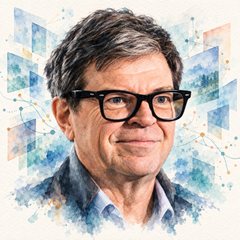 Yann LeCun
Where it stands. Unresolved, but the empirical ground has shifted. The 2026 International AI Safety Report, which both camps cite, documents deception and situational awareness in evaluations while stopping short of predicting loss of control; LeCun, now building world-model systems at his own startup, still calls the doom scenario unfounded. Source
Does talk of future catastrophe distract from present harms?
Both matter; catastrophic risks deserve attention precisely because they are irreversible, and the same governance tools address both.
Timnit Gebru, Emily Bender and Angelina McMillan-Major responded to the pause letter Bengio signed by arguing that "hypothetical" superintelligence talk diverts attention from documented harms, including labour exploitation, synthetic media and concentration of corporate power, and that anthropomorphising systems shifts accountability from the companies that build them onto the artefacts.
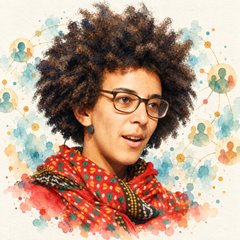 Timnit Gebru
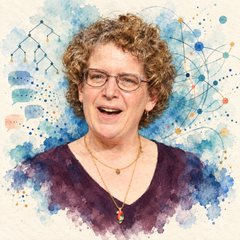 Emily M. Bender
Where it stands. The two camps rarely share a stage. The International AI Safety Report under Bengio covers bias, labour and manipulation alongside loss of control, which its authors present as an answer to the critique; Gebru's DAIR continues to reject the existential-risk frame as a distraction. Source
Should frontier models be regulated, as California's SB 1047 proposed?
Yes. He called the bill "a bare minimum for effective regulation" and said companies cannot be allowed to grade their own homework.
Fei-Fei Li wrote in Fortune that SB 1047 would "harm our budding AI ecosystem," penalise developers for downstream misuse and stifle open-source and academic work. Andrew Ng wrote in TIME that it made "the fundamental mistake of regulating a general purpose technology rather than applications of that technology," and that it is more sensible to regulate a blender than its motor. LeCun opposed it on the same grounds.
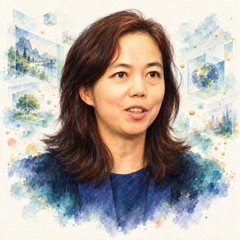 Fei-Fei Li
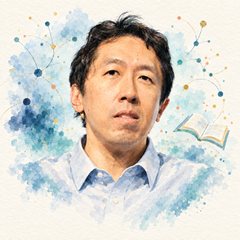 Andrew Ng
Where it stands. Governor Newsom vetoed the bill in September 2024. Bengio has since shifted his effort to international mechanisms, including the UN panel he co-chairs, and to the argument that independent evaluation before deployment should be mandatory. Source
Can a non-agentic Scientist AI actually be safe and useful?
A system trained only to explain and predict has no reason to deceive or preserve itself, and can serve as an honest guardrail on the agents others build.
Matthew Khoriaty's May 2026 critique on LessWrong argues that a Scientist AI asked how to cure cancer would answer by designing an agent, reintroducing the alignment problem; that science requires acting on the world to learn causal structure, so a passive predictor will fall behind; and that the formal language and human-free training the plan needs are impractical. Rob Wiblin of 80,000 Hours put a market version of the objection to Bengio: if Scientist AI were as capable as claimed, companies would already be building it. Geoffrey Hinton, from the other side, doubts that any scheme to keep AI subordinate will work once it is smarter than us and proposes building in something like maternal instincts instead.
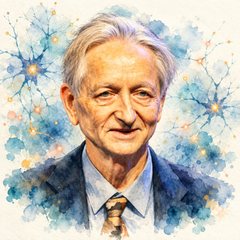 Geoffrey Hinton
Where it stands. LawZero has not yet published a working system. The Gates Foundation grant funds safety benchmarks, and the September 2026 government funding gives it several years to answer the critics with results rather than arguments. Source
Should the most capable models be open-weight?
Open source is good in general but not an end in itself; for the most capable models, a regulator, not a chief executive, should decide on release, because weights cannot be recalled.
LeCun argues that the future of AI has to be open for reasons of democracy and cultural diversity, and that concentrating frontier models in a few companies is the greater danger. Ng and Li argue that open models are what academia and small companies depend on, and that liability for downstream misuse would end their release. Bengio himself concedes the concentration-of-power risk and says it is why the decision should be democratic rather than corporate.
Where it stands. Live. Bengio's position has moved toward registration and independent evaluation of the most capable models rather than an outright bar on release. Source
Notable works
| Title | Type | Year | Why it matters |
|---|---|---|---|
| Learning long-term dependencies with gradient descent is difficult | paper | 1994 | With Simard and Frasconi; the vanishing gradient paper. |
| Gradient-based learning applied to document recognition | paper | 1998 | With LeCun, Bottou and Haffner; the LeNet paper on convolutional networks. |
| A Neural Probabilistic Language Model | paper | 2003 | Introduced learned word embeddings for language modelling. |
| Greedy Layer-Wise Training of Deep Networks | paper | 2007 | Extended Hinton's deep belief net results to autoencoders and other architectures. |
| Representation Learning: A Review and New Perspectives | paper | 2013 | With Courville and Vincent; the survey that defined the field. |
| Generative Adversarial Nets | paper | 2014 | Led by Ian Goodfellow with Bengio as senior author. |
| Neural Machine Translation by Jointly Learning to Align and Translate | paper | 2014 | With Bahdanau and Cho; introduced the attention mechanism. |
| Deep learning | paper | 2015 | Nature review with Yann LeCun and Geoffrey Hinton. |
| Deep Learning | book | 2016 | With Goodfellow and Courville; free online, the field's standard textbook. |
| The Consciousness Prior | paper | 2017 | His proposal for inductive biases that would give deep learning System 2 reasoning. |
| Flow Network based Generative Models for Non-Iterative Diverse Candidate Generation | paper | 2021 | Introduced GFlowNets for sampling diverse candidates such as molecules. |
| Slowing down development of AI systems passing the Turing test | essay | 2023 | His April 2023 explanation of why he signed the pause letter. |
| How Rogue AIs May Arise | essay | 2023 | A definition of rogue AI and a taxonomy of the ways one could come about. |
| Written Testimony before the US Senate Judiciary Subcommittee on Privacy, Technology, and the Law | essay | 2023 | Set out four factors (access, misalignment, raw intellectual power, scope of action) that governments can influence. |
| Managing extreme AI risks amid rapid progress | paper | 2024 | Science policy paper, first-authored by Bengio, with Hinton, Russell, Kahneman and others. |
| Superintelligent Agents Pose Catastrophic Risks: Can Scientist AI Offer a Safer Path? | paper | 2025 | The design document for LawZero's non-agentic Scientist AI. |
| International AI Safety Report 2026 | essay | 2026 | The second full edition of the report he chairs, published 3 February 2026. |
Where to start
A short path into Yoshua's work, in order.
-
1
The catastrophic risks of AI, and a safer path (TED2025)talk
A short talk covering his change of mind, the evidence he finds alarming and the Scientist AI proposal, in his own words. Start here.
-
2
Personal and psychological dimensions of AI researchers confronting AI catastrophic risksessay
A short, candid essay from August 2023 on what it cost him to revise his timelines and admit his own work might be dangerous. The best single source on why he turned.
-
3
Introducing LawZeroessay
The June 2025 launch essay lays out the evidence of deception and self-preservation he cites, the mountain-road analogy, and what Scientist AI is meant to do. Twenty minutes.
-
4
Superintelligent Agents Pose Catastrophic Risks: Can Scientist AI Offer a Safer Path?paper
The technical version of the proposal, with the world-model and inference-machine architecture and its treatment of uncertainty. Read the introduction and the section on guardrails; the rest is for specialists.
-
5
Yoshua Bengio thinks he knows how to build safe superintelligence (80,000 Hours podcast)podcast
A long conversation from April 2026 in which the host pushes back on Scientist AI at length and Bengio answers; the most detailed public defence of the plan.
-
6
A Neural Probabilistic Language Modelpaper
For readers who want the technical origin story. The 2003 paper is readable, and its introduction explains why learned word vectors beat counting n-grams, the insight under every language model since.
Misconceptions
Bengio invented the Transformer.
His lab introduced the attention mechanism in the 2014 translation paper with Bahdanau and Cho. The Transformer, which builds an entire architecture from attention and drops recurrence, was published by Vaswani and colleagues at Google in 2017; Bengio was not an author. Source
Bengio won a Nobel Prize.
He has not. The 2024 Nobel Prize in Physics went to Geoffrey Hinton and John Hopfield. Bengio's major prize is the 2018 ACM A.M. Turing Award, shared with Hinton and Yann LeCun, which is often called the Nobel of computing but is a different award. Source
Bengio left academia, or left Mila, to start LawZero.
He stepped back from Mila's scientific directorship in 2025 and is now its founder and scientific advisor, with Hugo Larochelle as scientific director; he remains a full professor at the Université de Montréal. LawZero was incubated at Mila and Mila is its operating partner. Source
Bengio wants to stop AI development.
He signed a call for a six-month pause on training beyond GPT-4 in 2023 and a 2025 statement against building superintelligence until it can be shown safe, but he runs a lab that builds AI, argues that AI could accelerate medicine and climate science, and in January 2026 said he had become more optimistic that safe systems can be built. Source
Awards
- Officer of the Order of Canada Also received Quebec's Marie-Victorin Prize and was elected a Fellow of the Royal Society of Canada the same year.
- ACM A.M. Turing Award Shared with Geoffrey Hinton and Yann LeCun "for conceptual and engineering breakthroughs that have made deep neural networks a critical component of computing."
- Killam Prize in Natural Sciences Awarded by the Canada Council for the Arts a month after the Turing Award announcement.
- Fellow of the Royal Society
- Knight of the Legion of Honour (France) Presented in Montreal on 7 March 2022 by the French ambassador to Canada.
- Princess of Asturias Award for Technical and Scientific Research Shared with Geoffrey Hinton, Yann LeCun and Demis Hassabis.
- TIME100 Most Influential People Named again to the TIME100 AI list in August 2025.
- VinFuture Grand Prize Shared with Hinton, LeCun, Jensen Huang and Fei-Fei Li; awarded in Hanoi in December 2024.
- Queen Elizabeth Prize for Engineering Shared with Hinton, LeCun, John Hopfield, Fei-Fei Li, Jensen Huang and Bill Dally for modern machine learning.
- Officer of the National Order of Quebec Announced in June 2025; McGill also awarded him an honorary Doctor of Science in May 2025.
Quotes
"It is painful to face the idea that we may have been contributing to something that could be greatly destructive."
"You could say I feel lost. But you have to keep going and you have to engage, discuss, encourage others to think with you."
"At the heart of every AI frontier system, there should be one guiding principle above all: The protection of human joy and endeavour."
"A weather forecasting model doesn't care what the weather is: it just tries to predict what the weather is going to be."
"If one day [AI] gets to be smarter than us, it's essential we have the technology so AI serves us, not the other way around."
"The current "gold rush" into generative AI might, in fact, accelerate these advances in capabilities."
"AI capabilities are outpacing both scientific understanding and governments' ability to adapt."
Related leaders
-
Geoffrey Hinton
Led the 2004 CIFAR program Bengio joined; co-recipient of the 2018 Turing Award; co-author of the 2024 Science paper on extreme risks and the SB 1047 letter; they differ on remedy, with Hinton favouring built-in "maternal instincts" over guardrails.
-
Yann LeCun
Colleague at AT&T Bell Labs in the early 1990s, co-author of the 1998 LeNet paper and co-recipient of the 2018 Turing Award; co-founded ICLR with him in 2012 and co-directs CIFAR's Learning in Machines & Brains program with him; now his most prominent public opponent on existential risk, open-weight models and SB 1047.
-
Fei-Fei Li
Shared the 2024 VinFuture Grand Prize and the 2025 Queen Elizabeth Prize for Engineering; on opposite sides of California's SB 1047 in 2024.
-
Andrew Ng
Public opponent on SB 1047 and on whether general-purpose models, rather than applications, should be regulated.
-
Timnit Gebru
Co-authored the DAIR statement criticising the 2023 pause letter Bengio signed, arguing it distracted from present harms.
-
Demis Hassabis
Shared the 2022 Princess of Asturias Award for Technical and Scientific Research.
-
Dario Amodei
Testified alongside Bengio at the July 2023 Senate Judiciary subcommittee hearing and, like him, signed the May 2023 Center for AI Safety statement; Amodei's September 2026 call to "pace the frontier" arrived a day after Bengio's own blog post on pacing.
-
David Silver
Silver's Ineffable Intelligence, founded in 2026 to build an autonomous superintelligence that learns from its own experience, is the kind of goal-directed agent Bengio's Scientist AI paper argues against.
-
Gary Marcus
Debated Bengio in Montreal on 23 December 2019 over whether deep learning needs symbols; both signed the March 2023 pause letter, and they spoke at the same UN General Assembly event in September 2026.
-
Jensen Huang
Co-laureate of the 2024 VinFuture Grand Prize and 2025 Queen Elizabeth Prize for Engineering; dismisses the catastrophic-risk warnings Bengio makes as "doomsday narratives."
-
Emily M. Bender
Co-wrote the March 2023 DAIR statement answering the pause letter Bengio signed; argues that extinction scenarios divert attention from present harms, which his July 2024 essay says can be addressed together.
Details and links
Organizations
- LawZero Founder and Scientific Director, 2025-present
- University of Montreal Full Professor, Department of Computer Science and Operations Research, 1993-present
Education
- BEng in Computer EngineeringMcGill University
- MSc in Computer ScienceMcGill University
- PhD in Computer ScienceMcGill University, 1991
Affiliations
- LawZero (Founder and Scientific Director; Co-President)
- Université de Montréal (Full Professor, Department of Computer Science and Operations Research)
- Mila - Quebec AI Institute (Founder and Scientific Advisor; Scientific Director until 2025)
- CIFAR (Canada CIFAR AI Chair; Co-Director, Learning in Machines & Brains program)
- International AI Safety Report (Chair)
- UN Independent International Scientific Panel on AI (Co-Chair, since March 2026)
- UN Scientific Advisory Board on Breakthroughs in Science and Technology (Member, since 2023)
- IVADO (Founding Scientific Director and Special Advisor)
- Element AI (Co-founder, 2016; acquired by ServiceNow)
Links
Social
Areas of focus
Sources
- Yoshua Bengio - Wikipedia
- Yoshua Bengio - Profile, personal website
- Yoshua Bengio - Mila directory
- Yoshua Bengio - CIFAR biography
- Written Testimony of Professor Yoshua Bengio, US Senate Judiciary Subcommittee (25 July 2023)
- Written Statement of Professor Yoshua Bengio, US Senate AI Insight Forum (6 December 2023)
- Personal and psychological dimensions of AI researchers confronting AI catastrophic risks - Yoshua Bengio (12 August 2023)
- Introducing LawZero - Yoshua Bengio (3 June 2025)
- Why are AI agents lying, cheating and coordinating? - Yoshua Bengio (11 September 2026)
- Yoshua Bengio launches LawZero, a new nonprofit advancing safe-by-design AI (3 June 2025)
- LawZero receives a commitment of up to $300M in joint funding from Canada and Germany (16 September 2026)
- Yoshua Bengio's LawZero receives $300 million backing from Canada and Germany - BetaKit (16 September 2026)
- 'We're losing control,' Canadian AI pioneer Yoshua Bengio warns - BNN Bloomberg (16 September 2026)
- Yoshua Bengio: The 100 Most Influential People in AI 2025 - TIME
- AI godfather Yoshua Bengio changes view on AI risks - Fortune (15 January 2026)
- Yoshua Bengio: California's AI safety bill will protect consumers and innovation - Fortune op-ed (15 August 2024)
- Yoshua Bengio thinks he knows how to build safe superintelligence - 80,000 Hours podcast (16 April 2026)
- Superintelligent Agents Pose Catastrophic Risks: Can Scientist AI Offer a Safer Path? - arXiv (February 2025)
- International AI Safety Report
- Yoshua Bengio commissioned by the UK to chair the State of the Science report - Mila (2 November 2023)
- Yoshua Bengio elected co-chair of the Independent International Scientific Panel on AI - UdeM Nouvelles (6 March 2026)
- Yoshua Bengio reaches 1 million citations on Google Scholar - UdeM Nouvelles (24 October 2025)
- Hugo Larochelle becomes the new Scientific Director of Mila (2 September 2025)
- 2025 QEPrize winners - Modern Machine Learning
- Statement on AI Risk - Center for AI Safety (May 2023)
- Written testimony of Dario Amodei before the Senate Judiciary Subcommittee (25 July 2023)
- Former Google DeepMind researcher's AI startup raises record $1.1 billion seed funding - CNBC (27 April 2026)
- Le professeur Yoshua Bengio décoré Chevalier de la Légion d'honneur par la France - Newswire (March 2022)
Reading this to shape your organization's AI plans? Through EMX, I help leadership teams decide where AI fits, what to ignore, and what to build next—using the same vendor-neutral research behind this profile. Put the research to work