Llama 2
Meta's second family of language models, released with downloadable weights and a licence allowing commercial use, six weeks after two senators had criticised the release of the first; the Open Source Initiative said the licence was not open source.
What it was
On 18 July 2023 Meta released Llama 2, "a collection of pretrained and fine-tuned large language models (LLMs) ranging in scale from 7 billion to 70 billion parameters," including chat versions tuned for dialogue. Unlike the first LLaMA, which Meta had offered only to approved researchers, anyone could download the weights after accepting a licence, and the licence allowed commercial use. Microsoft was the preferred partner, offering the models on its Azure cloud.
The licence carried conditions. Any company whose products had more than 700 million monthly active users on the release date had to "request a license from Meta, which Meta may grant to you in its sole discretion," and an acceptable-use policy barred certain applications. Meta said it had red-teamed the models and published a responsible-use guide alongside them.
What it changed
Meta made the argument for its approach in the announcement: "We believe an open approach is the right one for the development of today's AI models," and, of safety, "we believe it's safer. Opening access to today's AI models means a generation of developers and researchers can stress test them, identifying and solving problems fast, as a community." That was the opposite answer to the one OpenAI had given with GPT-4 in March, and it came six weeks after Senators Blumenthal and Hawley wrote to Mark Zuckerberg that open models "once released to the public, will always be available to bad actors."
The release also drew an objection to the word "open." On 20 July 2023 the Open Source Initiative, which maintains the Open Source Definition, wrote that Meta "is confusing 'open source' with 'resources available to some users under some conditions,' two very different things," and asked Meta to correct its description.
The arguments it moved
Who should have access to powerful models?
Llama 2 made open weights a corporate strategy rather than an accident. The first LLaMA's weights had leaked; these were published deliberately, by one of the largest technology companies, with a commercial licence. Yann LeCun, Meta's chief AI scientist, told the Senate Intelligence Committee in September 2023 that "At Meta, we believe it is better if AI is developed openly, rather than behind closed doors by a handful of companies." Bengio's written statement to the Senate AI Insight Forum on 6 December 2023 argued the other way, that "a regulator and not the CEO of a company should decide whether a powerful Frontier model could be open-sourced."
Who should set the rules for AI?
Once weights are published, anyone can run and modify the model without the developer's involvement, which raises the question of who is responsible for what is done with it. Blumenthal and Hawley's June 2023 letter had put that question to Meta about the leaked LLaMA; with Llama 2 Meta chose to publish anyway. The same question ran through the 2024 fight over California's SB 1047, when Fei-Fei Li wrote in Fortune that "Open-source development is important in the private sector, but vital to academia, which cannot advance without collaboration and access to model data," and opposed holding original developers liable for downstream misuse.
Positions it bears on
-
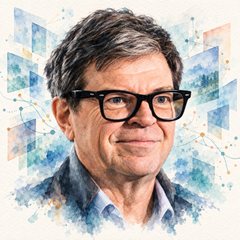
Yann LeCun, Open vs closed models
Insists that foundation models must be open source so that no handful of companies controls the information people receive, and sees the concentration of AI in proprietary systems as a greater danger than the technology itself.
LeCun was Meta's chief AI scientist when it released Llama 2, and argued in Senate testimony two months later for developing AI openly.
-
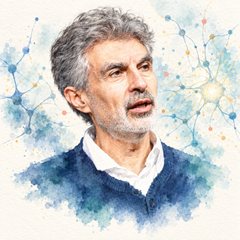
Yoshua Bengio, Open-weight frontier models
A self-described lifelong supporter of open source who argues that releasing the weights of the most capable models could enable catastrophic misuse and make loss of control more likely, and that a regulator rather than a company should make the call.
Bengio's December 2023 Senate statement argued that a regulator, not a company, should decide whether a frontier model's weights are released.
-
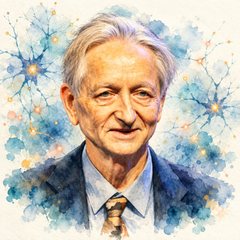
Geoffrey Hinton, Open-weight models
Opposes releasing the weights of the largest models, because bad actors can cheaply fine-tune them for harm.
Hinton opposes releasing the weights of the largest models because they can be cheaply fine-tuned for harm, the risk Meta's open release accepted.
-
Fei-Fei Li, Regulating frontier models (SB 1047)
Opposed California's SB 1047 on the grounds that holding original developers liable for downstream misuse would chill open-source development and academic research; prefers rules aimed at applications and evidence of harm.
Li argued in August 2024 that SB 1047's developer liability would chill open-source releases that academic research depends on.
-
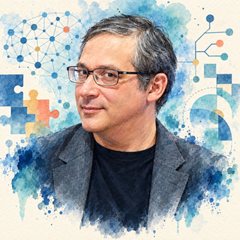
Gary Marcus, Open-weight models
Opposes the unilateral release of powerful model weights without outside review, arguing that nobody can yet rule out serious misuse and that a single company should not make the decision for everyone.
Marcus objects to exactly this kind of release, arguing that one company should not decide unilaterally, without outside review, to publish a powerful model's weights.

Sources
- Meta and Microsoft Introduce the Next Generation of Llama, Meta, 18 July 2023
- Llama 2: Open Foundation and Fine-Tuned Chat Models, Touvron et al. (arXiv), 18 July 2023
- Llama 2 Community License Agreement, Meta
- Meta's LLaMa license is not Open Source, Open Source Initiative, 20 July 2023
- Testimony of Yann LeCun, US Senate Select Committee on Intelligence, 19 September 2023
- Written statement of Yoshua Bengio to the US Senate AI Insight Forum, 6 December 2023
- Letter from Senators Blumenthal and Hawley to Mark Zuckerberg, 6 June 2023
- Godmother of AI says California's AI bill will harm US ecosystem, Fei-Fei Li, Fortune, 6 August 2024