"There's nothing artificial about artificial intelligence. It's inspired by people, it's created by people, and, most importantly, it has an impact on people."
Builder of ImageNet, the dataset behind deep learning's 2012 breakthrough in vision; founding director of Stanford HAI; now CEO of World Labs, a $1 billion-funded bet on "spatial intelligence".
Early life and education
Fei-Fei Li was born in Beijing in 1976. She has told the story of her name on the Tim Ferriss podcast: her father, "characteristically late to the hospital", was cycling to her mother's bedside when he caught a bird on the way, and named her Fei-Fei, from the word for flying. Most of her childhood was spent in Chengdu, Sichuan, which she describes as a place "very famous for panda bears". Her mother, from a family of intellectuals, encouraged her to read Jane Eyre. When Li was twelve her father emigrated alone to Parsippany, New Jersey; she and her mother followed in 1992, when she was fifteen by her own account (a 2018 Wired profile put it at sixteen). On her second day in America her father took her to a gas station and asked her to explain a car problem to the mechanic; within two years she was the family's interpreter.
Parsippany High School had no advanced calculus class, so a mathematics teacher, Bob Sabella, improvised one and taught her during his lunch breaks. He and his wife took her on a family holiday to Disney World and later lent her $20,000 to open a dry-cleaning shop for her parents to run. She won a scholarship to Princeton in 1995 and, as an undergraduate, went home nearly every weekend to help run the business, a fact she later put in her memoir and that Princeton cited when it assigned the book to its incoming class of 2028. She graduated in 1999 with high honors in physics.
At Caltech she moved from physics toward the science of seeing. Her 2005 dissertation, "Visual Recognition: Computational Models and Human Psychophysics", supervised by Pietro Perona with Christof Koch, paired computational models of object recognition with experiments on how quickly people recognise objects in natural scenes. She spent a year as an assistant professor at the University of Illinois Urbana-Champaign before moving to Princeton in January 2007.
ImageNet and the data revolution
At Princeton, Li's reasoning was that a child sees many thousands of images before learning to name objects, so a machine would need a dataset of comparable size, organised by meaning. She borrowed the structure of WordNet, the lexical database built at Princeton, and set out to collect on average a thousand images for each noun. Kai Li, a Princeton professor of computer architecture, joined as collaborator, and her student Jia Deng became first author of the project. Labelling was the obstacle. She first paid Princeton undergraduates $10 an hour, which was far too slow; a student then pointed her to Amazon Mechanical Turk, a marketplace barely a year old. "Online workers, their goal is to make money the easiest way, right?" she told Wired, so her team seeded the tasks with images whose labels were already known, such as golden retrievers, to catch workers who clicked everything.
The dataset presented at CVPR in June 2009 (Deng, Dong, Socher, Li-Jia Li, Kai Li and Fei-Fei) has grown to 14,197,122 images across 21,841 synsets, and Semantic Scholar lists more than 76,000 citations of the paper. From 2010 the team ran the ImageNet Large Scale Visual Recognition Challenge (ILSVRC), a 1,000-category benchmark that drew more than fifty institutions and ran annually until 2017. The winning top-5 classification error was 25.8 percent in 2011. In 2012 the SuperVision entry from Alex Krizhevsky, Ilya Sutskever and Geoffrey Hinton, a deep convolutional network trained on GPUs, brought it to 16.4 percent; by 2014 GoogLeNet reached 6.7 percent. The challenge's own retrospective, written with Olga Russakovsky as first author, calls 2012 "the major breakthrough". The 2025 Queen Elizabeth Prize citation says she "established the importance of providing high quality datasets, both to benchmark progress and underpin the training of machine learning algorithms".
Stanford, Google and human-centered AI
Li joined Stanford as an assistant professor in June 2009, became an associate professor in August 2012, directed the Stanford Artificial Intelligence Laboratory from 2013 to October 2018, was promoted to full professor in January 2018 and named the inaugural Sequoia Professor in June 2019. Her lab extended deep networks from images to video (a 2014 CVPR paper with Andrej Karpathy) and to fast style transfer (a 2016 paper with Justin Johnson, later a World Labs co-founder), and turned toward "ambient intelligence", cameras and sensors that watch for risks in hospital rooms. Its PhD alumni include Karpathy, Russakovsky and Timnit Gebru, who completed her doctorate there in 2017.
In the summer of 2015 she, the postdoc Olga Russakovsky and Rick Sommer of Stanford Pre-Collegiate Studies started SAILORS, a free two-week camp for rising tenth-grade girls that drew more than 200 applications for 24 places in each of its first two years. "SAILORS is built on the hypothesis that a humanistic mission statement would attract more diverse students," Li said in 2016. In 2017 it became the national nonprofit AI4ALL, which she chaired until November 2024, when Russakovsky succeeded her.
From January 2017 to September 2018, on sabbatical, she was a vice president at Google and chief scientist of AI/ML for Google Cloud, where she co-founded the Cloud AI unit, oversaw the AutoML products and the acquisition of Kaggle, and set up Google AI's China Center in Beijing. The job also put her inside the Project Maven controversy. In September 2017, as Google prepared to speak about its Pentagon drone-imagery contract, she emailed colleagues, "Avoid at ALL COSTS any mention or implication of AI," adding, "This is red meat to the media to find all ways to damage Google." The emails were leaked to The New York Times and The Intercept in May 2018, after about 4,000 employees had signed a petition against the contract. Li issued a statement: "I believe in human-centered AI to benefit people in positive and benevolent ways. It is deeply against my principles to work on any project that I think is to weaponize AI." Google then published AI principles ruling out weapons work.
On 26 June 2018 she told a joint hearing of two House Science subcommittees that "there's nothing artificial about artificial intelligence" and set out three pillars for what she called human-centered AI: technology inspired by human intelligence, an emphasis on augmenting rather than replacing people, and attention to societal impact. Nine months later, on 18 March 2019, Stanford launched the Institute for Human-Centered Artificial Intelligence with Li and the former provost John Etchemendy as co-directors and 200 participating faculty from all seven schools. Within a week Quartz reported that of the 121 faculty listed on its website, more than 100 appeared to be white and most were men; a spokesperson replied, "We know we still have a long way to go to reach everyone who can contribute to HAI's mission and it is our top priority." By 2026 the institute counted more than 400 affiliated scholars and $60 million in cumulative grant funding.
Public voice on AI policy
Twitter appointed Li an independent director in May 2020; she left with the rest of the board when Elon Musk completed his purchase on 27 October 2022. In 2020 she was elected to both the National Academy of Engineering, which cited her for building the large databases behind machine learning, and the National Academy of Medicine. In June 2023 she and Stanford Medicine's dean Lloyd Minor launched RAISE-Health, an initiative on responsible AI in medicine, and in August 2023 UN Secretary-General Antonio Guterres named her, alongside Yoshua Bengio, to a new Scientific Advisory Board.
Her memoir, "The Worlds I See", published by Flatiron Books on 7 November 2023, braided her family's story with the making of ImageNet; Barack Obama put it on his list of books about AI, the Financial Times named it a best book of 2023, and Hinton's blurb called it "an urgent, clear-eyed account". Promoting it, she told MIT Technology Review that she respected Hinton's warnings about existential risk but that "there are other risks that are what I would call catastrophic risks to society that are more pressing and urgent", naming misinformation, workforce disruption, bias and privacy, and she called for "a moon-shot moment in AI" in public-sector compute. That argument became her lobbying for the National AI Research Resource, which the National Science Foundation piloted in 2024.
In August 2024 she wrote in Fortune that California's SB 1047 would penalise developers for downstream misuse, mandate a "kill switch" that would cripple open-source work, and starve academic research of access to models. State Senator Scott Wiener said the bill only required shutting down models in a developer's own possession and that Li "put that inaccurate statement in her piece"; Hinton and Bengio backed the bill. Governor Gavin Newsom vetoed it in September 2024 and asked Li, with Jennifer Tour Chayes and Mariano-Florentino Cuellar, to lead a Joint California Policy Working Group on AI Frontier Models, whose final report appeared on 17 June 2025 and which Wiener welcomed as affirming the need for "effective safety guardrails". In October 2024 she had told a Credo AI summit, "I frankly don't even know what AGI means."
She gave the opening keynote at the Paris AI Action Summit on 10 February 2025, telling delegates "it's essential that we govern on the basis of science, not science fiction", and in August 2025, when Hinton proposed at the Ai4 conference in Las Vegas that AI be built with "maternal instincts" toward people, she told CNN, "I think that's the wrong way to frame it." In December 2025 TIME put her on the cover of its Person of the Year issue as one of eight "Architects of AI" it honoured collectively, alongside Sam Altman, Dario Amodei, Demis Hassabis, Jensen Huang, Elon Musk, Lisa Su and Mark Zuckerberg. In August 2026, back at Ai4 with Hinton and Andrew Ng and with local opposition to data centres growing, she told Bloomberg's Emily Chang that "if we are not showing a positive attitude and positive path toward AI, everybody loses."
World Labs and spatial intelligence
In 2024 Li co-founded World Labs with Justin Johnson, Ben Mildenhall and Christoph Lassner. The company left stealth on 13 September 2024 having raised $230 million in two rounds from Andreessen Horowitz, NEA and Radical Ventures at a valuation above $1 billion, promising "large world models" for artists, designers and engineers. Its research arm released RTFM, a real-time frame model, in October 2025, and on 10 November 2025 Li published a long essay, "From Words to Worlds", arguing that language models "remain wordsmiths in the dark; eloquent but inexperienced, knowledgeable but ungrounded" and that a world model must be generative, multimodal and interactive.
Two days later World Labs launched Marble, which turns text, photos, video, panoramas or rough 3D layouts into persistent, editable 3D environments exportable as Gaussian splats, meshes or video. A free tier allowed four generations; paid tiers ran from $20 to $95 a month, and an experimental editor called Chisel let users block out walls and boxes and style them with text. A World API for developers followed on 21 January 2026. On 18 February 2026 the company announced a $1 billion round including $200 million from Autodesk, with AMD, Emerson Collective, Fidelity, Nvidia and Sea also investing; it declined to confirm reports of a $5 billion valuation. "If AI is to be truly useful, it must understand worlds, not just words," Li said in the announcement.
On 21 July 2026 World Labs acquired SceniX, a startup building simulation environments in which robots practise before running on hardware, its first move into embodied AI. On 1 September 2026 it introduced Atlas, an "omni world model" trained from scratch on text, images, video and 3D that can generate camera-controlled video of up to a minute at 1440p and reconstruct scenes from a few photographs, and which the company says will power future versions of Marble.
Influence and legacy
Li's Google Scholar profile listed more than 374,000 citations and an h-index of 181 in September 2026. The specific idea she is credited with, that a large, carefully labelled benchmark could move a field faster than a new algorithm, is now the default assumption behind every foundation model, and the ILSVRC error-rate chart remains the standard illustration of why deep learning won. The VinFuture Foundation, awarding her its $3 million 2024 Grand Prize with Bengio, Hinton, Huang and LeCun, said her dataset made it "possible to train models at scale"; the 2025 Queen Elizabeth Prize for Engineering added John Hopfield and Bill Dally to the same group.
Her other legacy is institutional. AI4ALL, HAI, RAISE-Health and the California working group each translated the phrase "human-centered AI" into a program with staff and budgets. On 4 May 2026 Stanford merged HAI with Stanford Data Science under the HAI name, with James Landay continuing as Denning Director; Li stepped back from day-to-day leadership to become Special Advisor on AI to President Jonathan Levin and to co-chair the institute's advisory council with former president John Hennessy. "We have to double down on what universities uniquely contribute," she said, "fundamental research, open science, and developing talent in service of the public good."
Timeline
-
Born in Beijing, China
Named for a bird her father caught on the way to the hospital; raised in Chengdu, Sichuan.
-
Joins her father in Parsippany, New Jersey
Arrived at fifteen by her own account; a teacher, Bob Sabella, taught her calculus at lunch and later lent her family $20,000 for a dry-cleaning shop.
-
BA in Physics, Princeton University
Graduated with high honors after four years of weekend trips home to run the family business.
-
PhD in Electrical Engineering, Caltech
Dissertation on visual recognition advised by Pietro Perona and Christof Koch; joined the University of Illinois Urbana-Champaign as assistant professor.
-
Begins ImageNet at Princeton
Set out to collect a thousand images for each WordNet noun, first with paid undergraduates, then with Amazon Mechanical Turk.
-
ImageNet paper at CVPR
The paper with Jia Deng as first author has been cited more than 76,000 times.
-
Joins Stanford
Started at Stanford as an assistant professor after two years at Princeton.
-
Deep learning wins the ImageNet challenge
The SuperVision network from Hinton's group cut the top-5 error from 25.8 to 16.4 percent; Li became an associate professor that August.
-
Director of the Stanford AI Lab
Led SAIL until October 2018; co-founded the SAILORS girls' summer camp in 2015.
-
Chief Scientist of AI/ML, Google Cloud
Sabbatical role from January 2017 to September 2018 covering AutoML, the Kaggle acquisition and Google AI's Beijing centre; SAILORS became the nonprofit AI4ALL.
-
Project Maven emails leak
Leaked emails on Google's Pentagon contract made her a face of the controversy.
-
House testimony
On 26 June she told Congress AI must be human-centered.
-
Co-founds Stanford HAI
Launched 18 March with John Etchemendy and 200 faculty; criticised within a week for the demographics of its faculty list.
-
Elected to the National Academy of Engineering
Cited for building the large databases behind machine learning.
-
Joins Twitter's board
Served as an independent director of Twitter until Musk dissolved the board in October 2022.
-
Elected to the National Academy of Medicine
Her second academy election of the year, after the National Academy of Engineering.
-
Co-launches RAISE-Health
An initiative on responsible AI in medicine, launched with Stanford Medicine's dean Lloyd Minor.
-
UN advisory board
Appointed to the UN Secretary-General's Scientific Advisory Board alongside Yoshua Bengio.
-
Memoir "The Worlds I See"
Published by Flatiron Books on 7 November.
-
Fights SB 1047
Her Fortune op-ed opposed the California bill, which Newsom vetoed the following month.
-
Co-founds World Labs
World Labs left stealth on 13 September with $230 million.
-
VinFuture Grand Prize
Shared the prize with Yoshua Bengio, Geoffrey Hinton, Jensen Huang and Yann LeCun.
-
Queen Elizabeth Prize for Engineering
Shared the QEPrize with six others for modern machine learning.
-
Paris keynote
Opened the Paris AI Action Summit, urging governance based on science, not science fiction.
-
California frontier-model working group report
Co-led the working group whose final report appeared on 17 June.
-
Marble launches
World Labs' first product launched on 12 November.
-
TIME Person of the Year cover
Pictured on the cover of TIME's Person of the Year issue as one of the "Architects of AI".
-
$1 billion round
World Labs raised $1 billion, including $200 million from Autodesk.
-
Stanford advisor
Became Special Advisor on AI to Stanford's president as HAI merged with Stanford Data Science.
-
World Labs buys SceniX
Its first move into embodied AI, acquiring a startup that builds simulation environments for robots.
-
Atlas
World Labs released Atlas, an omni world model, on 1 September.
Key contributions
ImageNet
Beginning at Princeton in 2007, Li led the construction of ImageNet, a database now holding 14,197,122 images across 21,841 WordNet categories, labelled by crowd workers on Amazon Mechanical Turk at a time when standard vision datasets held a few thousand pictures. It supplied the training data on which deep convolutional networks first proved themselves, and the 2009 CVPR paper describing it has more than 76,000 citations on Semantic Scholar.
The ImageNet Large Scale Visual Recognition Challenge
From 2010 to 2017 the annual ILSVRC gave the field a shared yardstick for 1,000-category classification and detection, drawing entries from more than fifty institutions. The fall in winning top-5 error from 25.8 percent (2011) to 16.4 percent (2012, SuperVision) to 6.7 percent (2014, GoogLeNet) persuaded the wider community that deep learning worked and set off the investment that followed.
Human-centered AI and Stanford HAI
In 2018 testimony she defined human-centered AI by three pillars, technology that reflects human intelligence, augments rather than replaces people, and is guided by concern for its impact, and in 2019 co-founded the Stanford Institute for Human-Centered AI to pursue it across engineering, medicine, law, policy and the humanities. The institute had more than 400 affiliated scholars when Stanford merged it with Stanford Data Science in May 2026.
AI4ALL and broadening participation
With Olga Russakovsky she co-founded SAILORS in 2015, a free Stanford summer camp for rising tenth-grade girls, and in 2017 the national nonprofit AI4ALL, which she chaired until November 2024. Her stated hypothesis was that a humanistic framing of AI would draw students the field otherwise misses.
Ambient intelligence for healthcare
Her Stanford lab applied computer vision and sensing to hospital rooms and homes, work she calls ambient intelligence for healthcare delivery. In June 2023 she and Stanford Medicine dean Lloyd Minor launched RAISE-Health (Responsible AI for Safe and Equitable Health) to set standards for AI in medicine.
Spatial intelligence and world models
Li argues that perceiving, reasoning about and acting in three-dimensional space is a foundation of intelligence that language cannot supply, and that the next class of AI systems will be world models that generate and simulate consistent 3D environments. World Labs, co-founded in 2024, and its Marble, World API and Atlas releases are the commercial test of that thesis.
AI policy work
Through House testimony in 2018, advocacy for the National AI Research Resource, the 2024 campaign against SB 1047, co-leadership of California's Joint Policy Working Group on AI Frontier Models (report June 2025), the Paris AI Action Summit keynote and the UN Scientific Advisory Board, she has pressed for governance based on evidence about applications, public investment in compute and data, and protection of open-source and academic research.
How Fei-Fei thinks
The ideas that organize this person's work and public arguments.
Data is the bottleneck
The idea that made Li's reputation is that machine perception was starved of data, not of algorithms. In 2006 the standard object-recognition benchmarks held a few thousand images in a few dozen categories, and researchers spent their effort on hand-designed features. Her reasoning was developmental: a child sees a vast number of scenes before it can name a cat, so a learning machine should be given the same, organised by the meaning of words. ImageNet followed WordNet's hierarchy, aimed at a thousand pictures per noun, and used a crowd-labour marketplace that was barely a year old, with hidden control images to catch careless workers. The consequence arrived in 2012, when a GPU-trained convolutional network from Hinton's group needed exactly that volume of labelled data to beat every hand-engineered system on the ImageNet challenge, and every foundation model since has been, at bottom, a bet on more data. The idea is contested from two directions. Kate Crawford, Trevor Paglen, Abeba Birhane and Vinay Prabhu have argued that scraping and labelling people at this scale caused harms of consent, privacy and classification that the field ignored, and Li's own retrospective essay lists ImageNet as one of three ingredients of modern AI, alongside neural network algorithms and modern computation, rather than the sole one.
Human-centered AI
Li's phrase for how AI should be built dates from her 2018 congressional testimony and rests on three pillars: the technology should draw on what is known about human intelligence, it should augment rather than replace people (her examples were nurses and doctors assisted by diagnostic tools), and it should be guided by concern for bias, security, privacy and effects on society. Her institutional answer was Stanford HAI, an institute deliberately staffed across all seven Stanford schools rather than inside computer science, and the same premise ran through SAILORS and AI4ALL, whose founding hypothesis was that a humanistic framing would attract students the field otherwise misses. The framing has critics. At HAI's launch, reporters counted the demographics of its faculty list and found it largely white and male, which suggested the institute's stated diversity of thought was thin. Researchers in the safety camp, including Hinton and Bengio, argue that focusing on present harms understates catastrophic ones. And Li herself has worked inside institutions, Google Cloud and Twitter, whose choices sat uneasily with the label, as the Project Maven emails showed.
Spatial intelligence and world models
Li's current thesis is that language is a late and partial layer of intelligence, and that the ability to perceive, imagine and act in three-dimensional space came first in evolution and matters more for robots, science and design. She calls this spatial intelligence and describes it as the "North Star" of her career, from her Caltech thesis on rapid scene recognition through ImageNet to World Labs. In her November 2025 essay she set out what a world model must do: generate worlds that are geometrically and physically consistent, accept any modality as input (images, video, text, actions), and predict the next state of a world in response to an action. Marble, the World API and Atlas are the company's successive attempts at that specification, and the $1 billion raised in February 2026 is the market's. The disagreement is over method rather than goal. Yann LeCun, who also left a large company to pursue world models, argues that predicting in an abstract representation space (his JEPA architectures) is the right route and that generative approaches waste capacity filling in unpredictable pixel detail; Google DeepMind's Genie line builds worlds as video rather than explicit 3D. Whether a 3D-first, exportable representation or a learned latent one wins is, as of 2026, an open empirical question.
Policy as ecosystem, not only restriction
Since 2023 Li has argued that the most consequential AI policy decisions concern who gets to do research at all. Frontier models cost hundreds of millions of dollars to train, so universities, which produced the field's ideas and people, can no longer build what they study. Her prescription is public investment, above all the National AI Research Resource, which she lobbied for and which the NSF began piloting in 2024, together with rules targeted at applications and evidence of harm rather than at models above a compute threshold. This is the logic behind her opposition to SB 1047 and her Paris keynote's call to "govern on the basis of science, not science fiction". Critics including Senator Wiener, Hinton and Bengio reply that the largest models are exactly where catastrophic capabilities would appear, that developer liability is ordinary product law, and that Li mischaracterised the bill's shutdown provision. The June 2025 report of the California working group she co-led landed between the camps, recommending transparency and safety guardrails for frontier developers while warning against rules that would drive research out of the state.
Perspectives
Where Fei-Fei stands on the debates shaping the field. Marked lines show how a view has moved.
AI risk #
Treats existential-risk scenarios as worth discussing but less pressing than concrete harms such as misinformation, bias, privacy violations and workforce disruption.
"I feel there are other risks that are what I would call catastrophic risks to society that are more pressing and urgent."
By 2025 she was framing every technology as "a double-edged sword" on PBS's Firing Line, while still directing policy attention to applications rather than models.
Regulating frontier models (SB 1047) #
Opposed California's SB 1047 on the grounds that holding original developers liable for downstream misuse would chill open-source development and academic research; prefers rules aimed at applications and evidence of harm.
Shaped by Llama 2, 2023 The veto of California's SB 1047, 2024
"Open-source development is important in the private sector, but vital to academia, which cannot advance without collaboration and access to model data."
After the veto she accepted Governor Newsom's invitation to co-lead the Joint California Policy Working Group on AI Frontier Models, whose June 2025 report called for transparency and safety guardrails that Senator Wiener, the bill's author, welcomed.
Governance grounded in science #
Argues that policy should rest on evidence about how AI is used rather than on speculative narratives, and that sensational framing produces bad rules.
"For starters, it's essential that we govern on the basis of science, not science fiction."
Public compute and open science #
Warns that frontier AI has become too expensive for universities and calls for a national research resource giving academics access to compute and data.
"America needs a moon-shot moment in AI and to significantly invest in public-sector research and compute capabilities, including a National AI Research Resource and labs similar to CERN."
The same argument, that "if these resources are concentrated in only a handful of companies, the AI ecosystem will suffer", anchored her Paris keynote in February 2025.
Human-centered AI #
Holds that AI is a tool made by and for people, that it should augment rather than replace human skills, and that its builders must answer for its effects.
"The second is the emphasis on enhancing and augmenting human skills, not replacing them."
The three-pillar framing from 2018 became Stanford HAI's founding mission in 2019 and the phrase she used on joining the UN advisory board in 2023, "we must center humans at every stage of its development and use".
Limits of language models #
Believes language models lack grounding in the physical world and that the next leap will come from world models that perceive, generate and reason about three-dimensional space.
"Yet they remain wordsmiths in the dark; eloquent but inexperienced, knowledgeable but ungrounded."
AGI #
Regards "artificial general intelligence" as an ill-defined term she does not use, preferring measurable capabilities such as spatial intelligence.
"I frankly don't even know what AGI means. Like people say you know it when you see it, I guess I haven't seen it."
Military use of AI #
Said during the Project Maven controversy that working to weaponise AI is against her principles, while her leaked emails showed her main concern at the time was how Google's contract would be perceived.
"It is deeply against my principles to work on any project that I think is to weaponize AI."
Critics and counterpoints
The strongest cases against Fei-Fei's positions, and where each argument stands.
Are near-term harms or existential risks the priority?
Li respects the warnings of Hinton and others but says the catastrophic risks that are already here, misinformation, workforce disruption, bias and privacy loss, are more pressing and should shape policy.
Geoffrey Hinton and Yoshua Bengio, who signed the May 2023 statement that "mitigating the risk of extinction from AI should be a global priority", argue that the timing of catastrophic capabilities is uncertain and that waiting for evidence of loss of control means acting too late; Bengio's International AI Safety Report documents deception and situational awareness appearing in evaluations.
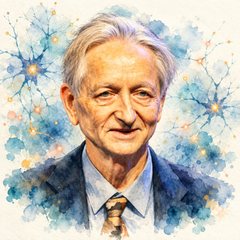 Geoffrey Hinton
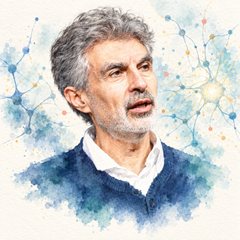 Yoshua Bengio
Where it stands. Unresolved; the two camps backed opposite sides of SB 1047 in 2024, and Li's 2025 California working group report tried to accommodate both by recommending guardrails without model-level liability. Source
Should frontier-model developers be liable, as SB 1047 proposed?
Li argued in Fortune that penalising developers for downstream misuse, mandating a kill switch and setting an arbitrary $100 million training threshold would chill open-source work and academic research without addressing real harms like bias and deepfakes.
State Senator Scott Wiener said the bill "was crystal clear" that only models in a developer's own possession had to be shut down and that Li "put that inaccurate statement in her piece"; Hinton and Bengio called the bill a bare minimum of regulation and said companies cannot be trusted to assess themselves.
Where it stands. Governor Newsom vetoed the bill in September 2024 and appointed Li to co-lead a working group whose June 2025 report Wiener welcomed as affirming the need for guardrails. Source
Did ImageNet's people categories cause harm?
Li's team accepted that the person subtree inherited WordNet's outdated vocabulary and unequal representation, flagged 1,593 of its 2,832 categories as unsafe, proposed removing them and later showed that blurring faces barely affects model accuracy.
Kate Crawford and Trevor Paglen's "Excavating AI" (2019) showed ImageNet labelling a woman in a bikini a "slattern" and a child a "loser", and argued the whole enterprise of classifying people from photographs is political; Abeba Birhane and Vinay Prabhu's "Large image datasets: a pyrrhic win for computer vision?" (2020) found non-consensual and pornographic images in the ILSVRC set and called for institutional review of dataset curation.
Where it stands. ImageNet withdrew most person categories and released a face-blurred version; the argument has moved on to web-scale datasets such as LAION, which inherit the same problems at a thousand times the size. Source
How should a world model represent the world?
World Labs builds explicit, exportable 3D representations (Gaussian splats and meshes) and, with Atlas, a single model trained across text, images, video and 3D, on the view that a useful world model must output an observable state that people and robots can act in.
Yann LeCun argues that generative models "try to fill-in every bit of missing information, even though the world is inherently unpredictable", and that world models should instead predict in an abstract representation space (JEPA), which his AMI Labs is now pursuing; other labs, including Google DeepMind, generate worlds as video rather than geometry.
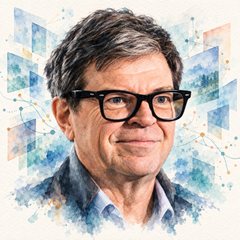 Yann LeCun
Where it stands. Both camps raised about a billion dollars within a month of each other in early 2026; no benchmark yet settles which representation transfers better to robotics. Source
Did the Project Maven emails contradict her ethics?
Li said the Pentagon contract was not her deal, that she considered the imagery work "fairly innocuous" before the outcry, and that weaponising AI is against her principles.
The Intercept and The New York Times, publishing her September 2017 emails, noted that her stated worry was reputational ("red meat to the media") rather than ethical, and roughly 4,000 Google employees petitioned against the contract on grounds she had not raised internally.
Where it stands. Google announced AI principles excluding weapons in June 2018 and let the contract lapse; Li returned to Stanford that September and the episode remains the main criticism of her record. Source
Notable works
| Title | Type | Year | Why it matters |
|---|---|---|---|
| ImageNet: A large-scale hierarchical image database | paper | 2009 | CVPR paper (Deng, Dong, Socher, Li-Jia Li, Kai Li, Fei-Fei) introducing ImageNet; more than 76,000 citations. |
| Large-scale video classification with convolutional neural networks | paper | 2014 | CVPR paper with Andrej Karpathy extending deep convolutional networks from images to a million YouTube videos. |
| ImageNet Large Scale Visual Recognition Challenge | paper | 2015 | IJCV retrospective, first author Olga Russakovsky, documenting the benchmark and the 2012 breakthrough. |
| How we're teaching computers to understand pictures | talk | 2015 | TED talk on ImageNet and the child's-eye view of learning to see. |
| Perceptual losses for real-time style transfer and super-resolution | paper | 2016 | ECCV paper with Justin Johnson, later a World Labs co-founder; more than 11,000 citations. |
| Testimony: Artificial Intelligence - With Great Power Comes Great Responsibility | talk | 2018 | House Science Committee testimony laying out the three pillars of human-centered AI. |
| Towards fairer datasets: filtering and balancing the distribution of the people subtree in the ImageNet hierarchy | paper | 2020 | The ImageNet team's response to critics; flagged 1,593 of 2,832 person categories as unsafe and proposed removing them. |
| On the opportunities and risks of foundation models | paper | 2021 | Stanford report she co-authored with more than a hundred colleagues on large pretrained models. |
| The Worlds I See: Curiosity, Exploration, and Discovery at the Dawn of AI | book | 2023 | Memoir (Flatiron Books, 7 November 2023) weaving her immigrant story with the making of ImageNet. |
| With spatial intelligence, AI will understand the real world | talk | 2024 | TED talk framing spatial intelligence as the step beyond language models. |
| 'Godmother of AI' says California's well-intended AI bill will harm the U.S. ecosystem | essay | 2024 | Fortune op-ed opposing SB 1047. |
| From Words to Worlds: Spatial Intelligence is AI's Next Frontier | essay | 2025 | Her manifesto for world models, published 10 November 2025, two days before Marble launched. |
| Marble | product | 2025 | World Labs' first product, a world model that generates editable, exportable 3D environments from text, images, video and layouts. |
Where to start
A short path into Fei-Fei's work, in order.
-
1
How we're teaching computers to understand pictures (TED, 2015)talk
Eighteen minutes on why a three-year-old beats a computer at seeing and how ImageNet tried to close the gap; the clearest statement of the data-first idea.
-
2
Fei-Fei Li's Quest to Make AI Better for Humanity (Wired, 2018)essay
The long profile with the calculator with the broken key, the $20,000 loan, the Mechanical Turk controls and the Maven emails; about 30 minutes.
-
3
House testimony, 26 June 2018essay
Her written statement runs a few pages and contains the three pillars of human-centered AI in her own words; skim the rest of the transcript for the exchange on immigration.
-
4
The memoir alternates chapters on her family and on the science; read it for the years between Parsippany and ImageNet that no interview covers.
-
5
From Words to Worlds (Substack, November 2025)essay
The current thesis in full, why language is not enough, the three properties a world model needs, and what World Labs is building; twenty minutes.
-
6
The Tim Ferriss Show, episode 839 (December 2025)podcast
Two and a half hours of conversation, with the story of her name, her mother, Bob Sabella and the desperation that led to crowdsourcing; the transcript is searchable.
Misconceptions
Fei-Fei Li built the network that won the 2012 ImageNet competition.
The 2012 winner, SuperVision (later called AlexNet), was built by Alex Krizhevsky, Ilya Sutskever and Geoffrey Hinton at Toronto. Li's team built the dataset and ran the challenge on which it won. Source
ImageNet was a solo project.
The 2009 paper lists Jia Deng as first author with Wei Dong, Richard Socher, Li-Jia Li and Kai Li; the challenge retrospective has twelve authors led by Olga Russakovsky. Li conceived and led the effort, which is why the prizes name her. Source
She opposes AI regulation.
She opposed one bill, SB 1047, on its design. She has lobbied for the National AI Research Resource, co-led California's 2025 frontier-model working group, and told the Paris summit that governance should rest on science rather than science fiction. Source
She left Stanford to run World Labs.
She remains Sequoia Professor of Computer Science and HAI's founding director, and in May 2026 added the role of Special Advisor on AI to Stanford's president, while running World Labs as CEO. Source
Awards
- Alfred P. Sloan Research Fellowship
- IEEE PAMI Mark Everingham Prize For the ImageNet project; the same year she received the IAPR J.K. Aggarwal Prize.
- ACM Fellow
- Member, US National Academy of Engineering Cited for building the large databases needed for both the principles and the applications of machine learning.
- Member, US National Academy of Medicine
- Woodrow Wilson Award, Princeton University
- VinFuture Prize (Grand Prize) Shared with Yoshua Bengio, Geoffrey Hinton, Jensen Huang and Yann LeCun.
- Queen Elizabeth Prize for Engineering Shared with Yoshua Bengio, Bill Dally, Geoffrey Hinton, John Hopfield, Jensen Huang and Yann LeCun for contributions to modern machine learning.
- TIME Person of the Year, "Architects of AI" Honoured collectively; the cover pictured her with Altman, Amodei, Hassabis, Huang, Musk, Su and Zuckerberg.
Quotes
"Online workers, their goal is to make money the easiest way, right?"
"I feel there are other risks that are what I would call catastrophic risks to society that are more pressing and urgent."
"For starters, it's essential that we govern on the basis of science, not science fiction."
"Yet they remain wordsmiths in the dark; eloquent but inexperienced, knowledgeable but ungrounded."
"AI is absolutely a civilizational technology."
"If AI is to be truly useful, it must understand worlds, not just words. Worlds are governed by geometry, physics, and dynamics, and reconciling the semantic, spatial, and physical is the next great frontier of AI."
"If we are not showing a positive attitude and positive path toward AI, everybody loses."
Related leaders
-
Geoffrey Hinton
His group's 2012 ImageNet win made her dataset famous; co-laureate of the 2024 VinFuture Prize and 2025 QEPrize; he blurbed her memoir, but they took opposite sides on existential risk and SB 1047, and in August 2025 she called his "maternal AI" proposal "the wrong way to frame it".
-
Yoshua Bengio
Fellow member of the UN Secretary-General's Scientific Advisory Board and co-laureate of the VinFuture and Queen Elizabeth prizes; supported SB 1047, which she opposed.
-
Yann LeCun
Co-laureate of the VinFuture and Queen Elizabeth prizes; both left large institutions to build world-model startups, but he favours latent-space prediction (JEPA) over her explicit 3D generation.
-
Timnit Gebru
Completed her PhD in Li's Stanford lab in 2017; later a leading critic of the large-dataset practices ImageNet helped establish.
-
Andrew Ng
Stanford colleague who, like her, publicly opposed California's SB 1047 in 2024.
-
Demis Hassabis
Fellow 2025 TIME "Architect of AI"; Google DeepMind's Genie models are the leading video-based rival to World Labs' 3D approach to world models.
-
Ilya Sutskever
Co-author, with Alex Krizhevsky and Geoffrey Hinton, of AlexNet, the network that won her ImageNet challenge in October 2012.
-
Jensen Huang
Co-laureate of the 2024 VinFuture Prize and 2025 Queen Elizabeth Prize; AlexNet won her ImageNet challenge on NVIDIA GPUs, and both were on TIME's December 2025 "Architects of AI" cover.
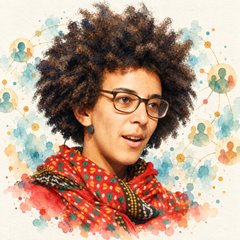
Details and links
Organizations
- World Labs Co-founder and CEO, 2024-present
- Stanford University Sequoia Professor of Computer Science; founding co-director of HAI, 2009-present
Education
- BA in PhysicsPrinceton University, 1999
- PhD in Electrical EngineeringCalifornia Institute of Technology, 2005
Affiliations
- World Labs (Co-founder and CEO, 2024-)
- Stanford University (Sequoia Professor of Computer Science; Special Advisor on AI to the President, 2026-)
- Stanford Institute for Human-Centered AI (Founding Co-Director 2019-2026; Co-chair of the Advisory Council, 2026-)
- Joint California Policy Working Group on AI Frontier Models (Co-lead, 2024-2025)
- Stanford Artificial Intelligence Laboratory (Director, 2013-2018)
- Google Cloud (Vice President and Chief Scientist of AI/ML, 2017-2018)
- AI4ALL (Co-founder; Chair 2017-2024)
- UN Secretary-General's Scientific Advisory Board (Member, 2023-)
- Twitter (Independent Director, 2020-2022)
- Princeton University, Department of Computer Science (Assistant Professor, 2007-2009)
- University of Illinois Urbana-Champaign (Assistant Professor, 2005-2006)
Areas of focus
Sources
- Fei-Fei Li's Profile - Stanford Profiles
- Fei-Fei Li - Stanford HAI (biography)
- Fei-Fei Li's Quest to Make AI Better for Humanity - Wired, December 2018 issue
- The Tim Ferriss Show transcript, Dr. Fei-Fei Li, episode 839 (December 2025)
- 'The Worlds I See' selected as Princeton Pre-read - Princeton University, February 2024
- Visual Recognition, Computational Models and Human Psychophysics - PhD thesis, Caltech 2005 (PDF)
- ImageNet - About (dataset statistics)
- ImageNet Large Scale Visual Recognition Challenge - Russakovsky et al., IJCV 2015 (arXiv)
- Stanford programs prepare underrepresented high schoolers - Stanford Report, August 2016 (SAILORS, archived)
- House hearing transcript, Artificial Intelligence - With Great Power Comes Great Responsibility (26 June 2018)
- How a Pentagon Contract Became an Identity Crisis for Google - The New York Times, 30 May 2018 (archived)
- Leaked Emails Show Google Expected Lucrative Military Drone AI Work - The Intercept, May 2018
- Stanford University launches the Institute for Human-Centered Artificial Intelligence - Stanford Report, March 2019 (archived)
- Stanford's New AI Institute Criticized For Lack Of Gender Balance - AI Business, 2019 (archived)
- Three Stanford faculty elected to the National Academy of Engineering - Stanford Report, February 2020 (archived)
- HAI Co-Director Fei-Fei Li Joins UN Secretary-General's Scientific Advisory Board - Stanford HAI, August 2023
- AI is at an inflection point, Fei-Fei Li says - MIT Technology Review, November 2023
- Interview with the 'Godmother of AI' - Issues in Science and Technology, Spring 2024
- 'Godmother of AI' says California's well-intended AI bill will harm the U.S. ecosystem - Fortune, August 2024
- Senator Wiener Responds to Top Experts' Final Report on AI Governance Framework - June 2025
- AI4ALL Appoints Co-Founder Dr. Olga Russakovsky as Board Chair - AI4ALL, November 2024
- The 2024 VinFuture Prize honors four scientific works - VinFuture Prize, December 2024
- 2025 Queen Elizabeth Prize for Engineering - Modern machine learning
- World Labs lands $1B, with $200M from Autodesk - TechCrunch, February 2026
- Stanford Merges AI and Data Science Efforts Under Single Institute - Stanford HAI, May 2026
- The 'godfather of AI' reveals the only way humanity can survive superintelligent AI - CNN Business, 13 August 2025 (with Li's response)
- Hinton, Fei-Fei Li and Andrew Ng clash over AI risks, jobs and regulation at Ai4 - Data Center Knowledge, August 2026
- Time's 2025 Person of the Year goes to 'the architects of AI' - CBS News, 11 December 2025 (names the eight people on the cover)
Reading this to shape your organization's AI plans? Through EMX, I help leadership teams decide where AI fits, what to ignore, and what to build next—using the same vendor-neutral research behind this profile. Put the research to work