The UN's first global scientific panel on AI
Forty independent experts from every UN region issued a first global assessment of AI's capabilities, opportunities and risks, warning that evidence and safeguards were not keeping pace with the technology.
What it was
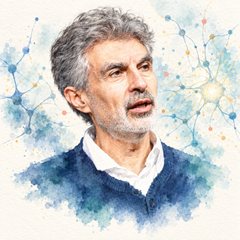
The United Nations General Assembly appointed the 40 members of the Independent International Scientific Panel on Artificial Intelligence in February 2026. At its inaugural meeting on 3 March, the members elected Yoshua Bengio and the journalist and Nobel Peace Prize laureate Maria Ressa as co-chairs. The UN describes it as the first global scientific body devoted entirely to AI, with members serving independently rather than as representatives of governments or companies.
On 1 July the panel published its preliminary report. It assessed AI science, economic effects, security, human rights, culture and governance, and was written to give every government a common evidence base before the first Global Dialogue on AI Governance in Geneva on 6 and 7 July. Its central institutional problem was timing: policymakers need evidence before acting, but waiting until every effect is certain may mean acting too late.
What it changed
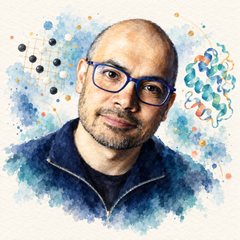
The panel gave an institutional form to an analogy that researchers had been making for years. Demis Hassabis had called for an international body resembling the Intergovernmental Panel on Climate Change, and Bengio had chaired the earlier International AI Safety Report. The new panel sits inside the UN system, includes experts from all five UN regions and is expected to publish recurring assessments rather than a single summit declaration.
Its first report also widened the frame. Frontier-model safety was one part of an assessment that also covered labour, education, concentration of power, environmental costs, information integrity and human rights. That made the panel a test of whether a global body can keep the evidence current enough to inform policy without collapsing disagreements over AI into a single measure of risk.
The arguments it moved
Who should set the rules for AI?
The panel does not regulate models. Its purpose is to create a shared scientific record that governments can use when they do. That separates evidence gathering from rulemaking and answers one objection to company-led governance: governments no longer have to depend entirely on the frontier labs for technical assessments of the systems they may regulate.
What are the biggest risks from AI?
The report treats loss of control and malicious use alongside current, measurable harms rather than choosing between them. That puts catastrophic-risk researchers and critics focused on labour, rights and inequality inside the same assessment process, while leaving their disagreements visible.
Positions it bears on
-
Yoshua Bengio, International governance
Sees AI as an international problem on the scale of nuclear weapons, needing treaties, democratic oversight and time for institutions to catch up; co-chairs the UN's scientific panel on AI.
Bengio was elected co-chair after years of arguing for an international scientific body able to assess frontier capabilities independently of the labs.
-
Demis Hassabis, International governance
Wants oversight to start with an IPCC-like scientific body and build toward something like the IAEA, and in 2026 proposed an industry-funded standards body to review models before release.
The panel closely resembles Hassabis's proposal for an AI body modelled on the IPCC, although it has an advisory rather than regulatory mandate.