The LLaMA leak
A week after Meta offered its LLaMA language models to approved researchers, the weights appeared on 4chan and BitTorrent, and three months later two senators asked Mark Zuckerberg to explain how he had assessed the risk.
What it was
On 24 February 2023 Meta announced LLaMA, a family of language models at 7, 13, 33 and 65 billion parameters, released under a noncommercial licence. Access was to be "granted on a case-by-case basis to academic researchers; those affiliated with organizations in government, civil society, and academia; and industry research laboratories around the world." Meta argued that smaller, efficient models would let researchers without large computing budgets study how such systems work. Yann LeCun was Meta's chief AI scientist, and the work came from its FAIR research lab.
On 3 March 2023 a torrent of the full weights was posted on 4chan, and the files spread across other sites; researchers who downloaded them told The Verge they matched Meta's official files, and users soon had the 13-billion-parameter version running on a MacBook. Meta filed takedown requests but did not deny the leak. It told Motherboard that "some have tried to circumvent the approval process" but that "we believe the current release strategy allows us to balance responsibility and openness."
What it changed
On 6 June 2023 Senators Richard Blumenthal and Josh Hawley, chair and ranking member of the Senate Judiciary subcommittee on privacy and technology, wrote to Mark Zuckerberg about "the 'leak' of Meta's AI model." Their letter said the full model had appeared on BitTorrent "within days of the announcement, making it available to anyone, anywhere in the world, without monitoring or oversight," and asked what risk assessment Meta had done, how many researchers it had approved and what safeguards it had used, with answers due by 15 June. As evidence of misuse, it cited reports of people using the leaked model to automate conversations on Tinder, and noted that Stanford's Alpaca, a chatbot built from LLaMA, had been taken down shortly after release.
The letter granted the case for openness, noting that open models allow "research, testing, and collaborative development that are not as readily achievable within closed systems like OpenAI's GPT-4 or Google Bard." It then argued that "Meta's choice to distribute LLaMA in such an unrestrained and permissive manner raises important and complicated questions about when and how it is appropriate to openly release sophisticated AI models." Six weeks after the letter, on 18 July 2023, Meta released Llama 2 with downloadable weights and a licence that allowed commercial use.
The arguments it moved
Who should have access to powerful models?
The argument started within days. The Verge reported on 8 March 2023 that cybersecurity researcher Jeffrey Ladish had tweeted "Open sourcing these models was a terrible idea," while the Princeton researchers Sayash Kapoor and Arvind Narayanan wrote that despite warnings of a wave of malicious use, "there don't seem to be any documented cases." Blumenthal and Hawley's June 2023 letter set out both sides in one document: open models help safety research and keep AI from being "dominated by a few select corporations," but "open source AI models like LLaMA, once released to the public, will always be available to bad actors." Its complaint that Meta "appears to have failed to conduct any meaningful risk assessment in advance of release" put the question as who should decide what gets released, and on what evidence. Meta's position, stated at the time of the leak, was that its approach balanced "responsibility and openness."
Who should set the rules for AI?
The letter treated the release of model weights, rather than any particular use of them, as something a company should answer to Congress for. It noted that Meta was already under a Federal Trade Commission consent decree and said Congress was considering "legislation and oversight to promote both innovation and accountability." Bengio's written statement to the Senate AI Insight Forum on 6 December 2023 proposed that "a regulator and not the CEO of a company should decide whether a powerful Frontier model could be open-sourced."
Positions it bears on
-
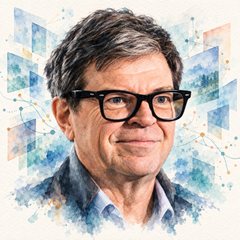
Yann LeCun, Open vs closed models
Insists that foundation models must be open source so that no handful of companies controls the information people receive, and sees the concentration of AI in proprietary systems as a greater danger than the technology itself.
The senators' letter noted that Meta's chief AI scientist, LeCun, had said open models were key to the company's success; he has argued throughout that open foundation models are safer than a few proprietary ones.
-
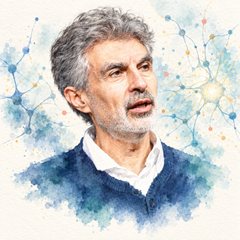
Yoshua Bengio, Open-weight frontier models
A self-described lifelong supporter of open source who argues that releasing the weights of the most capable models could enable catastrophic misuse and make loss of control more likely, and that a regulator rather than a company should make the call.
Bengio's December 2023 statement to the Senate AI Insight Forum answered the question the leak raised by assigning the release decision to a regulator.
-
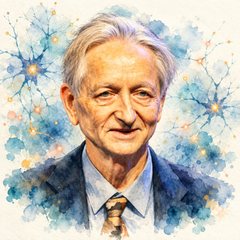
Geoffrey Hinton, Open-weight models
Opposes releasing the weights of the largest models, because bad actors can cheaply fine-tune them for harm.
Hinton's view that bad actors can cheaply fine-tune released weights for harm is the concern the senators' letter raised about LLaMA.
Sources
- Letter from Senators Blumenthal and Hawley to Mark Zuckerberg on the LLaMA leak, 6 June 2023
- Introducing LLaMA, Meta AI, 24 February 2023
- Facebook's Powerful Large Language Model Leaks Online, Motherboard (Vice), 7 March 2023
- Meta's powerful AI language model has leaked online, The Verge, 8 March 2023
- Runaway LLaMA, The Batch (DeepLearning.AI), March 2023
- Hawley and Blumenthal Demand Answers from Meta, Warn of Misuse After 'Leak' of Meta's AI Model, Senator Hawley, 6 June 2023
- Written statement of Yoshua Bengio to the US Senate AI Insight Forum, 6 December 2023