"The future has to be open source, if nothing else, for reasons of cultural diversity, democracy, diversity."
Inventor of convolutional neural networks and founding director of Meta's FAIR lab, LeCun shared the 2018 Turing Award and now chairs AMI Labs, a Paris startup betting that world models, not language models, lead to human-level AI.
Early life and education
Yann LeCun was born on 8 July 1960 in Soisy-sous-Montmorency, north of Paris, and grew up tinkering with the electronics and mechanics that interested his father, an engineer. His surname was originally written Le Cun; he closed the space after moving to the United States, where people kept treating "Le" as a middle name. He dates his interest in machine intelligence to seeing the computer HAL in the film 2001: A Space Odyssey as a young boy, and as a teenager he played in a band alongside his science projects.
He studied microchip design and automation at ESIEE Paris, earning an engineering diploma in 1983, and began reading about machine learning on his own as an undergraduate. That reading became the center of his doctoral work at Université Pierre et Marie Curie, where his 1987 thesis on connectionist learning models described a form of the backpropagation algorithm for training multi-layer networks, arrived at independently of the version Hinton and his colleagues published in 1986.
A 1985 workshop at Les Houches in the French Alps put him in contact with the small international community working on the same problem. There he met Terry Sejnowski, a collaborator of Hinton's whose backpropagation work was not yet published. When Hinton visited Paris a few months later he introduced himself to LeCun, which led to an invitation to a summer workshop at Carnegie Mellon and a postdoctoral year in Hinton's new group at the University of Toronto in 1987-88.
Bell Labs and the birth of convolutional networks
In 1988 LeCun joined the Adaptive Systems Research Department at AT&T Bell Labs in Holmdel, New Jersey, run by Lawrence Jackel. The problem he took on was that an ordinary network trained to recognise a feature in one corner of an image learned nothing about the same feature elsewhere. His answer, the convolutional neural network, sweeps a small learned filter across the whole input so that a pattern is detected wherever it appears, which cut the number of parameters, sped up training and improved accuracy. His 1989 paper in Neural Computation showed such a network, trained end to end with backpropagation, reading handwritten zip codes supplied by the US Postal Service.
Handwriting recognition was then an industry-wide struggle, but reading the amount on a check needed only ten digits at very high accuracy, and check clearing was done at central sites that could afford the necessary computers. With Bengio, Bottou and Haffner he built a check-reading system around convolutional networks and "graph transformer networks", licensed through bank-equipment suppliers such as NCR. LeCun has said that at one point it was reading more than 10 percent of all checks written in the United States. At Bell Labs he also introduced "Optimal Brain Damage", a method for pruning unnecessary connections from a trained network, and the department ran the invitation-only Learning Workshop held every year at Snowbird, Utah, from 1986 to 2012, which LeCun later chaired.
When AT&T spun off most of Bell Labs into Lucent in 1996, LeCun stayed to head the Image Processing Research Department at AT&T Labs-Research until 2002. There he and Bottou, Haffner and Paul Howard developed DjVu, a compression format for scanned documents that outperformed Adobe's Acrobat on file size and was used heavily by the Internet Archive in the early 2000s. His 1998 paper with Bottou, Bengio and Haffner, "Gradient-based learning applied to document recognition", described the LeNet-5 architecture and the full check-reading pipeline, and with Corinna Cortes and Christopher Burges he assembled the MNIST database of 70,000 handwritten digits that became the entry-level benchmark for a generation of machine learning students. After a year as a fellow at the NEC Research Institute he left industry in 2003.
NYU and the deep learning revival
LeCun joined the Courant Institute at New York University as a professor of computer science in 2003 and used the move to return to neural networks, which most of the field still regarded as a dead end. His Computational and Biological Learning Lab worked on energy-based models, unsupervised feature learning, object recognition and off-road robot navigation. In 2004 he became a founding member of the Neural Computation and Adaptive Perception program, which Hinton persuaded the Canadian Institute for Advanced Research to fund and then directed, and which kept the deep learning community together; since 2014 he has co-directed its successor, Learning in Machines & Brains, with Bengio.
In 2012 he and Bengio established the International Conference on Learning Representations, which held its first meeting in 2013 and adopted open, public peer review as an experiment in scientific publishing. 2012 also brought the result that vindicated his 25-year bet, when Hinton's students won the ImageNet competition with a large convolutional network trained on graphics processors. In January 2013 he became the founding director of the NYU Center for Data Science.
Meta and FAIR
In December 2013 Mark Zuckerberg hired LeCun to create Facebook's Fundamental AI Research lab, FAIR, while he kept a part-time position at NYU. He ran it as director until 2018, insisting that its researchers publish openly and release code, and later wrote that the "creation of FAIR is my proudest non-technical accomplishment". In 2018 he handed day-to-day management to others and became Vice President and Chief AI Scientist, setting research direction rather than running the lab. He also held the 2015-16 annual chair in computer science at the Collège de France, where he delivered an inaugural lecture on deep learning in February 2016, and represented Facebook as a founding member of the Partnership on AI in September 2016.
In March 2019 the Association for Computing Machinery announced that he, Hinton and Bengio would share the 2018 A.M. Turing Award. In June 2022 he posted a 60-page position paper, "A Path Towards Autonomous Machine Intelligence", proposing that the route to human-level AI ran through learned world models, hierarchical planning and a Joint Embedding Predictive Architecture (JEPA) that predicts in an abstract representation space rather than in pixels or tokens. FAIR released I-JEPA, the first image model built on the idea, in June 2023, and V-JEPA 2, a 1.2-billion-parameter video model that could plan robot pick-and-place tasks in unfamiliar settings, in June 2025.
As chatbots made AI a political issue, LeCun became Meta's public face on policy. On 19 September 2023 he told the US Senate Select Committee on Intelligence that "it is better if AI is developed openly, rather than behind closed doors by a handful of companies", and that the language fluency of large language models "may suggest human-level intelligence, but it is far from that". He declined to sign either the March 2023 pause letter or the May 2023 Center for AI Safety statement on extinction risk, and in September 2024 opposed California's SB 1047, writing that its supporters had a "distorted view" of AI's near-term capabilities.
Meta's reorganisation of its AI work in 2025 changed his position inside the company. After a $14.5 billion investment in Scale AI in June brought in its founder Alexandr Wang as chief AI officer, FAIR was folded into the new Meta Superintelligence Labs, and in October Meta cut 600 jobs from the division, including people from FAIR. LeCun later told MIT Technology Review that Meta had been "less successful" at turning FAIR's research into products and that letting the robotics group go "was a strategic mistake". On 19 November 2025 he announced on LinkedIn that he would leave at the end of the year after "12 years: 5 years as founding director of FAIR and 7 years as Chief AI Scientist".
AMI Labs and the bet on world models
The startup he announced that day was Advanced Machine Intelligence Labs, AMI for short, which is also the French word for friend. He told CNBC its goal was "to bring about the next big revolution in AI: systems that understand the physical world, have persistent memory, can reason, and can plan complex action sequences", and Meta agreed to partner with the company without investing in it. Alexandre LeBrun, a former FAIR colleague who co-founded the health-tech company Nabla, became CEO; LeCun took the title of executive chairman and said he would keep teaching one class a year at NYU. He put the headquarters in Paris rather than California, telling Fortune in December 2025 that "Silicon Valley is completely hypnotized by the current models of generative AI" and MIT Technology Review that industry and governments wanted "a credible frontier AI company that is neither Chinese nor American". In January 2026 he also became founding chair of the technical research board at Logical Intelligence, a startup building energy-based reasoning models.
AMI launched publicly on 10 March 2026 with a $1.03 billion seed round, the largest ever raised by a European startup, at a $3.5 billion pre-money valuation. The round was co-led by Cathay Innovation, Greycroft, Hiro Capital, HV Capital and Bezos Expeditions, with Nvidia, Samsung, Temasek, Toyota Ventures, Xavier Niel, Eric Schmidt and Tim and Rosemary Berners-Lee among the backers. Laurent Solly, formerly Meta's vice president for Europe, became chief operating officer, Saining Xie chief science officer and Pascale Fung chief research and innovation officer, with offices in Paris, New York, Montreal and Singapore. LeBrun told TechCrunch that "world models" would be the industry's next buzzword and that within six months every company would claim to be building one.
The technical program continues LeCun's JEPA line. With Randall Balestriero he published LeJEPA in November 2025, a version of the architecture with a single regulariser in place of the usual stop-gradient and teacher-student heuristics, and in May 2026 the group released stable-worldmodel, an open platform for evaluating world models, and a paper proving when LeJEPA can recover the hidden variables driving a physical system. At Brown University's Lemley Lecture in spring 2026 he showed a slide reading, in red capitals, "IF YOU ARE INTERESTED IN HUMAN-LEVEL AI, DON'T WORK ON LLMs", and admitted that "nobody knows how to do hierarchical planning". TIME named him to its 2026 list of the 100 most influential people in AI in August, and he gave the keynote on world models at the European Conference on Computer Vision on 11 September 2026. When Dario Amodei called the next day for the industry to "pace the frontier," LeCun replied on X that Amodei "was already claiming that GPT2 was too dangerous to open source back in 2019. I made fun of them then. Everyone should make fun of them now."
Influence and legacy
Convolutional networks run in every smartphone camera, in medical imaging systems, in driver-assistance software and in the optical character recognition that reads the world's forms and checks. The 2015 Nature review "Deep learning" that LeCun wrote with Bengio and Hinton has more than 84,000 citations in the OpenAlex index, and the Turing citation credits the three with "conceptual and engineering breakthroughs that have made deep neural networks a critical component of computing". He is a member of the US National Academies of Engineering (elected 2017) and Sciences (2021) and of the French Académie des sciences, and shared the 2022 Princess of Asturias Award, the 2024 VinFuture Grand Prize and the 2025 Queen Elizabeth Prize for Engineering.
His second legacy is institutional. FAIR set the template of a corporate lab that publishes everything, and the open release of Meta's models followed the position he argued for in Washington. His third is a running argument with the rest of the field. Where Hinton and Bengio now warn of existential risk and most large labs treat scaling language models as the road to general intelligence, LeCun says the risk claims are "preposterous" and the scaling claim "simply false", and has raised a billion dollars to prove the alternative. Asked by TIME in 2026 how he sustains a contrarian position, he advised researchers to "lift your nose from the trench you're digging, and look around".
Timeline
-
Born in Soisy-sous-Montmorency, France
Grew up in the Paris suburbs, the son of an engineer, and traced his interest in machine intelligence to HAL, the computer in Stanley Kubrick's film 2001.
-
PhD, Université Pierre et Marie Curie
After an engineering diploma from ESIEE Paris in 1983, his thesis proposed a form of backpropagation independently of Hinton's group; he then spent 1987-88 as a postdoc with Hinton in Toronto.
-
Joins AT&T Bell Labs
Research scientist in the Adaptive Systems Research Department in Holmdel, New Jersey, where he developed convolutional neural networks.
-
Backpropagation applied to handwritten zip code recognition
Neural Computation paper showing a convolutional network trained end to end on US Postal Service digits.
-
DjVu document compression
As head of image processing at AT&T Labs (1996-2002) he co-created DjVu, a compression format for scanned documents, with Bottou, Haffner and Howard.
-
LeNet-5 and the MNIST benchmark
The Proceedings of the IEEE paper on gradient-based learning described LeNet-5, the check-reading system and the MNIST benchmark of handwritten digits.
-
Professor at NYU's Courant Institute
Returned to neural network research with a lab working on energy-based models, unsupervised learning and robot navigation.
-
Founding member of CIFAR's Neural Computation and Adaptive Perception program
The Hinton-led program sustained the deep learning community; he has co-directed its successor, Learning in Machines & Brains, with Bengio since 2014.
-
Co-founds ICLR
With Bengio established the International Conference on Learning Representations, first held in 2013 with open peer review.
-
Founds NYU Center for Data Science
Became founding director of the center, which NYU announced as part of a university-wide initiative in data science.
-
Founding director of FAIR at Facebook
Hired by Mark Zuckerberg in December 2013 to build Facebook AI Research while keeping a part-time NYU post.
-
Collège de France chair
Delivered the inaugural lecture of the annual computer science chair.
-
Founding member of the Partnership on AI
Represented Facebook among the founding members of the industry group.
-
Vice President and Chief AI Scientist, Meta
Handed FAIR's management to others to focus on research direction and strategy.
-
2018 ACM A.M. Turing Award announced
Shared with Geoffrey Hinton and Yoshua Bengio "for conceptual and engineering breakthroughs that have made deep neural networks a critical component of computing."
-
A Path Towards Autonomous Machine Intelligence
Position paper in June proposing world models, hierarchical planning and the Joint Embedding Predictive Architecture; FAIR released I-JEPA a year later.
-
Testifies before the US Senate on open AI
Told the Senate Select Committee on Intelligence on 19 September 2023 that AI should be developed openly rather than behind closed doors.
-
Queen Elizabeth Prize for Engineering
Shared the QEPrize for Engineering with Bengio, Hinton and four others for contributions to modern machine learning.
-
V-JEPA 2 world model
FAIR released V-JEPA 2, a world model built on the Joint Embedding Predictive Architecture he proposed in 2022.
-
Announces he will leave Meta
On 19 November he announced he would leave Meta at year-end to found AMI Labs.
-
AMI Labs launches with a $1.03 billion seed round
The Paris company launched on 10 March 2026 at a $3.5 billion pre-money valuation; he was named to the TIME100 AI list in August and keynoted ECCV in September.
Key contributions
Convolutional neural networks and LeNet
LeCun's convolutional network sweeps small learned filters across an image so that a feature is recognised wherever it occurs, sharing weights across positions and pooling responses into progressively more abstract layers. His 1989 zip-code paper was the first to train such a network end to end with backpropagation on real handwriting, and the 1998 LeNet-5 paper described the version deployed in commercial check readers. When Hinton's students scaled the same design onto graphics processors to win ImageNet in 2012, it became the standard architecture for image understanding, medical imaging and driver assistance.
Backpropagation and network pruning
His 1987 thesis arrived at a form of the backpropagation algorithm for training hidden layers independently of the 1986 Rumelhart, Hinton and Williams paper. At Bell Labs he introduced "Optimal Brain Damage" (1989), which uses second-derivative information to identify connections that can be removed from a trained network, producing smaller and faster models that perform as well as the original.
The MNIST benchmark and DjVu
With Corinna Cortes and Christopher Burges he remixed samples from two NIST handwriting collections into MNIST, 70,000 centred 28-by-28 digit images that became the first dataset most machine learning students ever train on. With Léon Bottou, Patrick Haffner and Paul Howard at AT&T Labs he created DjVu, a scanned-document compression format that beat Acrobat on file size and was widely used by the Internet Archive in the early 2000s.
Energy-based models and self-supervised learning
At NYU he framed learning as shaping an energy function that assigns low values to compatible configurations of variables and high values to incompatible ones, a formulation that covers probabilistic and non-probabilistic methods alike and that he still uses to describe reasoning as minimisation. He became the most prominent advocate of self-supervised learning, the idea that systems should learn how the world works by predicting missing parts of their input rather than from human labels, which is now the basis of both language models and his own world models.
World models and JEPA
His 2022 position paper proposed a modular cognitive architecture with a learned world model at its center, a configurable cost function, short-term memory and a hierarchical planner. Its key component, the Joint Embedding Predictive Architecture, predicts the representation of a missing or future input rather than the input itself, so that the model can ignore unpredictable detail. FAIR's I-JEPA (2023) and V-JEPA 2 (2025), his LeJEPA paper with Randall Balestriero (2025) and AMI Labs' stable-worldmodel platform (2026) are successive attempts to make it work.
Founding FAIR and the open research model
As founding director of Facebook AI Research from 2013 to 2018 he built a corporate lab that published its results and released its code, and as Chief AI Scientist he argued in Congress and in public that open models are safer than a few proprietary systems controlling "the information diet" of humanity. Meta's release of the Llama models followed that position, and the argument now defines one side of the open-versus-closed debate.
Building the field's institutions
He chaired the Snowbird Learning Workshop that ran annually from 1986 to 2012, was a founding member of CIFAR's Neural Computation and Adaptive Perception program under Hinton in 2004 and has co-directed its successor, Learning in Machines & Brains, with Bengio since 2014, co-founded ICLR with Bengio in 2012, represented Facebook among the founding members of the Partnership on AI in 2016, and founded the NYU Center for Data Science in 2012.
How Yann thinks
The ideas that organize this person's work and public arguments.
Intelligence is a world model, and language is not where it starts
LeCun's central claim is that the substance of intelligence is a predictive model of how the world behaves. As he put it to MIT Technology Review in January 2026, "an agentic system that is supposed to take actions in the world cannot work reliably unless it has a world model to predict the consequences of its actions." Humans and animals build such models from sensory experience in the first months of life, long before language, which is why a cat can plan a jump and a teenager can learn to drive in about 20 hours. Text, in his view, is a lossy and low-bandwidth summary of that experience, so a system trained only on text inherits the summary without the understanding underneath. The idea runs from his 2022 position paper to the founding statement of AMI Labs, which declares that "real intelligence does not start in language. It starts in the world." Critics note that language models have absorbed a great deal of physical common sense from text alone, and that multimodal models already train on images and video; LeCun's reply is that adding pixels to a next-token predictor does not give it the ability to plan.
JEPA, or predict in representation space, not in pixels
If the world is unpredictable in detail, a model that tries to generate every pixel of the future will waste its capacity on noise and fail. The Joint Embedding Predictive Architecture instead encodes an input and a target into abstract representations and trains a predictor to map one to the other, with a mechanism to stop the representations collapsing to a constant. "JEPA is not generative AI," he told MIT Technology Review in January 2026; "it is a system that learns to represent videos really well." The idea grew out of his long work on energy-based models and self-supervised learning at NYU, was set out in the 2022 paper, and has been implemented in I-JEPA (2023), V-JEPA 2 (2025), which planned robot manipulation in unfamiliar settings after training on a million hours of video, and LeJEPA (2025), which replaces the earlier anti-collapse tricks with a single provable regulariser. The contested part is not whether JEPA learns good representations but whether it scales to the open-ended reasoning that language models already do; Gary Marcus has also argued that the cognitive architecture around it repackages older critiques of deep learning.
Self-supervised learning is the dark matter of intelligence
Long before it was fashionable, LeCun argued that supervised learning from labels and reinforcement learning from rewards provide too little signal to account for how animals learn. Most of what a brain learns, he says, comes from observing and predicting its own sensory input, and a machine will need the same. He championed the approach through the 2010s, when it was known as unsupervised learning, and his 2022 paper made it the foundation of the whole architecture. The irony he acknowledges is that the technique's first great success was the large language model, which is self-supervised learning applied to text. His disagreement with the LLM builders is therefore not about the training principle but about the substrate and the architecture: self-supervised prediction on video and sensor data, in representation space, rather than next-token prediction on text.
LLMs are an off-ramp, not the road to human-level AI
From his 2023 Senate testimony through Davos in 2025 and Brown in 2026, LeCun has said that autoregressive language models are useful, worth investing in and not a path to human-level intelligence. They cannot plan beyond what they were trained on, they lack persistent memory and a model of the world, and their fluency creates an "illusion, or delusion" that scaling will close the gap. He gave the current paradigm a shelf life of three to five years in January 2025 and told a Brown audience in 2026 that anyone interested in human-level AI should not work on LLMs. The position puts him against the strategy of OpenAI, Anthropic and Google DeepMind, whose leaders expect scaled models with reasoning and tool use to reach general capability within years, and against parts of his former employer, whose Llama models are LLMs. His own program has not yet produced a system that does what LLMs do, which is the strongest argument his opponents make.
Open source is the safety strategy
LeCun turns the safety argument around. The danger he sees is not a rogue model but a future in which "all of our information diet is controlled by a small number of companies" running proprietary systems. Open models let every country, company and community build assistants with their own languages, values and biases, and let researchers find and fix flaws in public. He told the Senate in 2023 that the internet runs on open-source software and that an open foundation lets an industry be built on top rather than having dozens of companies duplicate the same model. The position, which Meta adopted with its Llama releases, is opposed by Hinton, who has compared open-sourcing large models to selling nuclear weapons at Radio Shack, and by Bengio, who in an October 2023 exchange on LeCun's Facebook page compared open-sourcing powerful systems to distributing dangerous weapons. LeCun's answer is that safety comes from "my good AI against your bad AI", with the good ones more numerous.
Perspectives
Where Yann stands on the debates shaping the field. Marked lines show how a view has moved.
AI existential risk #
Rejects the idea that AI poses an existential threat to humanity. He argues that intelligence does not imply a drive to dominate, that safety can be designed into systems through objectives and guardrails, and that catastrophic narratives rest on pessimism about people.
Shaped by The "Pause Giant AI Experiments" letter, 2023 The Statement on AI Risk, 2023
"The idea of AI posing an existential risk to humanity is preposterous."
He declined to sign the March 2023 pause letter and the May 2023 extinction-risk statement that Hinton and Bengio backed, and has held the position through 2026, while arguing since 2022 that world-model systems with built-in "guardrail objectives" would be safer by construction than today's LLMs.
Open vs closed models #
Insists that foundation models must be open source so that no handful of companies controls the information people receive, and sees the concentration of AI in proprietary systems as a greater danger than the technology itself.
Shaped by GPT-2 and its staged release, 2019 The LLaMA leak, 2023 Llama 2, 2023 DeepSeek-R1, 2025
"The future has to be open source, if nothing else, for reasons of cultural diversity, democracy, diversity."
Regulation #
Supports policy that keeps research and model release open, and opposes rules such as California's SB 1047 that would hold developers liable for downstream harms from large models, which he says rest on inflated estimates of near-term capability.
Shaped by The veto of California's SB 1047, 2024
"At Meta, we believe it is better if AI is developed openly, rather than behind closed doors by a handful of companies."
In September 2024 he wrote that SB 1047's supporters had a "distorted view" of AI's near-term capabilities, one day after Hinton endorsed the bill; Governor Newsom vetoed it later that month.
Timelines to human-level AI #
Expects human-level AI to take years to a decade, with a long tail of uncertainty, and dismisses claims that it is imminent while agreeing that machines will eventually surpass humans in every domain.
"I said that reaching Human-Level AI "will take several years if not a decade.""
At Brown in 2026 he said there was "no question" machines would eventually surpass humans in all domains where humans are intelligent, but that it would take "a while" and be "almost certainly much harder than we think".
Limits of large language models #
Argues that autoregressive LLMs cannot reason or plan beyond their training data because they lack a model of the world, that scaling them will not produce human-level intelligence, and that the current paradigm will be replaced within a few years.
Shaped by The transformer, 2017 Scaling laws for neural language models, 2020 GPT-3, 2020 GPT-4 and its system card, 2023 OpenAI o1 and test-time reasoning, 2024 GPT-6 Astra, 2026
"LLMs are limited to the discrete world of text. They can't truly reason or plan, because they lack a model of the world."
He has made the argument since at least 2022, and at Davos in January 2025 gave the current paradigm a "shelf life" of three to five years; he still calls LLMs useful and says companies should invest in them.
World models and JEPA #
His research bet is on systems that learn predictive models of the physical world from video and sensor data, predicting in representation space rather than generating pixels or tokens, with persistent memory, reasoning and hierarchical planning built on top.
"The goal of the startup is to bring about the next big revolution in AI: systems that understand the physical world, have persistent memory, can reason, and can plan complex action sequences."
Robotics and physical AI #
Predicts that once AI systems understand how the physical world works, the coming decade will belong to robotics, and uses the absence of a domestic robot as his standard rebuttal to claims of near-term AGI.
"Maybe the coming decade will be the decade of robotics, maybe we'll have AI systems that are sufficiently smart to understand how the real world works."
Where frontier AI should be built #
Argues that Europe, and Paris in particular, has the talent and the demand for a frontier AI company that is neither American nor Chinese, and that Silicon Valley's fixation on generative models makes it the wrong place for alternative research.
"Silicon Valley is completely hypnotized by the current models of generative AI."
Predictions
Specific forecasts Yann has made in public, and how they have turned out so far. See them in the tracker
"There's no text in the world I believe that explains this. If you train a machine as powerful as could be…your GPT-5000, it's never gonna learn about this."
The claim. No language model trained on text, however large, would learn that an object on a table moves when the table is pushed, because no text describes it.
Their view since. In March 2024, back on Fridman's podcast, he said LLMs can do none of the four things intelligent systems need, or do them only in a primitive way, and that "they don't really understand the physical world."
"all of this is going to take at least a decade and probably much more because there are a lot of problems that we're not seeing right now that we have not encountered"
The claim. Human-level AI, with memory, reasoning and hierarchical planning working together, would take at least a decade and probably much longer.
Their view since. In October 2024 he wrote that reaching human-level AI "will take several years if not a decade" and that this did not put him in disagreement with Sam Altman's "several thousand days." In January 2026, launching AMI Labs, he told MIT Technology Review that human-level AI would come but "not going to be built on LLMs, and it's not going to happen next year or two years from now."
"I think the shelf life of the current [LLM] paradigm is fairly short, probably three to five years. I think within five years, nobody in their right mind would use them anymore, at least not as the central component of an AI system."
The claim. The large language model paradigm had a shelf life of three to five years, after which no one would use LLMs as the central component of an AI system.
Their view since. In January 2026 he told MIT Technology Review that LLMs "can't truly reason or plan, because they lack a model of the world," and that his new company is working on the architectures he expects to replace them.
Critics and counterpoints
The strongest cases against Yann's positions, and where each argument stands.
Existential risk from AI
The idea that AI could take over or wipe out humanity is preposterous; intelligence does not imply a will to dominate, systems can be designed with objectives that make them safe, and "doomers" underestimate people.
Geoffrey Hinton, who left Google in 2023 to speak about the "existential threat" from AI, has called for a huge effort to keep the technology out of the hands of bad actors and to make it more benevolent. Yoshua Bengio, after many debates with LeCun, wrote in July 2024 that given the stakes "we should aim to have very strong evidence before concluding there is nothing to worry about", and that uncertainty argues for the precautionary principle rather than against it. Sam Altman, Dario Amodei and Demis Hassabis all signed the 2023 statement that mitigating extinction risk should be a global priority.
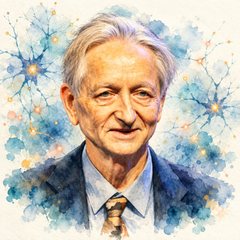 Geoffrey Hinton
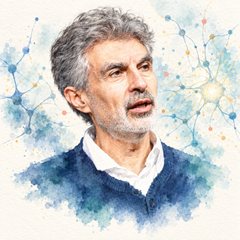 Yoshua Bengio
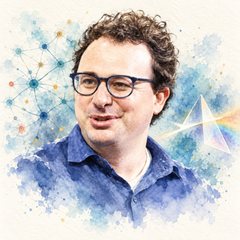 Dario Amodei
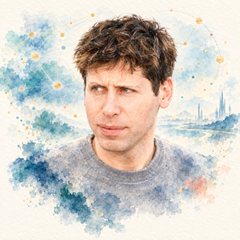 Sam Altman
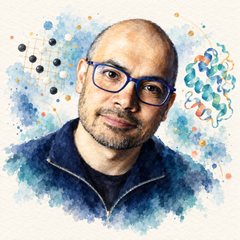 Demis Hassabis
Where it stands. Unresolved. LeCun and Andrew Ng remain the most prominent researchers rejecting the extinction framing, while Hinton and Bengio have moved further toward it, and each side treats the other's premise as the error. Source
Open-weight frontier models
Foundation models must be open so that no handful of companies controls what people see and know; openness is the safety mechanism, not the hazard.
Hinton said in February 2024 that "open-sourcing big models is like being able to buy nuclear weapons at Radio Shack" and urged regulators to close off the source of large models. In an October 2023 exchange on LeCun's Facebook page, Bengio argued for prudence and compared open-sourcing powerful systems to distributing dangerous weapons. The labs that Hassabis and Amodei run keep their frontier weights closed.
Where it stands. Meta's Llama models and others have shipped open weights near the frontier without the catastrophes critics predicted, which LeCun cites as vindication; critics reply that the dangerous capability threshold has not yet been reached. Source
Whether scaling language models leads to human-level AI
Autoregressive LLMs cannot reason or plan because they have no model of the world; scaling them will not close the gap, and the paradigm has a shelf life of a few years.
Dario Amodei has said that eyeballing the rate at which capabilities are increasing "does make you think that we'll get there by 2026 or 2027". Sam Altman has said superintelligence might arrive in "a few thousand days", on the assumption that scaled models with reasoning, tool use and multimodal input keep improving. They point to LLM-based systems that write code, pass professional exams and win mathematics olympiads, results LeCun himself concedes.
Where it stands. LeCun has narrowed the disagreement on timelines, saying in October 2024 that his "several years if not a decade" and Altman's "a few thousand days" were "not in disagreement", but the architectural bet is now being tested with a billion dollars on each side. Source
California SB 1047 and liability for frontier developers
The bill rested on an "illusion of existential risk" and its supporters had a "distorted view" of near-term capabilities born of inexperience and overestimates of their employers' lead; liability for downstream harms would chill open release.
Hinton and Bengio both supported the bill, co-signing an August 2024 letter that called it "the bare minimum for effective regulation of this technology"; both argue that developers of models costing more than $100 million to train can reasonably be asked to test for and guard against catastrophic capabilities before release.
Where it stands. Governor Newsom vetoed SB 1047 on 29 September 2024, saying it applied stringent standards to even basic functions regardless of deployment risk. Fei-Fei Li and Andrew Ng opposed the bill alongside LeCun; the fight has since moved to federal preemption and to the EU. Source
How new are the world-model ideas
The 2022 paper and AMI Labs represent a new research direction, distinct from generative AI, that the LLM-focused industry has neglected.
Gary Marcus wrote in September 2022 that "nobody has ever reprised my own arguments more closely than LeCun did yesterday, much less without attribution", arguing that the paper's calls for world models, common-sense reasoning and modular cognitive architecture restated critiques of deep learning that Marcus had published in 2018 and that LeCun had attacked at the time. Others note that video-prediction world models were studied at DeepMind and elsewhere years before JEPA, and that LeCun himself says the idea of learning from video prediction "is a very old one".
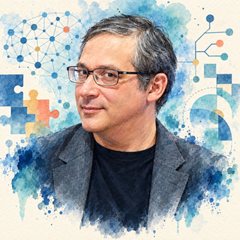 Gary Marcus
Where it stands. LeCun does not claim to have invented world models, only a specific non-generative architecture for learning them; the argument is about credit and about whether his earlier dismissals of critics were fair. Source
Notable works
| Title | Type | Year | Why it matters |
|---|---|---|---|
| Backpropagation applied to handwritten zip code recognition | paper | 1989 | First convolutional network trained end to end with backpropagation on real handwriting, using US Postal Service zip codes. |
| Optimal Brain Damage | paper | 1989 | With John Denker and Sara Solla; a second-derivative method for pruning network weights, presented at NIPS 1989. |
| Gradient-based learning applied to document recognition | paper | 1998 | With Bottou, Bengio and Haffner; describes LeNet-5, graph transformer networks and the deployed check-reading system. |
| The MNIST database of handwritten digits | product | 1998 | With Corinna Cortes and Christopher Burges; 60,000 training and 10,000 test images that became the standard first benchmark. |
| Deep learning | paper | 2015 | Nature review with Bengio and Hinton; more than 84,000 citations in the OpenAlex index. |
| L'apprentissage profond: une révolution en intelligence artificielle | talk | 2016 | Inaugural lecture of his 2015-16 annual chair at the Collège de France, delivered in French in February 2016. |
| A Path Towards Autonomous Machine Intelligence | paper | 2022 | 60-page position paper setting out world models, hierarchical planning and JEPA as the route to human-level AI. |
| Testimony to the US Senate Select Committee on Intelligence | essay | 2023 | Written statement of 19 September 2023 arguing that AI should be developed openly and that LLM fluency is not intelligence. |
| I-JEPA | product | 2023 | Meta's first model built on the Joint Embedding Predictive Architecture, released June 2023. |
| Lex Fridman Podcast #416: Meta AI, Open Source, Limits of LLMs, AGI and the Future of AI | podcast | 2024 | Nearly three hours on why autoregressive LLMs cannot reach human-level intelligence, JEPA, open source and "doomers". |
| V-JEPA 2 | product | 2025 | 1.2-billion-parameter video world model trained on over a million hours of video, released June 2025 with zero-shot robot planning results. |
| LeJEPA: Provable and Scalable Self-Supervised Learning Without the Heuristics | paper | 2025 | With Randall Balestriero; replaces JEPA's stop-gradient and teacher-student tricks with a single isotropic Gaussian regulariser. |
Where to start
A short path into Yann's work, in order.
-
1
TIME interview, "Meta's AI Chief Yann LeCun on AGI, Open-Source, and AI Risk"interview
The clearest 15-minute statement of all three of his public positions in his own words, from February 2024, including "preposterous" and "the future has to be open source".
-
2
MIT Technology Review, "Yann LeCun's new venture is a contrarian bet against large language models"interview
The January 2026 interview in which he explains AMI Labs, why it is in Paris, what JEPA is and what went wrong at Meta; the best single account of where he stands now, about 20 minutes.
-
3
Lex Fridman Podcast #416podcast
Nearly three hours in which he works through the argument against autoregressive LLMs step by step, explains JEPA on a whiteboard in words, and defends open source; the transcript is searchable by timestamp.
-
4
A Path Towards Autonomous Machine Intelligencepaper
The 2022 position paper is the primary source for everything AMI Labs is doing; readable without heavy mathematics in an afternoon, and the diagrams of the architecture are the ones he still uses in talks.
-
5
Testimony to the US Senate Select Committee on Intelligenceessay
Eight pages from September 2023 that lay out the open-source policy case in the register he uses with lawmakers, with the Linux and internet analogies; ten minutes.
-
6
Gradient-based learning applied to document recognitionpaper
The 1998 LeNet-5 paper is long, but the first ten pages explain convolutional networks from first principles and describe the deployed check-reading system; essential for understanding why he has the standing to be contrarian.
Misconceptions
LeCun is the CEO of AMI Labs.
He is executive chairman and has said explicitly that he is "executive chairman, not its CEO"; Alexandre LeBrun, a former FAIR colleague and co-founder of Nabla, is CEO, and LeCun continues to teach and supervise students at NYU. Source
LeCun thinks large language models are useless or a dead end for everyone.
He calls them useful, says companies should invest in them and that a lot of people will use them; his claim is narrower, that they are not a path to human-level intelligence and that they crowd out funding for alternatives. Source
LeCun believes AI is not dangerous.
He rejects extinction-level risk, but at Brown in 2026 he described current LLMs as "intrinsically unsafe" and argues that world-model systems with "guardrail objectives" would, by construction, not knowingly produce dangerous actions; his disagreement with Hinton and Bengio is about which risks are real and how to address them. Source
LeCun invented backpropagation.
His 1987 thesis arrived at a form of it independently, but Rumelhart, Hinton and Williams published the version the field adopted in 1986 and others derived it earlier; the Turing citation credits him with improving and applying it, above all through convolutional networks. Source
Awards
- IEEE Neural Network Pioneer Award
- Member, US National Academy of Engineering Elected "for developing convolutional neural networks and their applications in computer vision and other areas of artificial intelligence".
- ACM A.M. Turing Award Shared with Geoffrey Hinton and Yoshua Bengio "for conceptual and engineering breakthroughs that have made deep neural networks a critical component of computing"; announced in March 2019.
- AAAI Fellow
- Member, US National Academy of Sciences
- Princess of Asturias Award for Technical and Scientific Research Shared with Geoffrey Hinton, Yoshua Bengio and Demis Hassabis.
- Chevalier of the Légion d'honneur
- VinFuture Grand Prize Shared with Yoshua Bengio, Geoffrey Hinton, Jensen Huang and Fei-Fei Li.
- Queen Elizabeth Prize for Engineering Shared with Yoshua Bengio, Bill Dally, Geoffrey Hinton, John Hopfield, Jensen Huang and Fei-Fei Li for contributions to modern machine learning.
Quotes
"They can't really reason. They can't plan anything other than things they've been trained on."
"I think people are fundamentally good and in fact, a lot of doomers are doomers because they don't think that people are fundamentally good."
"The language fluency of LLMs may suggest human-level intelligence, but it is far from that."
"I think the shelf life of the current [LLM] paradigm is fairly short, probably three to five years."
"Right now, they are sucking the air out of the room anywhere they go"
"People have had this illusion, or delusion, that it is a matter of time until we can scale them up to having human-level intelligence, and that is simply false."
"But where is my domestic robot? Where is my robot that can clean the house, learn to drive in 20 hours of practice?"
Related leaders
-
Geoffrey Hinton
Postdoctoral adviser in Toronto in 1987-88, director of the CIFAR program LeCun joined as a founding member in 2004, and co-recipient of the 2018 Turing Award; they now disagree publicly on existential risk, open-weight models and SB 1047.
-
Yoshua Bengio
Colleague at Bell Labs and co-author of the 1998 LeNet-5 paper and the 2015 Nature review; co-founded ICLR and co-directs the CIFAR program with him, shares the Turing Award, and has debated him repeatedly on AI safety since 2023.
-
Fei-Fei Li
Co-laureate of the 2024 VinFuture Prize and 2025 Queen Elizabeth Prize; both opposed SB 1047 and both left big-tech roles to found startups building world models.
-
Demis Hassabis
Co-laureate of the 2022 Princess of Asturias Award; runs a closed-weights frontier lab whose scaling strategy LeCun disputes.
-
Andrew Ng
Fellow opponent of SB 1047 and of the extinction-risk framing; neither signed the 2023 Center for AI Safety statement.
-
Sam Altman
Public sparring partner on timelines; in October 2024 LeCun said his "several years if not a decade" and Altman's "a few thousand days" were not in disagreement.
-
Dario Amodei
Opposite poles of the scaling debate; Amodei expects human-level capability from scaled models by 2026-27, LeCun says scaling LLMs cannot get there, and in September 2026 he mocked Amodei's "pace the frontier" essay as a repeat of the 2019 claim that GPT-2 was too dangerous to release.
-
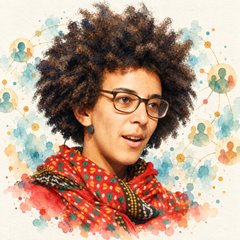
Timnit Gebru
Their June 2020 exchange on Twitter over whether bias in machine learning is only a data problem ended with LeCun leaving the platform; they remain opposed on that question and agree, from different directions, that extinction risk is overstated.
-
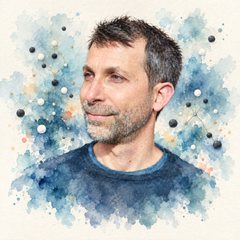
David Silver
Agrees that scaling language models will not reach human-level intelligence but disagrees on method; LeCun's 2016 "cake" analogy makes reinforcement learning the cherry on top, while Silver's Ineffable Intelligence bets on it as the foundation.
-
Gary Marcus
His longest-running critic; LeCun told ZDNet in 2022 that Marcus "is not an AI person," and Marcus says LeCun's world-model program restates his 2018 critique of deep learning without credit.
-
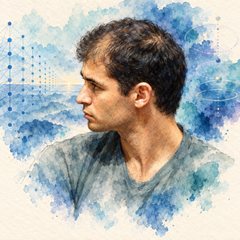
Ilya Sutskever
LeCun answered "Nope" to his February 2022 post that large neural networks may be "slightly conscious," and opposes both the scaling thesis Sutskever championed at OpenAI and his 2023 case against open-sourcing powerful models.
-
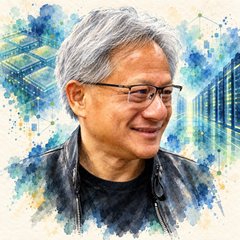
Jensen Huang
Co-laureate of the 2024 VinFuture Prize and 2025 Queen Elizabeth Prize; NVIDIA invested in AMI Labs' March 2026 seed round, and both oppose restrictions on open-weight models.
-
Mustafa Suleyman
Argues against releasing the weights of each new generation of frontier models, the practice LeCun defends as safer than concentrating AI in a few companies.
Details and links
Organizations
Education
- Diplôme d'Ingénieur (Electrical Engineering)ESIEE Paris, 1983
- PhD in Computer ScienceUniversité Pierre et Marie Curie (now Sorbonne Université), 1987
- Postdoctoral fellow (with Geoffrey Hinton)University of Toronto, 1988
Affiliations
- AMI Labs, Advanced Machine Intelligence (Co-founder and Executive Chairman, 2025-)
- New York University, Courant Institute (Jacob T. Schwartz Professor of Computer Science, Data Science, Neural Science, and Electrical and Computer Engineering; faculty since 2003)
- NYU Center for Data Science (Founding Director, 2013)
- Meta / Facebook (Founding Director of FAIR 2013-2018; Vice President and Chief AI Scientist 2018-2025)
- AT&T Bell Labs (1988-1996) and AT&T Labs-Research (Head, Image Processing Research Department, 1996-2002)
- NEC Research Institute (Fellow, 2002-2003)
- CIFAR Learning in Machines & Brains program (Co-director with Yoshua Bengio, 2014-)
- International Conference on Learning Representations, ICLR (Co-founder, 2012)
- Partnership on AI (Founding board member for Facebook, 2016)
- Logical Intelligence (Founding Chair, Technical Research Board, 2026-)
- Collège de France (Annual chair in computer science, 2015-16)
- Académie des sciences, France (Member)
Sources
- Yann LeCun - A.M. Turing Award Laureate biography, ACM (archived)
- Yann LeCun's home page, NYU (titles and affiliations)
- Yann LeCun - Wikipedia
- Testimony of Yann LeCun, US Senate Select Committee on Intelligence (19 September 2023)
- Meta's AI Chief Yann LeCun on AGI, Open-Source, and AI Risk - TIME (February 2024)
- Lex Fridman Podcast #416 transcript - Yann LeCun (March 2024)
- Yann LeCun on X on human-level AI timelines (October 2024)
- Meta's Yann LeCun predicts a new AI architectures paradigm within 5 years - TechCrunch (January 2025)
- Introducing the V-JEPA 2 world model - Meta AI blog (June 2025)
- I-JEPA, the first AI model based on Yann LeCun's vision - Meta AI blog (June 2023)
- LeJEPA: Provable and Scalable Self-Supervised Learning Without the Heuristics - arXiv (November 2025)
- Meta chief AI scientist Yann LeCun is leaving to create his own startup - CNBC (19 November 2025)
- French 'godfather of AI' Yann LeCun confirms he is leaving Meta - Euronews (20 November 2025)
- Yann LeCun's AMI Labs seeks $3.5 billion valuation - Fortune (December 2025)
- Yann LeCun's new venture is a contrarian bet against large language models - MIT Technology Review (January 2026)
- Who's behind AMI Labs, Yann LeCun's world model startup - TechCrunch (January 2026)
- Yann LeCun joins Logical Intelligence as founding chair of research board - Business Today (January 2026)
- Yann LeCun's AMI Labs raises $1.03B to build world models - TechCrunch (March 2026)
- AMI Labs - Updates (official launch, 10 March 2026)
- AI pioneer Yann LeCun discusses new frontiers at Brown lecture - Brown Daily Herald (April 2026)
- stable-worldmodel: A Platform for Reproducible World Modeling Research - arXiv (May 2026)
- When Does LeJEPA Learn a World Model? - arXiv (May 2026)
- Yann LeCun - TIME100 AI 2026 (August 2026)
- ECCV 2026 invited talk - World Models, Enabling the next AI revolution (September 2026)
- 2025 Queen Elizabeth Prize for Engineering - Modern machine learning
- Yann LeCun - Computer Sciences and Digital Technologies annual chair, Collège de France
- Tech giants form Partnership on AI - NPR (September 2016)
- The ICLR experiment - KDnuggets (2016)
- The MNIST database of handwritten digits (archived 2020)
- Deep learning (Nature, 2015) - OpenAlex citation record
- Gov. Newsom vetoes California's controversial AI bill, SB 1047 - TechCrunch (September 2024)
- Yann LeCun on X on SB 1047 supporters' "distorted view" (September 2024)
- AI can't be slowed down, Hinton says in call to ban open-source models - The Logic (February 2024)
- Reasoning through arguments against taking AI safety seriously - Yoshua Bengio (July 2024)
- Lex Fridman Podcast #452 transcript - Dario Amodei (November 2024)
- How new are Yann LeCun's "new" ideas? - Gary Marcus (September 2022)
- AI pioneers Yann LeCun and Yoshua Bengio clash in an online debate over AI safety - VentureBeat (October 2023, archived)
- Yann LeCun Quits Twitter Amid Acrimonious Exchanges on AI Bias - Synced (June 2020)
- The Cake that is Intelligence and Who Gets to Bake it - arXiv (February 2025, on LeCun's cake analogy)
- Yann LeCun Mocks Dario Amodei's AI Safety Warning - AI Front Page (14 September 2026, quoting LeCun's X post of 13 September)
Reading this to shape your organization's AI plans? Through EMX, I help leadership teams decide where AI fits, what to ignore, and what to build next—using the same vendor-neutral research behind this profile. Put the research to work