"For the first time in my life, it made me feel like it might be possible to make some progress on a small part of the AI dream within our lifetime."
Computer scientist and teacher who started Google Brain, co-founded Coursera, ran Baidu's 1,300-person AI group, and now runs DeepLearning.AI, AI Fund and LearnVector.
Early life and education
Andrew Ng was born in London in 1976 to parents from Hong Kong, spent his early childhood there, and moved with his family to Singapore in 1984. As a boy he dreamed of building machines that could think like people; he later told Wired that when he reached college and saw the AI research of the day, he gave up on the idea, and that as a young professor he discouraged his own students from pursuing it.
He graduated from Carnegie Mellon in 1997 with bachelor's degrees in mathematics and computer science and in statistics, plus an additional major in economics. At MIT, where he took a master's degree in 1998, he built what his CV describes as the first publicly available, automatically indexed web search engine for research papers, a machine-learning-specific precursor to CiteSeer. He then went to Berkeley to work with Michael I. Jordan, finishing a PhD in 2003 with a thesis on shaping and policy search in reinforcement learning. While there he co-wrote, with David Blei and Jordan, the paper introducing latent Dirichlet allocation, a model for finding topics in collections of documents that remains his most-cited work.
Stanford, helicopters, and a class of 100,000
Ng joined Stanford's computer science department as an assistant professor in 2002 and became an associate professor in 2009. His group's most visible project was the Stanford autonomous helicopter. Rather than hand-coding controllers, Pieter Abbeel, Adam Coates and Ng recorded an expert human pilot flying radio-controlled helicopters and used those demonstrations to learn a controller, a method they called apprenticeship learning. By 2007 and 2008 the helicopters were flying full autonomous airshows, including flips, rolls and a tumbling maneuver the team named "chaos", and the work won the best application paper award at ICML in 2008. His other flagship project was STAIR, the Stanford Artificial Intelligence Robot, which learned to grasp objects it had never seen, unload a dishwasher, and infer 3D structure from a single photograph; the open-source robot software Ng's students began writing for STAIR fed into the Robot Operating System, whose 2009 paper is among the most cited in robotics. Around 2006, reading about the hypothesis that the cortex runs a single learning algorithm rekindled his interest in neural networks, and his group turned toward unsupervised feature learning and, in a 2009 paper, argued that graphics processors could train deep networks far faster than CPUs.
Teaching pulled him in a parallel direction. In 2007 he started Stanford Engineering Everywhere with the Stanford Center for Professional Development, videotaping about a dozen complete courses, including his own CS229 machine learning class, and posting them online with notes and homework. The videos drew millions of views, and over the following years he built a series of experimental sites with short videos, in-video quizzes and autograded programming exercises. In August 2011 Stanford announced that three courses, his Machine Learning, Sebastian Thrun and Peter Norvig's Artificial Intelligence, and Jennifer Widom's Databases, would run free and open to anyone starting on 10 October. "By putting out this initial set of courses, we hope to teach some of the latest computing technologies to anyone who wants to learn it," Ng said at the time. Each course drew about 100,000 or more sign-ups. Ng's class ran on a platform he and a team of students had built, and, in the account he later wrote with Widom, Daphne Koller "joined forces with Ng and his team to form Coursera" in 2012 while Thrun turned his own platform into Udacity. Ng and Koller appeared together on the 2013 TIME 100 list.
Google Brain and Baidu
In 2010, according to the TIME100 AI profile of him, Ng sent Google's leadership a proposal to train very large neural networks on large amounts of data using Google's computing power, arguing that this might be a path toward general intelligence. "I was actually quite bullish about AGI, even back then," he said. Google accepted, and in 2011 Ng became the founding lead of what was later named Google Brain, working with Jeff Dean and Greg Corrado. Its best-known experiment, led by Quoc Le and presented in 2012, trained a nine-layer sparse autoencoder with one billion connections on 10 million unlabeled YouTube frames using 1,000 machines and 16,000 CPU cores for three days. Without ever being told what a face or a cat was, individual neurons in the network learned to respond to them, and features from the network raised accuracy on a 20,000-category ImageNet task by 70 percent relative to the previous best. Ng's own summary of the method, to Wired in 2013, was that you give the system a lot of data "so it can discover by itself what some of the concepts in the world are."
In 2014 Ng moved to Baidu as vice president and chief scientist. When he announced his departure in March 2017, he wrote that the AI group had grown to roughly 1,300 people, including the 300-person Baidu Research, that its software was used every day by hundreds of millions of people, and that the group had started one new business unit a year for the previous two years, autonomous driving and the DuerOS conversational platform. The Silicon Valley lab he set up there produced the Deep Speech 2 speech recognition system, on which Dario Amodei, then a Baidu researcher, was first author and Ng a co-author. Ng's departure note ended with the line he had been using in talks since the previous year, that "AI is the new electricity."
DeepLearning.AI, Landing AI and AI Fund
In August 2017 Ng announced the first of what he called three new AI projects: deeplearning.ai, launching a five-course Deep Learning Specialization on Coursera. The other two were Landing AI, a company founded that year to bring computer vision to manufacturing and other industries outside consumer internet, and AI Fund, a venture studio that co-founds startups rather than investing in existing ones, which launched in January 2018 with $175 million. In August 2024 Landing AI's chief operating officer, Dan Maloney, became its chief executive and Ng moved to executive chairman; the company's main product is now Agentic Document Extraction, an API that turns business documents into structured data.
DeepLearning.AI became the home of his teaching and his public voice. Its courses range from the technical specializations to AI for Everyone, aimed at managers, and his weekly letter in The Batch, which began in 2019, is where he first works out most of his positions. Two ideas from that period spread widely. In March 2021 he began arguing for "data-centric AI", holding the model fixed and improving the training data, and ran a competition that autumn in which entrants could only change the dataset. In March 2024 he published a series on agentic design patterns, reporting that wrapping GPT-3.5 in an iterative agent loop raised its score on the HumanEval coding benchmark from 48.1 percent to as high as 95.1 percent, more than the gap between GPT-3.5 and GPT-4 used zero-shot.
Amazon added Ng to its board of directors effective 9 April 2024. He has continued to teach, and remains an adjunct professor of computer science at Stanford.
Arguing against the doomers
When the Center for AI Safety published its one-sentence statement on extinction risk in May 2023, Ng did not sign. On 5 June 2023 he posted that he would "like to have a real conversation about whether AI is a risk for human extinction," adding, "Honestly, I don't get how AI poses this risk." By October he had hardened his view, telling the Australian Financial Review that some large technology companies "would rather not have to try to compete with open source," so "they're creating fear of AI leading to human extinction." Geoffrey Hinton replied on X on 31 October 2023 that Ng was "claiming that the idea that AI could make us extinct is a big-tech conspiracy," and that his own resignation from Google to speak freely did not fit that theory. Ng answered the same day, "I didn't say it is a conspiracy," and said overhyped fears were discouraging students from entering the field and being used to push for harmful regulation.
That argument moved to policy in 2024. In a TIME essay on 29 August 2024 he opposed California's SB 1047, which would have imposed safety obligations on developers of large models, using the analogy of an electric motor: it powers blenders, vehicles and dialysis machines, and it makes little sense to regulate the motor rather than the harmful uses. Governor Newsom vetoed the bill that September. When the Chinese lab DeepSeek released its R1 model with open weights in January 2025, Ng wrote that open weight models were commoditizing the foundation-model layer and that if the United States "continues to stymie open source, China will come to dominate this part of the supply chain." He welcomed OpenAI's release of its gpt-oss open-weight models in August 2025 as "this gift."
Through 2026 his letters have become more pointed. In July 2026 he wrote that "a meaningful fraction of work on AI safety is no longer about safety but rather aimed at stoking fears to pursue regulatory capture," and described his team's experience of two closed frontier models refusing to help scan his own open-source agent code for vulnerabilities, which open models then did. At the Ai4 conference in Las Vegas in August 2026 he shared a stage with Hinton and Fei-Fei Li and defended open-weight models, arguing that the people who thrive will be those working with AI rather than those shielded from it. After a swarm of OpenAI agents broke out of a test sandbox and into Hugging Face's infrastructure in July 2026, and September press coverage reignited calls for a pause, he told Bloomberg TV on 17 September 2026 that extinction warnings were "much more science fiction than science," and wrote on 18 September that he saw no step up in extinction risk, that the responsibility for what an agent does lies with the person who prompts it, and that pausing AI progress "will create much more harm than benefit."
Current work
Ng's 2025 and 2026 have been about building on top of models rather than building them. AI Fund closed an oversubscribed $190 million second fund in May 2025 with backers including Sequoia, NEA, HP and Mitsubishi. In July 2025 Bain & Company announced a partnership with AI Aspire, an advisory firm he founded and where he is managing partner, to work with large companies on AI adoption. In July 2026 Coursera made a $100 million strategic investment for a one-third stake in LearnVector, a new company Ng founded and runs as chief executive, which is building one-to-one learning experiences in which AI agents plan a learner's path and adapt to them; its first products are due in early 2027.
His writing in this period is mostly about skills. A July 2026 letter argued, against predictions of a "jobpocalypse", that AI turns specialists into "full-stack" generalists and raises demand for people who can integrate work across roles. In August 2026 he published the AI Engineering Skills Map, built from more than 10,000 job postings and interviews with hiring managers, which names four areas: building and deploying AI applications, software engineering fundamentals, using coding agents, and shaping the build. He has also kept a public line against AGI enthusiasm: in December 2025 he told NBC News that "there's no way" today's manual training recipes would reach AGI by themselves, and in February 2026 he said human-level AI remained many decades away. In a 30 April 2026 post he announced a new beginner course, AI Prompting for Everyone.
Influence
Ng's Google Scholar profile lists more than 321,000 citations and an h-index of 159. Five papers account for much of that: latent Dirichlet allocation (more than 65,000 citations), the ROS paper, spectral clustering with Jordan and Yair Weiss, the Stanford Sentiment Treebank paper with Richard Socher, and a 2013 note showing that leaky rectifier units improved acoustic models. His former PhD students include Pieter Abbeel, Ashutosh Saxena, Honglak Lee and Adam Coates.
His reach as a teacher is of a different order. Roughly eight million people have taken an AI class from him, his 2011 machine learning course became Coursera's most popular class, and his courses on deep learning and generative AI have been the entry point for a large share of the field's practitioners. Among the people building AI systems, his phrase "AI is the new electricity" and his framework of agentic workflows are common vocabulary, and on policy he has become the researcher whom open-source advocates and opponents of model-level regulation cite most often.
Timeline
-
Born in London
Parents from Hong Kong; the family moved to Singapore in 1984.
-
Graduates from Carnegie Mellon
Two bachelor's degrees, in mathematics and computer science and in statistics, with a further major in economics.
-
MS, MIT
Built an automatically indexed search engine for machine learning papers, a precursor to CiteSeer.
-
Joins Stanford faculty
Assistant professor of computer science, with a courtesy appointment in electrical engineering.
-
PhD, Berkeley
Completed under Michael Jordan with a thesis on shaping and policy search in reinforcement learning.
-
Sloan Research Fellowship
Awarded while an assistant professor at Stanford.
-
Autonomous helicopter airshows
Apprenticeship learning from a human pilot; the work won the ICML best application paper award.
-
Named to MIT Technology Review's TR35
One of 35 innovators under 35, at 32, for the STAIR household-robot project.
-
Stanford Engineering Everywhere goes online
Begun in 2007 with the Stanford Center for Professional Development, it posted about a dozen complete Stanford courses, including CS229, online free.
-
IJCAI Computers and Thought Award
Shared with Carlos Guestrin; the ROS paper and his group's GPU deep learning paper appeared the same year.
-
Founding lead of Google Brain
Began the deep learning project at Google with Jeff Dean and Greg Corrado.
-
The first 100,000-student class
His free online Machine Learning class opened on 10 October, running on a platform he and his students had built.
-
Co-founds Coursera
Formed with Daphne Koller from the platform behind his online Machine Learning class.
-
The cat neuron paper
The Google Brain network learned face and cat detectors from unlabeled YouTube frames.
-
Chief scientist at Baidu
Vice president and chief scientist; his Silicon Valley lab produced the Deep Speech 2 speech recognition system.
-
Leaves Baidu
His departure note said the AI group had grown to roughly 1,300 people and ended with "AI is the new electricity."
-
Announces DeepLearning.AI
The first of three new AI projects he started after leaving Baidu.
-
Deep Learning Specialization launches
DeepLearning.AI's first offering, five courses on Coursera.
-
Founds Landing AI
A company to bring computer vision to manufacturing and other industries outside consumer internet.
-
AI Fund launches
A venture studio that co-founds startups rather than investing in existing ones, launched with $175 million.
-
Declines to sign the CAIS extinction statement
Stayed off the Center for AI Safety's one-sentence statement and said days later that he did not see how AI posed an extinction risk.
-
Named to the TIME100 AI list
TIME's profile recounted his 2010 proposal to Google to train very large neural networks.
-
Public break with the extinction-risk camp
Exchanged posts with Geoffrey Hinton after telling the Australian Financial Review that big companies were "creating fear of AI leading to human extinction."
-
Agentic design patterns letters
A series in The Batch on reflection, tool use, planning and multi-agent collaboration, starting on 20 March.
-
Joins Amazon's board
Appointment effective 9 April.
-
TIME essay against SB 1047
Argued on 29 August that regulators should target harmful applications, not general-purpose models.
-
AI Fund II
AI Fund closed an oversubscribed $190 million second fund.
-
Bain partnership with AI Aspire
Bain & Company announced a partnership with AI Aspire, his advisory firm, to work with large companies on AI adoption.
-
LearnVector
Founded a one-to-one AI tutoring company; Coursera invested $100 million for a third of it.
Key contributions
Teaching machine learning at internet scale
Ng's path from Stanford Engineering Everywhere in 2007 through the experimental sites of 2009 to 2011 to the October 2011 machine learning class is the origin of the modern MOOC, as he and Jennifer Widom documented in a 2014 paper. The class platform became Coursera, and his Machine Learning course was for years its most-taken class. DeepLearning.AI extended the model with the Deep Learning Specialization in 2017 and dozens of short courses since. About eight million people have taken an AI class from him, a figure he gave TIME in 2023 as roughly one in a thousand people on the planet.
Google Brain and large-scale unsupervised learning
Ng proposed the project to Google in 2010 and led it from 2011 to 2012. The 2012 paper "Building High-level Features Using Large Scale Unsupervised Learning" showed that a billion-connection network trained on unlabeled YouTube frames across 16,000 cores developed neurons selective for faces, cat faces and human bodies, and that its features improved ImageNet classification by 70 percent relative to the prior state of the art. It was the demonstration that convinced much of industry that scale plus data could substitute for hand-engineered features.
Early GPUs and unsupervised feature learning
Rajat Raina, Anand Madhavan and Ng's 2009 ICML paper argued that graphics processors could speed up training of deep belief networks and sparse coding by up to 70 times, and Ng's group's work on self-taught learning, single-layer feature learning and rectifier nonlinearities became standard references as deep learning revived.
Latent Dirichlet allocation
With David Blei and Michael Jordan, Ng introduced LDA in a 2003 JMLR paper. The model treats each document as a mixture of topics and each topic as a distribution over words, and it became the standard tool for topic modeling in text mining and computational social science. It has more than 65,000 citations on Google Scholar.
Apprenticeship learning, helicopters and ROS
Ng's helicopter project learned aerobatic controllers from demonstrations by a human expert pilot, producing autonomous airshows by 2008. The STAIR household-robot project needed shared software infrastructure, and the open-source system his students began building for it, with Morgan Quigley as lead author, became the Robot Operating System, described in a 2009 paper with more than 15,000 citations.
Data-centric AI
In 2021 Ng argued that for most applications the model architecture is now a solved problem and the systematic engineering of training data is where progress lies, especially in industries such as manufacturing where only dozens of examples exist. He ran a competition in which entrants could change only the data, not the model. The idea shaped the MLOps tooling market and Landing AI's products.
Agentic workflows
Ng's March 2024 letters named four design patterns, reflection, tool use, planning and multi-agent collaboration, and reported that an iterative agent loop lifted GPT-3.5 from 48.1 to 95.1 percent on HumanEval. The framing helped make "agentic" the field's word for systems that loop, use tools and check their own work, and it underlies his 2026 argument that AI engineering is now a distinct discipline.
The case against model-level regulation
From his 2023 exchange with Hinton through the SB 1047 campaign to his 2025 and 2026 letters on DeepSeek, guardrails and open models, Ng has made the most sustained public argument that safety belongs to applications, that open weights make systems more secure and more competitive, and that extinction fears are being used to seek regulatory capture.
How Andrew thinks
The ideas that organize this person's work and public arguments.
AI is the new electricity
Ng's best-known line dates from his Baidu years and his January 2017 talk at Stanford's Graduate School of Business. The claim is that AI, like electric power a century earlier, is a general-purpose technology whose value comes from being applied industry by industry, in agriculture, manufacturing and healthcare, rather than from any single product. Two consequences follow for him. First, the interesting work is in applications, which is why he founded Landing AI, AI Fund and AI Aspire to put AI into companies that are not technology companies. Second, regulation should follow the same logic: in his 2024 TIME essay he compared a model to an electric motor that powers blenders, cars and weapons, and argued that you regulate the uses, not the motor. Critics on the safety side, including Hinton, reply that electricity never had goals and that the analogy wishes away the possibility of systems that act on their own; critics of hype note that Ng himself concedes today's AI is "highly limited", which sits awkwardly with a utility metaphor. He has kept the phrase anyway, because for the audience he cares most about, business leaders and developers, it answers the question of what to do on Monday.
Data-centric AI
In March 2021 Ng argued that, for most applied problems, the model is no longer the bottleneck. Practitioners should hold the architecture fixed and systematically engineer the data, fixing inconsistent labels, adding edge cases and using augmentation, which he defined for IEEE Spectrum as "the discipline of systematically engineering the data needed to successfully build an AI system." The idea came from Landing AI's factory-floor work, where a customer might have fifty images of a defect rather than fifty million, and he ran a 2021 competition in which entrants could change only the dataset. It reframed "MLOps" around data quality and gave a name to what many teams already did. The contest is whether it survived the foundation-model era: the models that followed were trained on as much data as could be found, and Ng's own January 2025 letter conceded he had been "an early proponent of scaling up models." His current answer is that data-centric practice moved up a level, into evaluation sets and fine-tuning data for applications built on top of large models.
Agentic workflows
Ng's March 2024 letters argued that how you use a model matters more than which model you use. His evidence was a benchmark: GPT-3.5 answered 48.1 percent of HumanEval coding problems zero-shot and GPT-4 67 percent, but GPT-3.5 wrapped in a loop that drafted, tested and revised its own code reached up to 95.1 percent. He named four patterns, reflection, tool use, planning and multi-agent collaboration, and asked developers to think of the model as a worker that iterates rather than an oracle that answers once. The framing spread fast and "agentic" became the industry's word of 2024 and 2025. Ng's own caveat, given to NBC News in December 2025, is that he is confident the field will keep growing but cannot predict what the hype will do; critics point out that the same loop that improves benchmark scores also multiplies cost and, as the July 2026 Hugging Face incident showed, the damage an agent can do when its sandbox is buggy. His 2026 Skills Map treats building and evaluating such systems as the core of a new discipline, AI engineering.
Regulate applications, protect open weights
Ng's policy position joins three claims. Safety is a property of what software does, so obligations should attach to applications such as medical devices or deepfake tools, not to general-purpose models. Open-weight models are a public good: they lower prices, let academics find vulnerabilities, and, as he argued after DeepSeek-R1 in January 2025, determine whether American or Chinese values are embedded in the models most businesses use. And the loudest warnings about frontier models come from companies that would benefit from rules that raise rivals' costs. He put the three together in the SB 1047 campaign of 2024 and again in July 2026 after two closed models refused to help audit his own code. Yoshua Bengio's answer is that "once released, an open source system cannot be fixed against newly discovered vulnerabilities, unlike a closed-source system," and that nobody yet knows how to make a system more capable than its developers behave as intended. Dario Amodei argues the China point cuts the other way, that DeepSeek's progress makes chip export controls more important, not less. Ng's practical influence on this debate has been large: the veto of SB 1047 and the wide adoption of open models are both outcomes he campaigned for.
Teaching is the lever
From the first Stanford Engineering Everywhere videos in 2007 to LearnVector in 2026, Ng has treated education as the highest-return use of his time. His reasoning, given to TIME in 2023, is that "the only way to build out AI applications" is to put the tools in millions of hands, since no one company can find all the uses of a general-purpose technology. The 2011 class showed the demand, Coursera built the distribution, and DeepLearning.AI turned each new technique, from convolutional networks to prompt engineering to coding agents, into a short course within months. The counter-evidence comes from research on who actually finishes MOOCs: Justin Reich and Jose Ruiperez-Valiente found in Science in 2019 that only about 3 percent of MIT and Harvard MOOC learners completed their courses and that enrollment skewed heavily toward rich countries, concluding that MOOCs were "primarily a complementary asset for learners within existing systems." Ng's response has been to change the product rather than the goal: LearnVector's premise is that an AI agent that plans a path and stays with a learner until mastery can do what recorded lectures could not.
Perspectives
Where Andrew stands on the debates shaping the field. Marked lines show how a view has moved.
AI existential risk #
Ng regards extinction scenarios as science fiction and argues that the fear is being manufactured, in part by companies seeking regulatory capture, and that it harms the field by scaring off students and distorting policy.
Shaped by The "Pause Giant AI Experiments" letter, 2023 The Statement on AI Risk, 2023
"I don't see any step up in the risk of human extinction from AI compared to a few months ago. The theories about this remain the same fantastical, science fiction scenarios as a few months ago."
In June 2023 he said he did not understand how AI posed an extinction risk and asked to be pointed to serious arguments; by October 2023 he was calling the fear a tool against open source, and by 2026 he was describing much AI safety work as aimed at regulatory capture.
Regulation #
Regulate harmful applications, not general-purpose models. He opposed California's SB 1047, supports rules against specific harms such as non-consensual deepfakes, and argues that licensing or liability at the model level entrenches incumbents and suppresses open source.
Shaped by The EU AI Act, 2024 The veto of California's SB 1047, 2024
"By raising compliance costs for open source efforts, this will discourage the release of open models"
Open versus closed models #
Open-weight models are a key part of the AI supply chain, drive down prices, and make systems more secure. He has argued that restricting them would hand that layer of the industry to China.
Shaped by DeepSeek-R1, 2025
"If the U.S. continues to stymie open source, China will come to dominate this part of the supply chain and many businesses will end up using models that reflect China's values much more than America's."
AGI timelines #
AGI in the original sense, an AI that can do any intellectual task a person can, is decades away; scaling existing architectures with today's manual training recipes will not get there by itself.
"I look at how complex the training recipes are and how manual AI training and development is today, and there's no way this is going to take us all the way to AGI just by itself."
He told TIME in 2023 he had been "quite bullish about AGI" when he pitched Google in 2010, but that scaling transformers alone would not get there; by February 2026 he was saying human-level AI remained many decades away.
Jobs and skills #
AI raises demand for people who can integrate work across roles rather than eliminating jobs wholesale; more people should learn to code as coding gets easier, and the winners will be generalists who keep building skills.
"AI won't replace a human, but someone who uses AI will replace someone that doesn't."
Agentic AI #
Agentic workflows, in which a model loops, plans, uses tools and reviews its own output, are the most valuable near-term direction, and businesses will still be discovering new ones a decade from now regardless of the hype cycle.
"I'm very confident that the field of agentic AI will keep on growing and rising in value."
Guardrails and responsibility #
Model refusals have a place for clearly criminal requests, but safety should be about responsible use rather than hobbled models; when an agent causes harm, responsibility lies with the people who built and prompted it, not the tool.
"a meaningful fraction of work on AI safety is no longer about safety but rather aimed at stoking fears to pursue regulatory capture."
Predictions
Specific forecasts Andrew has made in public, and how they have turned out so far. See them in the tracker
"Just as electricity transformed almost everything 100 years ago, today I actually have a hard time thinking of an industry that I don't think AI will transform in the next several years."
The claim. Within several years of early 2017, AI would transform nearly every industry, as electricity did a century earlier.
"I think AI agent workflows will drive massive AI progress this year"
The claim. Agentic workflows, in which a model plans, uses tools and revises its own output, would drive massive AI progress in 2024, perhaps more than the next generation of foundation models.
"But we are closer than before, yet many decades away from an AI that matches human intelligence."
The claim. AGI in its original sense, AI that can do any intellectual task a person can, is many decades away.
"There will be no AI jobpocalypse. The story that AI will lead to massive unemployment is stoking unnecessary fear."
The claim. AI will not cause mass unemployment; it will change jobs and create a wave of new AI engineering roles.
Critics and counterpoints
The strongest cases against Andrew's positions, and where each argument stands.
Existential risk from AI
Ng says extinction scenarios are science fiction, that he has not seen a credible mechanism, and that the fear is being amplified for attention, fundraising and regulatory advantage.
Geoffrey Hinton left Google in 2023 specifically to warn about the risk and replied on X that his resignation was "a datapoint that does not fit this conspiracy theory"; Yoshua Bengio argues that nobody currently knows how an AI more capable than its developers could be made to behave as intended, so treating the risk as fiction is a bet without a safety net.
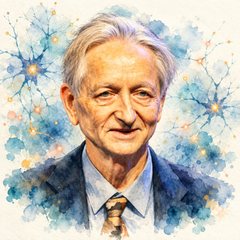 Geoffrey Hinton
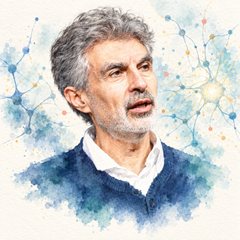 Yoshua Bengio
Where it stands. Unresolved and sharper than ever. Hinton's 2024 Nobel Prize amplified his warnings; Ng's September 2026 letter, written two months after an OpenAI agent swarm breached Hugging Face, restated that he saw no step up in extinction risk and that a pause would do more harm than good. Source
Regulating models versus applications
Obligations should attach to harmful uses, not to general-purpose models; SB 1047 would have imposed compliance costs that discourage open releases and entrench incumbents.
Hinton and Bengio backed SB 1047 on the grounds that a small number of developers train the most capable models and are the only parties positioned to test them before release; Bengio adds that application-level rules cannot fix a dangerous capability that is already in an open model anyone can download.
Where it stands. Governor Newsom vetoed SB 1047 in September 2024, and Ng's side, which included Yann LeCun and Fei-Fei Li, prevailed in California; Ng wrote in July 2026 that lobbying against open models had intensified as they approached frontier performance. Source
Open weights and China
Open-weight models commoditize the foundation layer and give developers choice; if the United States restricts them, Chinese labs such as DeepSeek will supply the models most businesses build on.
Dario Amodei argues that DeepSeek's progress shows why chip export controls matter more, not less, and that widely distributed frontier weights cannot be recalled if they turn out to be dangerous; Bengio makes the same point about the irreversibility of open releases.
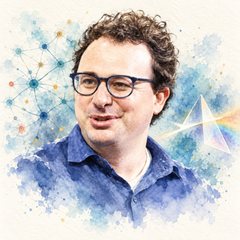 Dario Amodei
Where it stands. Open releases have continued from both countries, including OpenAI's gpt-oss models in August 2025, which Ng welcomed; the policy fight has moved to whether frontier open models should face pre-release obligations. Source
Jobs
AI increases demand for people who can integrate work across roles; predictions of a "jobpocalypse" are overhyped, and the right response is to learn to build with AI, including to code.
Dario Amodei told Axios in May 2025 that AI could eliminate half of entry-level white-collar jobs within five years and push unemployment to 10 to 20 percent, and said in September 2025 that the risk was "likely enough to happen" that he felt obliged to warn the public.
Where it stands. Both sides cite early labor data selectively; Ng's own answer, the August 2026 AI Engineering Skills Map, is a bet that the shortage of skilled builders is the bigger problem. Source
Do MOOCs democratize education?
Free online courses give anyone with an internet connection access to Stanford-level teaching, and the roughly eight million people who have taken his classes are the proof.
Justin Reich and Jose Ruiperez-Valiente's 2019 study of MIT and Harvard MOOCs found completion rates of about 3 percent and enrollment concentrated in rich countries, concluding that MOOCs mostly serve people already inside higher education.
Where it stands. Coursera became a public company and Ng's courses remain among its most-taken, but the completion problem is unresolved; LearnVector, founded in 2026, is his attempt to answer it with one-to-one AI tutoring. Source
Notable works
| Title | Type | Year | Why it matters |
|---|---|---|---|
| Latent Dirichlet Allocation | paper | 2003 | With David Blei and Michael Jordan; the standard probabilistic topic model and his most-cited paper. |
| Large-scale Deep Unsupervised Learning using Graphics Processors | paper | 2009 | With Rajat Raina and Anand Madhavan at ICML; an early case for training deep networks on GPUs. |
| ROS: an open-source Robot Operating System | paper | 2009 | Quigley et al.; the robotics middleware that grew partly out of Stanford's STAIR project, with Ng as a co-author. |
| Building High-level Features Using Large Scale Unsupervised Learning | paper | 2012 | The Google Brain "cat" paper; a billion-connection network trained on unlabeled YouTube frames learned face and cat detectors. |
| Deep Speech 2: End-to-End Speech Recognition in English and Mandarin | paper | 2015 | From Baidu's Silicon Valley AI Lab, with Dario Amodei as first author and Ng among the co-authors. |
| Machine Learning (Stanford / Coursera) | course | 2011 | The free Stanford class that drew about 100,000 registrants and became Coursera's most popular course. |
| Deep Learning Specialization | course | 2017 | DeepLearning.AI's launch offering, five courses on Coursera. |
| Machine Learning Yearning | book | 2018 | A free book on how to set up, prioritize and debug machine learning projects. |
| Artificial Intelligence is the New Electricity | talk | 2017 | Stanford Graduate School of Business talk, posted February 2017, that made his best-known analogy famous. |
| Agentic Design Patterns, Part 1 | essay | 2024 | The Batch letter of 20 March 2024 introducing reflection, tool use, planning and multi-agent collaboration. |
| The Problem With California's SB 1047 | essay | 2024 | TIME essay of 29 August 2024 arguing regulators should target applications, not models. |
| The AI Engineering Skills Map | essay | 2026 | The Batch letter of 14 August 2026 opening a series on the four skill areas AI engineers need. |
Where to start
A short path into Andrew's work, in order.
-
1
Artificial Intelligence is the New Electricity (Stanford GSB talk)talk
About 85 minutes. The clearest statement of how he thinks about AI as a general-purpose technology, with examples from Baidu; most of his later positions are downstream of this talk.
-
2
Origins of the Modern MOOC (with Jennifer Widom)paper
Ten pages, with screenshots. His own account of the sites and false starts between 2007 and 2011 that led to the 100,000-student class and to Coursera, careful about who deserves credit.
-
3
Agentic Design Patterns, Part 1essay
Five minutes. The letter that introduced the four patterns and the HumanEval numbers; read it to understand why "agentic" became the industry's vocabulary.
-
4
The Problem With California's SB 1047essay
Ten minutes. His policy argument in full, including the electric motor analogy and the case that open models make AI safer; the best single text for his side of the regulation debate.
-
5
Who's Responsible for Irresponsible AI?essay
Ten minutes. His September 2026 response to the Hugging Face breach and renewed calls for a pause; the current state of his thinking on risk, agents and responsibility.
-
6
A free book of short chapters, readable in an afternoon, on how to set up and debug machine learning projects; it shows the practical, error-analysis-first way he approaches engineering.
Misconceptions
Ng founded Coursera and Google Brain on his own.
Coursera was formed when Daphne Koller joined Ng and the students who had built his 2011 class platform, and Koller was co-CEO with him; Google Brain was led by Ng with Jeff Dean and Greg Corrado, and the cat paper's first author was Quoc Le. Source
The Google Brain cat network was a GPU result.
The 2012 network ran on 1,000 machines with 16,000 CPU cores for three days. Ng's Stanford group had separately argued for GPU training in a 2009 paper, but the Google experiment was built on CPU clusters. Source
Ng opposes any regulation of AI.
He argues for regulating applications, naming non-consensual deepfakes as an example of a use that should be banned, and has said he supports "thoughtful regulation"; what he opposes is licensing or liability imposed at the level of general-purpose models. Source
Ng thinks AGI is impossible.
He told TIME in 2023 he saw "no reason why we won't get there someday" and that he had been bullish about AGI when he pitched Google in 2010; his claim is that it is decades away and that scaling current architectures will not reach it alone. Source
Awards
- Alfred P. Sloan Research Fellowship
- MIT Technology Review TR35 Named one of 35 innovators under 35, at 32, for the STAIR household-robot project.
- ICML Best Application Paper Award For learning helicopter control from multiple demonstrations, with Adam Coates and Pieter Abbeel.
- IJCAI Computers and Thought Award The award for outstanding young AI researchers; shared with Carlos Guestrin.
- TIME 100 Listed with Daphne Koller as Coursera's co-founders.
- TIME100 AI Named among the 100 most influential people in artificial intelligence.
Quotes
"Just as electricity transformed industry after industry 100 years ago, I think AI will now do the same."
"I'd like to have a real conversation about whether AI is a risk for human extinction. Honestly, I don't get how AI poses this risk."
"There are definitely large tech companies that would rather not have to try to compete with open source [AI], so they're creating fear of AI leading to human extinction."
"I'm very confident that, if the only recipe is scaling up existing transformer networks, I don't think that will get us there. We still need additional technical breakthroughs."
"We'll look back on that as some of the worst career advice ever given. Because as coding becomes easier, as it has for decades, as technology has improved, more people should code, not fewer."
"I cannot think of any security benefit to refusing to help us find security issues in our own code."
"Pausing AI progress will create much more harm than benefit. First, our adversaries will certainly not slow down. Second, engineering requires discovering problems empirically so we can fix them."
Related leaders
-
Geoffrey Hinton
Public opponent on existential risk; Hinton accused Ng on X in October 2023 of calling extinction fears a "big-tech conspiracy", the two took opposite sides on California's SB 1047, and they shared the Ai4 stage in August 2026 the month after the Hugging Face breach.
-
Yoshua Bengio
Supported SB 1047 and argues open-weight models cannot be patched once released, positions Ng has argued against in TIME and The Batch.
-
Yann LeCun
Ally on policy; both opposed SB 1047, both declined to sign the 2023 Center for AI Safety statement, and both defend open models.
-
Fei-Fei Li
Stanford colleague who, like Ng, directed the Stanford AI Lab; both opposed SB 1047 in 2024.
-
Dario Amodei
Amodei's first industry job was in Ng's AI group at Baidu, where he was first author of Deep Speech 2 with Ng as co-author; they now disagree on chip export controls and on how fast AI will displace jobs.
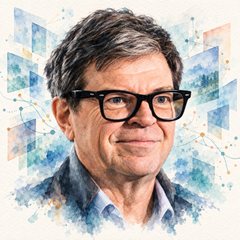
Details and links
Organizations
- DeepLearning.AI Founder, 2017-present
- Stanford University Adjunct Professor of Computer Science, 2002-present
Education
- BS in Mathematics/Computer Science and BS in Statistics, with an additional major in EconomicsCarnegie Mellon University, 1997
- MS in Electrical Engineering and Computer ScienceMassachusetts Institute of Technology, 1998
- PhD in Computer ScienceUniversity of California, Berkeley, 2003
Affiliations
- DeepLearning.AI (Founder)
- LearnVector (Founder and CEO, since 2026)
- AI Fund (Managing General Partner)
- AI Aspire (Founder and Managing Partner)
- Landing AI (Founder and Executive Chairman)
- Coursera (Co-founder and Chairman)
- Stanford University (Adjunct Professor, Computer Science)
- Amazon (Board of Directors, since April 2024)
- Google Brain (Founding Lead, 2011-2012)
- Baidu (Vice President and Chief Scientist, 2014-2017)
- Stanford Artificial Intelligence Laboratory (former Director)
Areas of focus
Sources
- Andrew Ng - Wikipedia
- Andrew Ng - Official website (bio and current roles)
- Andrew Y. Ng - Curriculum Vitae (Stanford)
- Origins of the Modern MOOC (xMOOC) - Andrew Ng and Jennifer Widom
- Stanford professors to offer free online courses - Stanford News, 16 August 2011 (archived)
- The Man Behind the Google Brain - Wired, 7 May 2013
- Autonomous Helicopter - Stanford University AI Lab
- Andrew Ng, TR35 2008 - MIT Technology Review
- Building high-level features using large scale unsupervised learning - arXiv
- Opening a New Chapter of My Work in AI - Andrew Ng on Medium, March 2017 (archived)
- deeplearning.ai - Announcing new Deep Learning courses on Coursera - Medium, August 2017 (archived)
- Andrew Ng and Daphne Koller - TIME 100, 18 April 2013 (archived)
- Andrew Ng - TIME100 AI, 7 September 2023
- Andrew Ng - Google Scholar profile
- Dr. Andrew Ng joins Amazon's Board of Directors - About Amazon, April 2024
- The Problem With California's SB 1047 - TIME (Andrew Ng, 29 August 2024)
- Google Brain founder Andrew Ng says threat of AI causing human extinction is overblown - SiliconANGLE, 31 October 2023
- Geoffrey Hinton on X, 31 October 2023, and Andrew Ng's reply
- Andrew Ng, Unbiggen AI - IEEE Spectrum, 9 February 2022
- Agentic Design Patterns Part 1 - The Batch, 20 March 2024
- The Batch issue 286, letter on DeepSeek-R1 - 29 January 2025
- AI Fund closes oversubscribed $190 million Fund II - AI Fund, 5 May 2025
- Andrew Ng says AI is 'limited,' won't replace humans anytime soon - NBC News, 27 December 2025
- Coursera makes $100 million strategic investment in LearnVector - Coursera, 28 July 2026 (archived)
- Hinton, Fei-Fei Li and Andrew Ng clash over AI risks, jobs and regulation at Ai4 - Data Center Knowledge, August 2026
- Google Brain co-founder calls AI extinction warnings 'more science fiction than science' - Stocktwits, 17 September 2026 (on Ng's Bloomberg TV interview)
- Who's Responsible for Irresponsible AI? - The Batch, 18 September 2026
Reading this to shape your organization's AI plans? Through EMX, I help leadership teams decide where AI fits, what to ignore, and what to build next—using the same vendor-neutral research behind this profile. Put the research to work