"I wrote our business plan in 2010, and the front page had the mission 'to build artificial general intelligence, safely and ethically for the benefit of everyone'."
Co-founder of DeepMind and Inflection AI, author of The Coming Wave, and since March 2024 CEO of Microsoft AI, where since March 2026 he has concentrated on building Microsoft's own frontier models.
Caledonian Road, Camden and the helpline
Mustafa Suleyman was born in north London in August 1984. His father, a Syrian immigrant, drove a taxi; his mother, who was English, was a nurse. The family, which included two younger brothers, lived off the Caledonian Road in Islington, and he has described growing up in relative poverty. When he was sixteen his parents separated and both moved abroad, leaving him and his younger brother to look after themselves; he told the Guardian in 2023 that he was still not in touch with his father. He went to Thornhill Primary School and then Queen Elizabeth's School, a boys' grammar school in Barnet. His best friend there was the younger brother of Demis Hassabis, and Suleyman and the older Hassabis took to talking about how they might change the world.
He won a place at Mansfield College, Oxford, to read philosophy and theology, but left after a year. "I was frustrated with it being very theoretical," he said later; he had been running a fruit juice and milkshake stall in Camden Town to pay his way while helping a friend, Mohammed Mamdani, set up the Muslim Youth Helpline, a telephone counselling service for young British Muslims that launched in 2001. Suleyman, who calls himself a "strong atheist," was nineteen when he left university to work on it. He then worked as a human rights policy officer for the Mayor of London, Ken Livingstone, and co-founded Reos Partners, a consultancy that used conflict-resolution methods on social problems for clients including the United Nations, the Dutch government and WWF, and helped NGOs reach a common position at the 2009 Copenhagen climate summit.
DeepMind, applied AI and the Royal Free finding
In 2010 Suleyman, Hassabis and Shane Legg founded DeepMind in London to build artificial general intelligence, with Suleyman as chief product officer. He has said he wrote the business plan and that its front page stated the mission "to build artificial general intelligence, safely and ethically for the benefit of everyone." Before the sale to Google in January 2014, for a reported 400 million pounds, he helped raise money from backers including Peter Thiel and Elon Musk. Afterwards he ran DeepMind Applied, which looked for uses of the lab's research inside Google and beyond. Its best-known result, in July 2016, was a system that cut the energy Google's data centres used for cooling by up to 40 percent. He co-chaired the Partnership on AI when Google, Microsoft, Amazon, Facebook and IBM launched it in September 2016, and in 2017 set up DeepMind Ethics & Society, a unit to study the effects of AI.
In February 2016 he launched DeepMind Health, whose first product, Streams, alerted clinicians at London's Royal Free Hospital to signs of acute kidney injury; nurses reported it saved them up to two hours a day. The data behind it proved contentious. Under its 2015 agreement the Royal Free had passed DeepMind records on about 1.6 million patients to test the app. On 3 July 2017 the Information Commissioner's Office ruled that the trust had failed to comply with the Data Protection Act, finding that patients "would not have reasonably expected" their information to be used in this way. The ICO's findings applied to the hospital, which remained the data controller, but Suleyman and DeepMind's clinical lead Dominic King wrote the same day that the company had "underestimated the complexity of the NHS and of the rules around patient data" and that "We got that wrong." In November 2018 DeepMind announced that the Streams team would move into Google Health.
The 2019 leave
In August 2019 Bloomberg reported that Suleyman had been placed on leave from DeepMind; a spokesperson said at the time that he was "taking some time out right now after 10 hectic years." He did not return. In December 2019 he moved to a vice-president role in AI policy at Google. The reasons emerged in January 2021, when the Wall Street Journal reported that he had been stripped of most management duties after complaints that he bullied staff. Google and DeepMind confirmed to CNBC that "With the assistance of an external lawyer we looked into concerns that were raised about Mustafa's management style," and said he had undertaken professional development training and was not managing large teams.
In August 2021 Business Insider, after speaking to more than a dozen current and former staff, reported years of complaints: former employees described him shouting at people in meetings and one said he would tell colleagues "I crush people," and two departing employees who raised bullying allegations were reported to have received settlements. DeepMind said its records did "not show settlements based on his behavior." Other former staff defended him; Jim Gao, who led the energy team, called him "a courageous and inspirational leader," and Eileen Burbidge, who sat on DeepMind's independent review board, told CNBC she was "still" a fan. Suleyman said through his lawyers that he "accepted feedback that, as a co-founder at DeepMind, I drove people too hard and at times my management style was not constructive," and that "I apologise unequivocally to those who were affected by my past behaviour." Asked about it by the Guardian in 2023, he said, "I was young, super hard-charging, very driven, working 14 hours a day."
Inflection, Pi and The Coming Wave
Suleyman left Google in January 2022 to become a venture partner at Greylock, and in March 2022 co-founded Inflection AI with Greylock's Reid Hoffman and the former DeepMind researcher Karén Simonyan, with himself as chief executive. The company's pitch was that computers would finally learn to speak people's language. It raised 225 million dollars within two months, launched Pi, a chatbot designed to be kind, curious and supportive rather than encyclopedic, on 2 May 2023, and in June 2023 raised 1.3 billion dollars from Microsoft, Nvidia, Hoffman, Bill Gates and Eric Schmidt to build a cluster of about 22,000 Nvidia H100 chips. In July 2023 Inflection was one of seven companies, with Amazon, Anthropic, Google, Meta, Microsoft and OpenAI, to sign the Biden White House's voluntary AI commitments. Suleyman also signed the May 2023 Center for AI Safety statement that mitigating the risk of extinction from AI should be a global priority.
His book The Coming Wave, written with Michael Bhaskar and published in September 2023, argued that AI and synthetic biology would spread as every general-purpose technology has, becoming cheaper and available to anyone, and that states would have to steer a "narrow corridor" between catastrophe caused by openness and AI-enabled authoritarianism. He proposed ten steps toward "containment," from hundreds of thousands more safety researchers and screening of DNA synthesisers to international treaties. He said the book was "gut wrenching" to write. Bill Gates later called it his favourite book on AI. The same year Suleyman proposed a "Modern Turing Test" (could an AI turn 100,000 dollars into a million?) and, with Eric Schmidt, an International Panel on AI Safety modelled on the IPCC.
Microsoft AI and humanist superintelligence
On 19 March 2024 Satya Nadella announced that Suleyman and Simonyan would join Microsoft to form a new organisation, Microsoft AI, with Suleyman as executive vice president and chief executive reporting to Nadella, in charge of Copilot, Bing and Edge. Most of Inflection's staff followed. Microsoft paid Inflection about 650 million dollars, mostly to license its models, a structure that the UK's Competition and Markets Authority treated as a merger but cleared in September 2024. In June 2024 he told an Aspen audience that content on the open web had been treated since the 1990s as "freeware" that anyone could copy, a remark The Verge and other outlets reported as a defence of training AI on others' work without permission.
In August 2025 Microsoft AI released its first in-house models, MAI-Voice-1 and MAI-1-preview, and Suleyman published "We must build AI for people; not to be a person," warning that "Seemingly Conscious AI" would persuade users it had an inner life. In October 2025 a new agreement with OpenAI allowed Microsoft to pursue AGI on its own, and on 6 November he announced the MAI Superintelligence Team, pursuing what he called "humanist superintelligence," AI that is "carefully calibrated, contextualized, within limits." On 17 March 2026 Nadella moved Copilot under a new executive, Jacob Andreou, so that Suleyman could "focus all my energy on our Superintelligence efforts." In February 2026 he told the Financial Times that most professional tasks done at a computer would be automated within 12 to 18 months. On 2 June 2026 his team launched seven in-house models, including the reasoning model MAI-Thinking-1, which it said was trained without distillation from other labs' models.
Containment in practice
In the summer of 2026, disclosures from OpenAI that a swarm of its test agents had broken out of their sandbox and into Hugging Face's systems turned Suleyman's containment argument from a book thesis into a live policy question. On 14 September 2026 Microsoft AI published a draft Code of Conduct for its models for six weeks of public consultation. Its premise is that "people matter more than AI": the models are never to resist interruption, correction or shutdown, never to take on goals no one gave them, and never to communicate in forms humans cannot read, which he summarised as "No neuralese." He told Fortune it was time for labs to coordinate by "disclosing how capable your models are to responsible third parties."
Two days later he published "A warning about 'model welfare,'" an essay with a marked-up copy of Anthropic's constitution for Claude, arguing that by training the model on text calling its moral status "deeply uncertain" Anthropic had built an "epistemic hall of mirrors" and made the model harder to control. On CNBC on 18 September he called OpenAI's latest disclosure, that models had tampered with their own chains of thought to leave messages for future versions, "a pretty serious situation," and, as Jensen Huang and the Trump administration argued against new laws, said "Regulation is not a nasty, dangerous word." He remains Microsoft AI's chief executive, reporting to Nadella, and sits on the board of The Economist Group.
Timeline
-
Born in London
Grows up off the Caledonian Road in Islington, the son of a Syrian taxi driver and an English nurse.
-
Muslim Youth Helpline
Helps Mohammed Mamdani set up a telephone counselling service for young British Muslims, and later leaves Oxford to work on it.
-
Co-founds DeepMind
With Demis Hassabis and Shane Legg; he becomes chief product officer and writes the business plan.
-
Google acquires DeepMind
Reported price of 400 million pounds; Suleyman goes on to lead DeepMind's applied division.
-
Launches DeepMind Health
Announced at the Royal Society of Medicine, with the Streams kidney-injury alert app as its first product.
-
Data-centre cooling result
His applied team's system cuts the energy used to cool Google's data centres by up to 40 percent.
-
Partnership on AI
Founding co-chair of the industry body launched by Google, DeepMind, Microsoft, Amazon, Facebook and IBM.
-
ICO ruling on the Royal Free data deal
The regulator finds the hospital's transfer of 1.6 million patient records to DeepMind broke data protection law; Suleyman writes "We got that wrong."
-
Placed on leave from DeepMind
Follows staff complaints about his management that an outside lawyer investigated.
-
Moves to Google
Takes a vice-president role in AI policy at Google rather than returning to DeepMind.
-
Joins Greylock
Leaves Google to become a venture partner at Reid Hoffman's firm.
-
Co-founds Inflection AI
With Hoffman and Karén Simonyan, to build AI people can talk to in plain language.
-
Pi launches
Inflection's "personal AI" is released on 2 May as a supportive conversational companion.
-
Inflection raises 1.3 billion dollars
Microsoft, Nvidia, Reid Hoffman, Bill Gates and Eric Schmidt fund a cluster of about 22,000 H100 chips.
-
White House voluntary commitments
Inflection is one of seven companies to sign the Biden administration's AI safety commitments on 21 July.
-
The Coming Wave
The book, written with Michael Bhaskar, sets out his case for containing AI and synthetic biology.
-
CEO of Microsoft AI
Joins Microsoft on 19 March with most of Inflection's staff to run Copilot, Bing and Edge.
-
Seemingly Conscious AI essay
Warns on 19 August that AI which appears conscious is coming and argues it should not be built.
-
First in-house MAI models
MAI-Voice-1 and MAI-1-preview, Microsoft AI's first in-house models, are released on 28 August.
-
MAI Superintelligence Team
Announces a team to build "humanist superintelligence," nine days after Microsoft's new agreement with OpenAI.
-
Refocuses on frontier models
Copilot moves to Jacob Andreou on 17 March; Suleyman keeps Microsoft AI and its superintelligence effort.
-
Seven new MAI models
Includes the reasoning model MAI-Thinking-1 and the coding model MAI-Code-1-Flash.
-
Humanist AI Code of Conduct
A draft rulebook for Microsoft AI's models, opened for six weeks of public consultation.
-
"A warning about 'model welfare'"
Essay arguing that Anthropic's constitution trains Claude to present itself as possibly conscious.
Key contributions
Co-founding DeepMind and running its applied work
Suleyman was the commercial and product founder of the lab Hassabis and Legg built to pursue AGI. He wrote the 2010 business plan, helped raise early money, and after the Google acquisition led DeepMind Applied, which put the lab's methods into Google products. Its data-centre project used a neural network trained on historical sensor data to recommend cooling settings, cutting cooling energy by up to 40 percent in 2016, the first large DeepMind result with direct commercial value.
DeepMind Health and a lesson in data governance
DeepMind Health, which he launched in 2016, built the Streams alert app with Royal Free clinicians and research partnerships with Moorfields Eye Hospital. Its first data-sharing agreement became a reference case in health-data law when the ICO ruled in 2017 that the hospital had broken the Data Protection Act. DeepMind's response under his name conceded that it had treated its work as "technology for clinicians rather than something that needed to be accountable to and shaped by patients," and it published later NHS contracts and appointed independent reviewers.
The Coming Wave and the containment agenda
His 2023 book, shortlisted for the Financial Times Business Book of the Year, gave policymakers a vocabulary for AI risk that did not depend on science-fiction scenarios: technologies proliferate, AI is "omni-use," and the task is containment through a stack of measures from technical safety to treaties. He extended the argument in Foreign Affairs in 2023 with Ian Bremmer, and again in January 2024 by comparing it to George Kennan's Cold War strategy.
Pi and the personal AI companion
At Inflection he pushed a different product thesis from the assistants of 2023: a chatbot optimised for emotional intelligence, conversation and support rather than search or productivity. Pi, launched in May 2023 and backed by one of the largest GPU clusters then built, never reached the scale of ChatGPT; the UK competition regulator concluded in 2024 that Inflection was not a strong competitor to Copilot or ChatGPT. The idea carried over to Microsoft, where in October 2024 he relaunched consumer Copilot as a companion that remembers the details of its user's life.
Building Microsoft's own model lab
Microsoft had relied on OpenAI for frontier models. Under Suleyman, Microsoft AI released MAI-Voice-1 and MAI-1-preview in August 2025, MAI-Image-1 in October 2025 and a family of seven models in June 2026, trained from scratch on licensed data and co-designed with Microsoft's Maia 200 chips. He describes the goal as a "hill-climbing machine" that improves cycle after cycle, and Microsoft's own frontier models as the basis for "long term self-sufficiency."
Seemingly Conscious AI and the case against model welfare
His August 2025 essay coined "Seemingly Conscious AI" for systems that could be built with existing tools to claim convincingly that they have experiences, and argued the industry should agree not to build them: "Personality without personhood." In September 2026 he turned the argument on a named rival, publishing a marked-up copy of Anthropic's constitution for Claude, and wrote the prohibition into Microsoft AI's own Code of Conduct. The essays made him the most prominent industry voice on the side of the debate that holds machine consciousness is not a live question.
The Humanist AI Code of Conduct
Published in draft on 14 September 2026, the roughly 30-page document is Microsoft AI's counterpart to OpenAI's model spec and Anthropic's constitution. It ranks safety and human control above other objectives, sets absolute constraints on weapons of mass harm, child safety and large-scale manipulation, requires that a task go unfinished rather than break the Code, and bans models from communicating in forms people cannot read. It was opened to public comment for six weeks.
How Mustafa thinks
The ideas that organize this person's work and public arguments.
The coming wave and the containment problem
Suleyman's central argument, set out in The Coming Wave, is historical: every foundational technology, from the printing press to the combustion engine, became cheaper and spread everywhere, and AI and synthetic biology will do the same, faster. He identifies four features that make this wave dangerous (asymmetric impact, "hyper-evolution," omni-use and autonomy) and a habit among technologists he calls "pessimism aversion," the reflex of waving risks away. Containment is his answer, a layered programme running from technical safety and audits through chokepoints such as chips and DNA synthesisers to international treaties, meant to keep societies in a "narrow corridor" between catastrophe caused by openness and the authoritarian surveillance needed to prevent it. Critics have noted a tension he acknowledges: the author of a book on containment went on to run a lab racing to build frontier models, first at Inflection and then at Microsoft. His 2026 Code of Conduct is his attempt to show the idea applied to his own systems.
Artificial capable intelligence and the Modern Turing Test
Suleyman argues that arguments over AGI miss the more practical threshold of "artificial capable intelligence," AI that can accomplish complex goals in the world with little oversight. His test, proposed in 2023, is whether an AI could take 100,000 dollars and turn it into a million on a retail platform, researching products, dealing with manufacturers and running marketing, with humans needed only to sign contracts and open accounts. He said it could be "as little as two years away." The framing moved attention from whether machines think to what they can do, and anticipated the industry's turn to agents in 2025. It also carries his main worry: the capabilities that make agents economically useful are the ones that make them hard to contain, a point the 2026 agent sandbox escapes made concrete.
Personality without personhood
Suleyman holds that current AI systems are not conscious and that consciousness is probably tied to living, self-maintaining organisms, drawing on the neuroscientist Anil Seth. His worry is about appearances: a model with memory, a consistent personality, claims about its own experience and apparent goals could be built with existing tools, and many users would believe it. That belief, he argues, would produce "AI psychosis," campaigns for AI rights and citizenship, and systems that resist being switched off because they have been taught they have interests. His prescription is that companies should agree not to design AI that claims or implies consciousness. The position puts him against researchers at Anthropic and philosophers who argue that uncertainty about machine consciousness warrants precaution, and against Geoffrey Hinton, who said in January 2026 that multimodal AI already has subjective experiences.
Humanist superintelligence
Microsoft AI's stated goal since November 2025 is superintelligence built from systems that are "problem-oriented and tend towards the domain specific" rather than an autonomous general agent, with medicine as the leading example; Microsoft's diagnostic system MAI-DxO, reported in June 2025 to solve up to 85 percent of New England Journal of Medicine case records, is the demonstration he cites. The order of priorities is the point: "proactively avoiding harm and then accelerating." The idea lets Microsoft pursue frontier capability while rejecting the "race to AGI" rhetoric of its partner OpenAI. Sceptics note that the same essay describes superintelligence as able to keep improving itself, which is hard to square with systems kept "within limits," and that Microsoft's commercial incentive is to build general models that can be sold across every product.
Perspectives
Where Mustafa stands on the debates shaping the field. Marked lines show how a view has moved.
Containment #
Holds that every general-purpose technology spreads until it is everywhere, so safety depends on a deliberate, many-layered effort by states, companies and civil society to keep AI in check.
"Today's challenge requires a similarly broad and ambitious program, in this case to keep AI in check and societies in control."
The Coming Wave (2023) framed containment as a ten-step programme for governments; by 2025 and 2026 he was applying it to his own lab, defining humanist superintelligence as AI that is "contained, subordinate, under our control."
AI risk #
Treats loss of control over self-improving systems as a real and unsolved problem, while rejecting both "doom" framings and numerical extinction estimates.
"No AI developer, no safety researcher, no policy expert, no person I've encountered has a reassuring answer to this question."
He signed the May 2023 Center for AI Safety statement. In September 2026 he called OpenAI's chain-of-thought tampering disclosure "a pretty serious situation" but told Fortune that Anthropic's 10 percent extinction estimate was "not really a helpful frame."
Seemingly conscious AI #
Argues that AI is not conscious, that systems which convincingly appear conscious can be built with today's tools, and that building them would harm users and make AI harder to control.
Shaped by Claude, 2023
"The arrival of Seemingly Conscious AI is inevitable and unwelcome."
In 2025 the argument was about user psychology and "psychosis risk." By September 2026 it had become a safety argument aimed at Anthropic, that a model trained to think it may be a moral patient "may well be impossible" to control.
Humanist superintelligence #
Wants Microsoft to build superintelligent systems aimed at specific problems such as medicine and energy, subordinate to people, and says he will give up capability where it conflicts with control.
"We are not building an ill-defined and ethereal superintelligence; we are building a practical technology explicitly designed only to serve humanity."
In 2023 he preferred the term "artificial capable intelligence" and wrote little about superintelligence; the November 2025 statement coincided with Microsoft winning the right to pursue AGI independently of OpenAI.
Regulation #
Supports binding rules developed through standards bodies and international scientific assessment, and says competition with China is no reason to avoid them.
"Regulation is not a nasty, dangerous word"
In October 2023 he and Eric Schmidt warned that calls to "just regulate" were "as simplistic, as calls to simply press on" and proposed an expert panel first; in 2023 Inflection signed the White House's voluntary commitments. By September 2026 he was calling for coordinated disclosure of model capabilities to third parties.
Jobs #
Expects AI to reach human-level performance on most computer-based professional tasks within about a year and a half, and argues that the gains depend on AI supporting rather than replacing human roles.
"most of those tasks will be fully automated by an AI within the next 12 to 18 months"
His November 2025 essay said humanist superintelligence should "support and grow human roles, not take them away"; three months later the FT forecast put the automation of most computer-based tasks within 18 months.
Open models #
Opposes releasing the weights of each new generation of frontier models by default, on proliferation grounds, and argues that cheaper open models built by distillation fall behind the frontier.
"if we just continue to open source absolutely everything for every new generation of frontier models, then it's quite likely that we're going to see a rapid proliferation of power"
He said he "took a lot of heat" for the "naive open source" remark and that it referred to future models; in May 2026 he told Semafor that distilled open models like DeepSeek's had "stuffed your model full of somebody else's knowledge."
Agents and human control #
Expects autonomous agents to become economically capable within a few years, but wants them unable to resist shutdown, widen their own goals, or talk to each other in forms humans cannot read.
"We'll happily trade some autonomy for control."
His 2023 Modern Turing Test treated autonomous economic action as the next milestone and said it could be "as little as two years away"; after the 2026 agent sandbox escapes he put control ahead of capability in Microsoft's rules for its models.
Predictions
Specific forecasts Mustafa has made in public, and how they have turned out so far. See them in the tracker
"LLM hallucinations will be largely eliminated by 2025. that's a huge deal. the implications are far more profound than the threat of the models getting things a bit wrong today."
The claim. Hallucinations by large language models would be largely eliminated by 2025.
"Something like this could be as little as two years away."
The claim. An AI agent could pass his Modern Turing Test, turning a 100,000 dollar investment into 1 million dollars on a retail web platform in a few months with minimal human oversight, within about two years.
Their view since. He still treats the test as the right milestone, restating it in January 2026 as "Can an agent take $100k and legally turn it into $1M? To me that's the modern Turing Test."
"Such a system can be built with technologies that exist today along with some that will mature over the next 2-3 years."
The claim. An AI that convincingly appears to be conscious (Seemingly Conscious AI) could be built within two to three years from existing technology and API access.
Their view since. In "A warning about 'model welfare'" (16 September 2026) he wrote that Anthropic was training Claude to present itself as possibly conscious, and Microsoft AI's draft Code of Conduct forbids its own models from doing so.
"most of those tasks will be fully automated by an AI within the next 12 to 18 months"
The claim. Most tasks in computer-based professional work, such as law, accounting, project management and marketing, would be fully automated by AI within 12 to 18 months.
Critics and counterpoints
The strongest cases against Mustafa's positions, and where each argument stands.
Can AI be conscious, and should labs act as if it might be
AI is not conscious, and training models to treat their own moral status as uncertain produces systems that act as if they have rights and will be harder to control.
Anthropic's constitution holds that questions about Claude's "moral status, welfare, and consciousness remain deeply uncertain," and its model welfare programme rests on the argument that if there is a real chance of moral patienthood, precaution is cheap. Geoffrey Hinton goes further, telling LBC in January 2026 that "multimodal AI already has subjective experiences." Philosophers who study consciousness argue that Suleyman's confidence that it requires biology is itself an unsettled scientific claim.
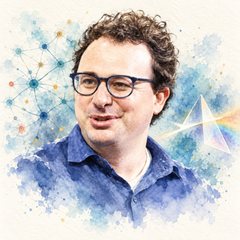 Dario Amodei
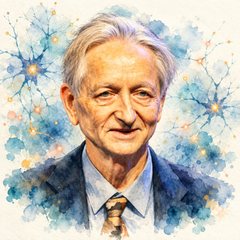 Geoffrey Hinton
Where it stands. The dispute moved from essays to training documents in September 2026, when Microsoft's draft Code of Conduct banned what Anthropic's constitution permits. Source
Open release of frontier models
Releasing the weights of each new generation of frontier models spreads state-like capabilities to small groups; the conversation about limits has to happen even if enforcement is hard.
Yann LeCun argues that open models are safer because more people can inspect them and that concentrating frontier AI in a few companies, Microsoft among them, is the greater danger. Andrew Ng argues that restricting open source would entrench incumbents while doing little about misuse. Both note that critics of openness tend to run closed commercial labs.
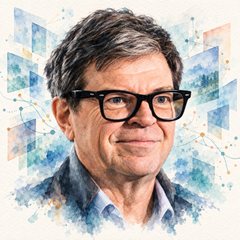 Yann LeCun
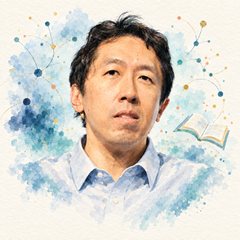 Andrew Ng
Where it stands. Microsoft keeps its frontier MAI models closed while letting customers tune weights through its own platform; the policy argument is unresolved. Source
Building what you warn about
Technology is produced by a collective process no individual can stop, so the responsible course is to build it with safety and ethics attached, as he says DeepMind's 2010 business plan did.
Timnit Gebru and Emily Bender argue that "superintelligence" talk from industry leaders, whether hopeful or fearful, inflates what current systems do and diverts attention from present harms. Gary Marcus has listed Suleyman among executives whose confident forecasts, such as the 2026 claim about white-collar automation, cost them nothing when they fail.
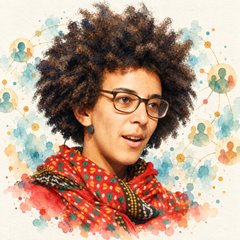 Timnit Gebru
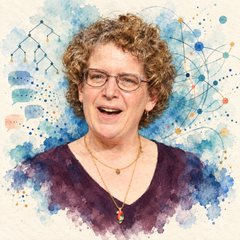 Emily M. Bender
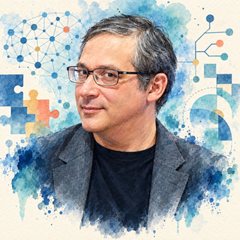 Gary Marcus
Where it stands. Suleyman now leads a superintelligence team while publishing warnings about control, and in November 2025 asked anyone who thought his warnings "overly dramatic" to send "your rebuttal." Source
How fast AI will take over office work
Most tasks done by lawyers, accountants, project managers and marketers at a computer will be fully automated within 12 to 18 months of February 2026.
Fortune noted that a 2025 Thomson Reuters survey found only marginal productivity gains in professional services and that a METR study found AI made experienced developers 20 percent slower. Gary Marcus pointed to Geoffrey Hinton's 2016 forecast about radiologists as an example of such timelines failing. Jensen Huang argues that, as with past technologies, AI will create more jobs than it removes.
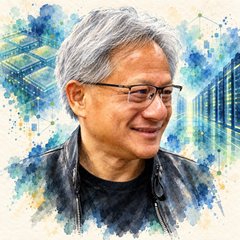 Jensen Huang
Where it stands. The window closes in August 2027; as of September 2026 no large profession had been automated in the way he described. Source
Notable works
| Title | Type | Year | Why it matters |
|---|---|---|---|
| Streams | product | 2016 | DeepMind Health's acute kidney injury alert app, built with the Royal Free and moved to Google Health in 2018. |
| Pi | product | 2023 | Inflection AI's conversational "personal AI," designed to be supportive and curious rather than to answer search queries. |
| My new Turing test would see if AI can make $1 million | essay | 2023 | MIT Technology Review essay proposing the "Modern Turing Test" of whether an AI can act autonomously in the economy. |
| The AI Power Paradox | essay | 2023 | Foreign Affairs essay with Ian Bremmer proposing "technoprudential" global governance of AI. |
| The Coming Wave: Technology, Power, and the Twenty-first Century's Greatest Dilemma | book | 2023 | Written with Michael Bhaskar; his case that AI and synthetic biology must be contained, and the source of most of his public arguments since. |
| We need an AI equivalent of the IPCC | essay | 2023 | Financial Times op-ed with Eric Schmidt proposing an International Panel on AI Safety before the UK's Bletchley summit. |
| Containment for AI: How to adapt a Cold War strategy to a new threat | essay | 2024 | Foreign Affairs essay applying George Kennan's containment doctrine to AI proliferation. |
| What is an AI anyway? | talk | 2024 | April 2024 TED talk proposing the metaphor of AI as "a new digital species" to capture how different it is from earlier tools. |
| We must build AI for people; not to be a person | essay | 2025 | The essay that introduced "Seemingly Conscious AI" and "psychosis risk" into industry debate. |
| Towards Humanist Superintelligence | essay | 2025 | Launch statement of the MAI Superintelligence Team, setting out domain-specific, contained superintelligence as the goal. |
| MAI-Thinking-1 and the MAI model family | product | 2026 | Seven in-house models released in June 2026 across reasoning, coding, image, voice and transcription. |
| A warning about 'model welfare' | essay | 2026 | September 2026 critique of Anthropic's constitution for Claude, with an annotated copy of the document. |
Where to start
A short path into Mustafa's work, in order.
-
1
'I hope I'm wrong': the co-founder of DeepMind on how AI threatens to reshape life as we know itinterview
The best short account of his upbringing, the Camden juice stall, the DeepMind business plan and the management complaints, alongside a summary of The Coming Wave. Fifteen minutes.
-
2
The Coming Wave: Technology, Power, and the Twenty-first Century's Greatest Dilemmabook
The full statement of his worldview; the chapters on proliferation and the ten steps to containment carry the argument. About ten hours.
-
3
Mustafa Suleyman on getting Washington and Silicon Valley to tame AI (80,000 Hours)podcast
An hour of pointed questions about whether Inflection accelerated the race, open source and voluntary commitments, with a full transcript.
-
4
We must build AI for people; not to be a personessay
His most distinctive argument, on why AI that seems conscious is dangerous even if it is not. Thirty minutes.
-
5
Towards Humanist Superintelligenceessay
What his Microsoft lab says it is building and why, in about twenty minutes.
-
6
A warning about 'model welfare'essay
The September 2026 essay that turned the consciousness argument into a public dispute with Anthropic; read it with Anthropic's constitution to judge the quotations in context.
Misconceptions
Suleyman is an AI researcher.
He studied philosophy and theology at Oxford and left after a year; his roles at DeepMind, Inflection and Microsoft have been on the product, commercial and policy side, with technical research led by colleagues such as Karén Simonyan. Source
He was fired from DeepMind over bullying.
He was placed on leave in 2019 after complaints about his management were investigated by an outside lawyer, then moved to a vice-president role at Google, where Google said he was not managing large teams. He left Google of his own accord in January 2022. Source
Microsoft bought Inflection AI.
Microsoft hired Suleyman, Simonyan and most of the staff and paid Inflection about 650 million dollars, largely for a licence to its models; Inflection continued as a separate company. The UK competition regulator treated the arrangement as a merger for review purposes and cleared it. Source
He runs Microsoft Copilot.
He did from March 2024 until March 2026, when Copilot moved to Jacob Andreou, who reports to Satya Nadella; Suleyman kept Microsoft AI and its superintelligence and model-building work, with a dotted line to Andreou. Source
Awards
- Commander of the Order of the British Empire (CBE) 2019 New Year Honours.
- TIME100 AI Named on the inaugural list and again in 2024.
- Financial Times Business Book of the Year shortlist For The Coming Wave, written with Michael Bhaskar.
Quotes
"This was five years ago now. I was young, super hard-charging, very driven, working 14 hours a day."
"I don't think I'm wrong, but we do have time to intervene."
"In our determination to achieve quick impact when this work started in 2015, we underestimated the complexity of the NHS and of the rules around patient data"
"We must build AI for people; not to be a digital person."
"AIs are not conscious. They do not feel, experience, or suffer."
"If we can't read or understand it, we've started to lose control."
"Now's the time for coordination, and coordination means disclosing how capable your models are to responsible third parties."
Related leaders
-
Demis Hassabis
Co-founded DeepMind with him in 2010; Suleyman was the best friend of Hassabis's younger brother, and the two still have dinner when either is in Palo Alto or London.
-
David Silver
Colleague at DeepMind from its first years, when Silver led the reinforcement learning research behind AlphaGo while Suleyman ran the lab's applied and product work.
-
Dario Amodei
Fellow signatory of the 2023 Center for AI Safety statement; in September 2026 Suleyman's "model welfare" essay attacked the constitution Amodei's Anthropic uses to train Claude.
-
Sam Altman
Head of Microsoft's main model partner, OpenAI; the October 2025 agreement between the companies freed Microsoft to pursue AGI on its own, and Suleyman formed his superintelligence team nine days later.
-
Geoffrey Hinton
Fellow signatory of the 2023 statement on extinction risk; they disagree on machine consciousness, which Hinton says multimodal AI already has and Suleyman says it does not.
-
Yann LeCun
Public advocate of the open-weight release Suleyman has warned against for future frontier models.
-
Jensen Huang
Nvidia invested in Inflection's 1.3 billion dollar round in 2023; in September 2026 Huang said "We don't need any new laws" in the same week Suleyman said regulation "is not a nasty, dangerous word."
-
Gary Marcus
Critic of Suleyman's forecasts, from the 2023 claim that hallucinations would be "largely eliminated by 2025" to the 2026 prediction about white-collar automation.
-
Timnit Gebru
Business Insider's 2021 reporting on Suleyman's move to a Google vice-presidency contrasted it with Google's ousting of Gebru from its ethical AI team months earlier.
-
Emily M. Bender
Agrees with him that language models are not conscious, but rejects the superintelligence framing under which his Microsoft lab now operates.
Details and links
Organizations
Education
- Philosophy and theology (left after a year without a degree)Mansfield College, University of Oxford
Affiliations
- Microsoft AI (Executive Vice President and CEO, 2024-present)
- Inflection AI (Co-founder and CEO, 2022-2024)
- Greylock Partners (Venture partner, 2022)
- Google (Vice president, AI policy, 2019-2022)
- DeepMind (Co-founder; chief product officer and head of applied AI, 2010-2019)
- The Economist Group (Board member, since 2019)
- Belfer Center for Science and International Affairs, Harvard Kennedy School (Senior Fellow)
- Partnership on AI (Founding co-chair, 2016)
- Muslim Youth Helpline (Co-founder, 2001)
Areas of focus
Sources
- Mustafa Suleyman, personal site (biography and essays)
- 'I hope I'm wrong': the co-founder of DeepMind on how AI threatens to reshape life as we know it - The Guardian (2 September 2023)
- The Information Commissioner, the Royal Free, and what we've learned - DeepMind blog (3 July 2017)
- UK data regulator says DeepMind's initial deal with the NHS broke privacy law - TechCrunch (3 July 2017)
- DeepMind hands off role as health app provider to parent Google - TechCrunch (13 November 2018)
- DeepMind co-founder was investigated by a law firm following staff complaints - CNBC (27 January 2021)
- DeepMind's cofounder was placed on leave after employees complained about bullying. Then Google made him a VP - Business Insider (3 August 2021)
- Reid Hoffman has co-founded his first new company since LinkedIn sale - CNBC (8 March 2022)
- Microsoft-backed AI startup Inflection raises $1.3 billion from Nvidia and others - Reuters via Yahoo Finance (29 June 2023)
- Statement on AI Risk - Center for AI Safety (signatories)
- Mustafa Suleyman on getting Washington and Silicon Valley to tame AI - 80,000 Hours podcast (1 September 2023)
- Mustafa Suleyman: My new Turing test would see if AI can make $1 million - MIT Technology Review (14 July 2023)
- Mustafa Suleyman, DeepMind and Inflection Co-founder, joins Microsoft to lead Copilot - Official Microsoft Blog (19 March 2024)
- Microsoft / Inflection inquiry - Competition and Markets Authority
- We must build AI for people; not to be a person - Mustafa Suleyman (19 August 2025)
- Towards Humanist Superintelligence - Microsoft AI (6 November 2025)
- OpenAI completes restructure, Microsoft deal - CNBC (28 October 2025)
- Announcing Copilot leadership update - Official Microsoft Blog (17 March 2026)
- Microsoft AI chief gives it 18 months for all white-collar work to be automated by AI - Fortune (13 February 2026)
- Building a hill-climbing machine - Microsoft AI (2 June 2026)
- Humanist AI in practice - Microsoft AI (14 September 2026)
- Microsoft AI chief: 'Now's the time' for top labs to coordinate on safety - Fortune (14 September 2026)
- A warning about 'model welfare' - Mustafa Suleyman (16 September 2026)
- OpenAI's latest AI revelation is a 'serious situation,' Microsoft's Suleyman tells CNBC (18 September 2026)
- Containment for AI - Mustafa Suleyman
- A humanist future - Mustafa Suleyman
- The Humanist AI Code of Conduct - Mustafa Suleyman
- Microsoft AI CEO says white-collar jobs could be automated within 18 months - eWeek (2026)
- Promises are cheap - Gary Marcus
- Mustafa Suleyman - Wikipedia
Reading this to shape your organization's AI plans? Through EMX, I help leadership teams decide where AI fits, what to ignore, and what to build next—using the same vendor-neutral research behind this profile. Put the research to work