"I couldn't really think at all, to be honest. My mind went blank."
Co-founder of DeepMind and 2024 Nobel laureate in chemistry for AlphaFold; since August 2026 Chair of Google DeepMind, Chief Scientist of Alphabet and CEO of Isomorphic Labs.
A chess childhood in north London
Demis Hassabis was born in London on 27 July 1976 to a Greek Cypriot father and a Chinese Singaporean mother. The family was, in his words, "more on the arty side"; his father composed a musical play in retirement and his sister is a composer. He learned chess at four by watching his father play his uncle, played competitively on England junior teams from four to thirteen, and captained several of them. By thirteen he had a rating of 2300, master standard. Chess training camps used physical chess computers, and he has said he was more fascinated by the fact that someone had programmed "this inanimate lump of plastic" to play than by the openings he was meant to be studying.
He spent his chess winnings on home computers, first a Sinclair ZX Spectrum and then a Commodore Amiga, and taught himself to program from books. He moved between state schools in north London, was home-schooled for a period, and sat his A-levels two years early, at sixteen. Cambridge asked him to wait a year before starting because of his age.
Theme Park, Cambridge and a studio that failed
He filled the gap year at Bullfrog Productions, Peter Molyneux's studio in Guildford, which he reached by entering a magazine competition to win a job there. At seventeen he co-designed and was lead programmer on Theme Park (1994), a simulation in which every visitor to the player's fairground was driven by AI, so that a food stall placed too close to a rollercoaster exit made the virtual customers sick. He has called it "probably my first big success" and said that watching people enjoy interacting with the game's AI convinced him to spend his career on artificial intelligence. He earned enough from the year to pay his own way through university.
He read the Computer Science Tripos at Queens' College, Cambridge, graduating with a double first in 1997, and first met the protein folding problem there as an undergraduate. After a spell as lead AI programmer on Lionhead's Black & White, he founded Elixir Studios on 7 July 1998, pitching fifteen publishers at E3 in Atlanta before signing a three-game deal with Eidos. Elixir grew to around sixty people and shipped Republic: The Revolution and Evil Genius, but closed in 2005 after a major project was cancelled. He later described the studio's ambitions as being "20 years ahead of your time" and said the lesson he carried forward was that hard problems have to be picked at the right time.
Neuroscience and the imagination papers
Hassabis returned to academia to study the brain, completing a PhD in cognitive neuroscience at University College London in 2009 under Eleanor Maguire. His first paper, in PNAS in 2007, tested five patients with hippocampal damage and found they could not construct imagined scenes, linking the machinery of episodic memory to the ability to imagine the future. Science included the work in its list of the year's ten leading breakthroughs. He then held a Henry Wellcome postdoctoral fellowship at UCL's Gatsby Computational Neuroscience Unit, where he met Shane Legg, a fellow postdoctoral researcher. He has since said the detour only "looks like a random path" if you do not know that he had AI in mind the whole time.
DeepMind
Hassabis founded DeepMind in 2010 with Legg and Mustafa Suleyman, a former schoolmate and friend of his younger brother, and recruited his Cambridge friend and Elixir partner David Silver. The mission, as he still states it, was to solve intelligence and then use it to solve everything else. Peter Thiel was an early investor. Over lunch at the SpaceX factory in 2012 Elon Musk told him that colonising Mars was a backup in case something went wrong on Earth; Hassabis replied that if AI were the thing that went wrong, Mars would not help, and Musk invested shortly afterwards. Google bought the company in January 2014 for a reported 400 million pounds. Hassabis insisted the lab stay in London against the advice of its first backers, who wanted it in San Francisco.
The early years were hard: he has recalled months in which the reinforcement learning system could not win a single game of Pong. The breakthrough was the Deep Q-Network, shown in 2014 and published in Nature in 2015, which learned dozens of Atari games from raw pixels and a score. AlphaGo beat European champion Fan Hui in 2015 and Lee Sedol, holder of eighteen world titles, 4-1 in Seoul in March 2016, including the unexpected Move 37 in game two. The same year DeepMind's system cut the energy used to cool Google's data centres by up to 40 percent. In April 2023 Google merged DeepMind with Google Brain into Google DeepMind under Hassabis, which built the Gemini models. He has said that if he had had his way the technology would have stayed in the lab longer, and that ChatGPT taught the leading labs how close they had been to their own technology.
AlphaFold and the Nobel Prize
AlphaFold placed first at CASP13 in 2018, and the re-architected AlphaFold 2 reached atomic accuracy (under one angstrom average error) at CASP14 in November 2020, leading the organisers to call the fifty-year problem solved. DeepMind and EMBL-EBI released predicted structures for more than 200 million proteins in July 2022 after consulting more than thirty biosecurity and bioethics experts; by late 2025 the database had been used by 3.3 million people. AlphaFold 3, published in Nature in May 2024, extended prediction to proteins interacting with DNA, RNA and small molecules.
Hassabis and John Jumper received the 2023 Albert Lasker Basic Medical Research Award, the 2023 Canada Gairdner International Award and a 2023 Breakthrough Prize in Life Sciences for the work, and on 9 October 2024 the Nobel Prize in Chemistry, sharing it with David Baker. The citation for their half was "for protein structure prediction". When the Nobel website reached him by phone that morning he said his mind had gone blank and that he had "a whole day of normal work ahead of me"; he celebrated that night with a poker game that included Magnus Carlsen. He delivered his Nobel lecture, Accelerating scientific discovery with AI, at Stockholm University on 8 December 2024. He had been knighted in March 2024 for services to artificial intelligence.
Isomorphic Labs
Isomorphic Labs was spun out of DeepMind in 2021 with Hassabis as chief executive, to rebuild drug discovery around AlphaFold-style models. It raised its first outside money, 600 million dollars led by Thrive Capital, in March 2025, had research partnerships with Eli Lilly and Novartis, added a multi-target collaboration with Johnson & Johnson in January 2026, and on 12 May 2026 announced a 2.1 billion dollar Series B led by Thrive with MGX, Temasek, CapitalG and the UK Sovereign AI Fund. As of that raise the company described its programmes as progressing toward the clinic; no Isomorphic-designed drug had yet entered human trials.
From chief executive to chair
In February 2025 Hassabis co-wrote, with James Manyika, the blog post in which Google rewrote its AI principles and dropped its 2018 commitment not to pursue weapons or surveillance applications; Human Rights Watch called the change "incredibly concerning". Gemini with Deep Think reached gold-medal standard at the International Mathematical Olympiad in July 2025, AlphaGenome was released to academic researchers in June 2025, and Gemini 3 launched on 18 November 2025 under a post signed by Sundar Pichai, Hassabis and Koray Kavukcuoglu. That week he told interviewers there was "obviously a bubble in the private market" for AI start-ups.
At Davos in January 2026 he said current systems were "nowhere near" AGI and put the odds of reaching it within the decade at about even; at Stanford on 22 May 2026 he called AI a "species-level transition" and, by Gary Marcus's transcription, suggested 2030 "plus or minus a year". In June 2026 John Jumper left for Anthropic and Noam Shazeer for OpenAI; David Silver had already left to start Ineffable Intelligence. On 14 July 2026 Hassabis published A Framework for Frontier AI and the Dawning of a New Age, proposing a standards body funded by the labs that would review frontier models up to 30 days before release.
On 5 August 2026 Pichai announced that Hassabis would become Chair of Google DeepMind and Chief Scientist of Alphabet, and that Kavukcuoglu, the lab's chief technology officer, would run it as a senior vice president reporting to Pichai. Jeff Dean left the same day to co-found Discovery Loop. Alphabet's shares fell around 5 percent. In his note to staff Hassabis wrote that he felt AGI was "close at hand" and wanted "the time and space to focus on the big picture"; TIME reported that he had been absent from most day-to-day Gemini meetings for months while attending those on safety, governance and post-AGI readiness, and that he had not been pushed. In September 2026 the Royal Society of Arts awarded him its Albert Medal, and when Dario Amodei published "We Must Pace the Frontier" on 12 September he wrote on X that "Dario's essay points towards the right path forward."
Timeline
-
Born in London
Born 27 July; learned chess at four and played on England junior teams until thirteen.
-
Theme Park
Co-designed and lead-programmed the Bullfrog simulation during a gap year, aged seventeen.
-
Double first, Cambridge
Computer Science Tripos at Queens' College, where he first encountered the protein folding problem.
-
Founded Elixir Studios
Signed a three-game deal with Eidos after pitching at E3; shipped Republic and Evil Genius before closing in 2005.
-
Amnesia and imagination paper
First paper, in PNAS, showed patients with hippocampal damage cannot imagine new scenes; listed by Science among the year's breakthroughs.
-
PhD, University College London
Supervised by Eleanor Maguire; postdoctoral fellowship at the Gatsby Unit, where he met Shane Legg.
-
Founded DeepMind
With Legg and Mustafa Suleyman, to build AGI using games as a proving ground.
-
Google acquires DeepMind
Reported price of 400 million pounds; the lab stayed in London at his insistence.
-
AlphaGo beats Lee Sedol
Won the five-game match in Seoul 4-1.
-
Data-centre cooling
DeepMind cut Google data-centre cooling energy by up to 40 percent.
-
AlphaFold 2 at CASP14
Atomic-accuracy predictions led the assessors to declare the structure prediction problem solved.
-
Founded Isomorphic Labs
Alphabet drug-design company spun out of DeepMind; Hassabis is CEO.
-
Breakthrough Prize in Life Sciences
The 2023 prize, shared with John Jumper for AlphaFold.
-
Canada Gairdner International Award
Shared with John Jumper for AlphaFold.
-
Google DeepMind formed
DeepMind merged with Google Brain, with Hassabis as chief executive.
-
Lasker Award
Albert Lasker Basic Medical Research Award, shared with John Jumper.
-
Knighthood
Knighted for services to artificial intelligence.
-
AlphaFold 3
Published in Nature, extending prediction to proteins interacting with DNA, RNA and small molecules.
-
Nobel Prize in Chemistry
Shared with Jumper and David Baker.
-
Isomorphic's first raise
Isomorphic raised 600 million dollars, led by Thrive Capital.
-
Gemini 3
Launched under a post signed by Sundar Pichai, Hassabis and Koray Kavukcuoglu.
-
Isomorphic raises 2.1 billion dollars
A Series B led by Thrive Capital.
-
Chair of Google DeepMind and Chief Scientist of Alphabet
Handed daily leadership to Koray Kavukcuoglu on 5 August.
Key contributions
Founding and running DeepMind
Hassabis founded DeepMind in 2010 as a research lab with the explicit goal of building artificial general intelligence, at a time when, as he put it, "everyone thought we were pretty crazy". He built it deliberately as a multidisciplinary group of machine learning, engineering, neuroscience and mathematics, modelled on his reading about Bell Labs, and ran it for sixteen years through the Google acquisition and the 2023 merger with Google Brain.
AlphaFold and the AlphaFold Protein Structure Database
He set protein structure prediction as a target for the lab and co-led the programme with John Jumper. AlphaFold 2's atomic-accuracy result at CASP14 in 2020 and the free release of more than 200 million predicted structures with EMBL-EBI in 2022 earned the two the 2024 Nobel Prize in Chemistry. By late 2025 the database had 3.3 million users and the 2021 paper had been cited more than 40,000 times.
AlphaGo and self-play
He chose Go as the lab's grand challenge because its 10^170 positions made brute-force search impossible. AlphaGo's 4-1 win over Lee Sedol in March 2016 combined deep neural networks with tree search; AlphaGo Zero and AlphaZero then reached the same level from self-play alone. He describes the general recipe, learn a model of the environment and use it to guide search against an objective, as the essence of what DeepMind's systems do.
Deep reinforcement learning from pixels
The Deep Q-Network, shown in 2014 and published in Nature in 2015, learned to play dozens of Atari games from screen pixels and a score signal, the first demonstration that a single learning agent could reach human-level control across many tasks. Hassabis has called it "the start of the modern AI era".
Memory, imagination and scene construction
His UCL work established that patients with hippocampal amnesia cannot imagine new experiences, and proposed scene construction as the process underlying both recall and imagination. The finding shaped his later argument that a general intelligence needs an internal simulation of the world in order to plan.
AI as a tool for science
Beyond AlphaFold, he directed a programme of applying learning systems to what he calls root-node problems, including data-centre cooling, fusion plasma control, weather forecasting, materials discovery and mathematics, and founded Isomorphic Labs in 2021 to redesign drug discovery around AI.
Proposals for governing frontier AI
A signatory of the May 2023 Center for AI Safety statement, he argued in October 2023 for an IPCC-style international scientific body as a first step toward something like an IAEA for AI. In July 2026 he proposed an independent, industry-funded standards body, modelled on FINRA, that would review frontier models up to 30 days before release.
How Demis thinks
The ideas that organize this person's work and public arguments.
AI is the ultimate tool for science
Hassabis says he has worked on AI his whole life because he believed it could be the ultimate tool for advancing knowledge, and that the target should be "root node" problems whose solution opens whole branches of research. Protein structure was the first; he lists fusion, weather, materials and mathematics as others. The claim rests on a view of what a suitable AI problem looks like, set out in his Nobel lecture: a huge combinatorial search space, a clear objective, and either plenty of data or an accurate simulator. He is careful about the division of labour, saying that for the next decade conjectures and hypotheses will come from human experts and the systems will make them ten or a hundred times more efficient. Critics, including structural biologists quoted by MIT Technology Review, note that AlphaFold can be confidently wrong and that its effect on actual drug approvals is still unproven, so the strength of the "proof point" is itself contested.
Games as the proving ground
He describes games as having shaped his career three times: chess trained his own thinking as a child, writing AI for commercial games was his first job, and at DeepMind games became the test bed for learning algorithms. Atari and Go were chosen because they offered a clean score, unlimited simulated experience and a public benchmark, which let the lab check whether general learning methods worked before pointing them at science. AlphaFold followed the same template, with CASP as the benchmark and the Protein Data Bank as the training set. The approach has limits he acknowledges: real science does not come with an objective function, and he says today's systems cannot yet ask the right question.
Neuroscience as a guide to general intelligence
Hassabis took a neuroscience PhD because the brain is the only existence proof that general intelligence is possible, and DeepMind was founded to combine systems neuroscience with machine learning. His own work on the hippocampus, showing that memory and imagination share a scene-construction process, fed his argument that an intelligent agent needs an internal simulation of the world in order to plan, a theme that reappears in his 2025 interest in world models such as Genie. The 2017 Neuron review he co-authored lays out the programme. Yann LeCun, who also argues for world models, disagrees on the path, saying that large language models will never reach human-level intelligence, while Hassabis treats Gemini as a component of an eventual AGI system.
Solve intelligence, then use it to solve everything else
DeepMind's two-step mission has not changed since 2010, and it carries a strict definition of the first step: AGI means a system that exhibits all the cognitive capabilities the human mind has, including the creativity to propose a new theory rather than solve a set problem. He objects to the term being "turned into a marketing term", and on that definition says today's models fall short on creativity and consistency. The definition is why he has resisted the claims of some rivals that AGI has effectively arrived, and also why his own timelines, five to ten years in 2025 and around 2030 in some 2026 remarks, draw scrutiny.
Radical abundance after a species-level transition
Hassabis argues that AGI, if stewarded safely, would end scarcity: cures for disease, fusion, new materials, and an economy that is no longer zero-sum. He pairs this with a warning that the transition is bigger and faster than the Industrial Revolution, with "little margin for error", and that the answers to distribution, purpose and meaning are political questions that need "great philosophers" and economists rather than engineers. The Guardian's Steve Rose put to him that radical abundance can be another name for mass unemployment; he agreed it was one of the biggest things to figure out. Sceptics such as Timnit Gebru argue that speculation about post-AGI abundance diverts attention from harms the systems cause now.
Perspectives
Where Demis stands on the debates shaping the field. Marked lines show how a view has moved.
Timelines to AGI #
Defines AGI as a system with all the cognitive capabilities of the human mind and expects it within five to ten years, while insisting that current systems lack true creativity and consistency.
"over the next five to 10 years, a lot of those capabilities will start coming to the fore and we'll start moving towards what we call artificial general intelligence"
At Davos in January 2026 he said current systems were "nowhere near" AGI and gave roughly even odds within the decade; at Stanford in May 2026 he pointed to 2030, a shift Gary Marcus criticised as inconsistent.
AI risk and safety #
Names two risks, misuse by bad actors and loss of control over increasingly autonomous systems, and says the public is right to be concerned.
"Can we make sure that-- we can keep control of the systems? That they're aligned with our values"
In 2023 he told the Guardian AI risk should be treated as seriously as climate change; by May 2026 he was describing a "species-level transition" with "little margin for error".
International governance #
Wants oversight to start with an IPCC-like scientific body and build toward something like the IAEA, and in 2026 proposed an industry-funded standards body to review models before release.
Shaped by The UN's first global scientific panel on AI, 2026
"The strength of this approach is it would be technically focused, while at the same time supporting innovation"
The 2023 proposal was for international bodies; the 2026 framework is US-focused and self-regulatory, which critics of voluntary principles have called inadequate.
Open versus closed models #
Sceptical of fully open release of frontier models, challenging advocates to explain how they would stop dangerous capabilities reaching bad actors.
Shaped by Gemini, 2023
"bad actor problem"
AI for science #
Sees AI as the most powerful tool yet for advancing knowledge, with AlphaFold as the first proof point and root-node problems as the targets.
Shaped by AlphaFold 2 at CASP14, 2020 GPT-6 Astra, 2026
"I've always seen AI as potentially the ultimate tool to advance the frontier of knowledge."
Radical abundance #
Argues that a safely managed transition to AGI could end scarcity, cure disease and make the economy no longer zero-sum, while conceding that distribution is a political problem.
Shaped by AlphaFold 2 at CASP14, 2020
"Assuming we steward it safely and responsibly into the world, and obviously we're trying to play our part in that, then we should be in a world of what I sometimes call radical abundance"
Military and national security uses of AI #
Co-authored the February 2025 post rewriting Google's AI principles, arguing that democracies and companies sharing their values should work together on AI that supports national security.
"we believe that companies, governments and organisations sharing these values should work together to create AI that protects people, promotes global growth and supports national security"
Google's 2018 principles, which he had endorsed, ruled out weapons applications; the 2025 revision removed that language.
The AI investment cycle #
Thinks parts of the industry, particularly private start-up valuations, are in a bubble, while arguing that Google's position is strong either way.
"obviously a bubble in the private market"
Predictions
Specific forecasts Demis has made in public, and how they have turned out so far. See them in the tracker
"We'll hopefully have some AI-designed drugs in clinical trials by the end of the year. That's the plan."
The claim. Isomorphic Labs, the Alphabet drug-discovery company he runs, would have AI-designed drugs in clinical trials by the end of 2025.
Their view since. According to a May 2026 Yahoo Finance report on the funding round, he told Bloomberg that he had "misspoke" in January 2025 and had been referring to pre-clinical trials, which the company had begun.
"I think over the next five to 10 years, a lot of those capabilities will start coming to the fore and we'll start moving towards what we call artificial general intelligence"
The claim. Artificial general intelligence, a system with all the cognitive capabilities humans have, would begin to emerge within five to ten years.
Their view since. He has kept the range while saying today's models alone will not reach it; at Davos in January 2026 he said AGI might come within the decade but not through models built exactly like current systems.
"I think that's within reach. Maybe within the next decade or so, I don't see why not."
The claim. Curing all disease with the help of AI could be within reach in about a decade.
Critics and counterpoints
The strongest cases against Demis's positions, and where each argument stands.
How close is AGI, and does the definition matter
AGI, strictly defined as all human cognitive capabilities, is five to ten years away; current systems are impressive but lack creativity and consistency.
Yann LeCun argues that language models will never reach human-level intelligence and that a different architecture is needed, so the timeline is unknowable. Gary Marcus says Hassabis's own definition implies AGI is not close, and that his January 2026 "nowhere near" and May 2026 "2030 plus or minus a year" cannot both be right. From the other side, Dario Amodei and Sam Altman say capabilities are arriving far faster than Hassabis's schedule implies.
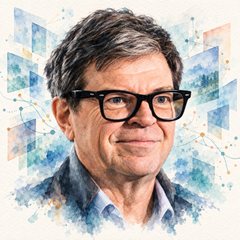 Yann LeCun
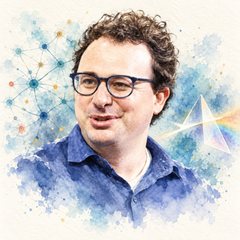 Dario Amodei
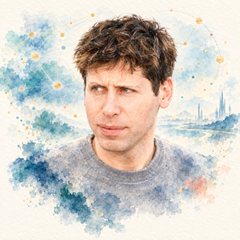 Sam Altman
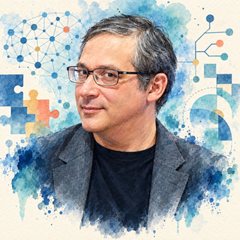 Gary Marcus
Where it stands. Unresolved; the disagreement is now as much about the definition of AGI as about dates. Source
Self-regulation versus binding law
Oversight should be science-led and adaptive, starting with an IPCC-like body internationally and, in the US, an independent standards body funded by the labs that reviews frontier models before release.
Human Rights Watch, responding to Google's 2025 change to its AI principles, said the episode showed "why voluntary principles are not an adequate substitute for regulation and binding law". Yoshua Bengio and Geoffrey Hinton have backed statutory rules such as California's SB 1047, which Hassabis's employer did not support. Yann LeCun and Andrew Ng, who declined to sign the 2023 statement on extinction risk that Hassabis signed, argue that the risk framing itself is overstated and that pre-release review favours incumbents.
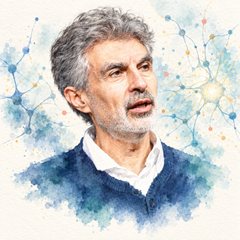 Yoshua Bengio
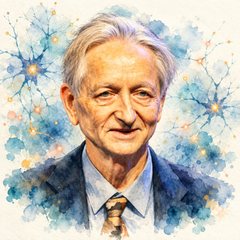 Geoffrey Hinton
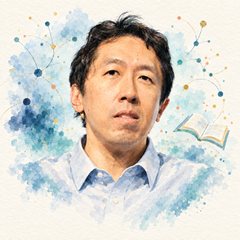 Andrew Ng
Where it stands. His July 2026 framework has been welcomed by parts of industry and criticised by civil society groups; no government has adopted it. Source
Open weights and the bad actor problem
Releasing frontier models openly hands dangerous capabilities to anyone; advocates of open source have not explained how they would handle misuse.
Yann LeCun, formerly Meta's Chief AI Scientist and now at AMI Labs, and Meta itself argue that open models are safer because they are scrutinised by more people, that concentration of frontier capability in a few companies is the larger risk, and that Google itself releases open Gemma models.
Where it stands. Google DeepMind keeps its frontier Gemini models closed while releasing smaller open models; the argument continues. Source
Has AlphaFold delivered for medicine
AlphaFold is the first proof point of AI accelerating science, and Isomorphic Labs will compress drug discovery from years to months.
Fortune's five-year review found that only about 36 percent of human protein predictions carry high confidence, that disordered regions resist prediction, and that no approved drug yet traces to AlphaFold. Kliment Verba of UCSF told MIT Technology Review that the model can "bullshit you with the same confidence as it would give a true answer". Isomorphic's own clinical timeline has slipped, and Jumper, who co-led AlphaFold, left for Anthropic in June 2026.
Where it stands. AlphaFold's research use is beyond dispute; its pharmaceutical payoff is still a promise, with Isomorphic's first human trials expected by the end of 2026. Source
Safety commitments inside Google
Frontier safety belongs inside the model-building team; Google says the 2026 reorganisation changes nothing about that.
TIME reported that DeepMind employees feared safety, responsibility and ethics teams moved into Google would lose influence, and that some safety teams might report to Google's president of global affairs. The February 2025 removal of the weapons pledge, in a post Hassabis co-signed, is cited by Human Rights Watch as evidence that Google's principles bend to commercial and political pressure.
Where it stands. The reporting lines were still being finalised in August 2026. Source
Notable works
| Title | Type | Year | Why it matters |
|---|---|---|---|
| Theme Park | product | 1994 | Bullfrog simulation game he co-designed and programmed at seventeen; the AI-driven visitors were its selling point. |
| Patients with hippocampal amnesia cannot imagine new experiences | paper | 2007 | His first paper, in PNAS, from the UCL PhD; listed by Science among the breakthroughs of 2007. |
| Human-level control through deep reinforcement learning | paper | 2015 | The DQN paper in Nature; one agent learning Atari games from pixels. |
| Mastering the game of Go with deep neural networks and tree search | paper | 2016 | The AlphaGo paper accompanying the Fan Hui match and preceding the Lee Sedol series. |
| Neuroscience-Inspired Artificial Intelligence | paper | 2017 | Neuron review with Kumaran, Summerfield and Botvinick setting out his case for using the brain as a guide to AI. |
| Highly accurate protein structure prediction with AlphaFold | paper | 2021 | The AlphaFold 2 paper; cited more than 40,000 times by late 2025 and the basis of the Nobel Prize. |
| AlphaFold Protein Structure Database | product | 2021 | Free database built with EMBL-EBI; expanded to more than 200 million structures in July 2022. |
| Accurate structure prediction of biomolecular interactions with AlphaFold 3 | paper | 2024 | Extends prediction to complexes of proteins with DNA, RNA, ligands and ions; commercial use is restricted. |
| Accelerating scientific discovery with AI (Nobel Prize lecture) | talk | 2024 | Delivered 8 December 2024 at Stockholm University; the slides state his conjecture that any pattern found in nature can be learned by a classical algorithm. |
| Gemini 3 | product | 2025 | Frontier model launched 18 November 2025 in a post co-signed by Pichai, Hassabis and Kavukcuoglu. |
| AI as the Ultimate Tool for Science: A Conversation with Demis Hassabis | essay | 2026 | Daedalus (Winter/Spring 2026) dialogue with James Manyika on root-node problems, AGI and creativity. |
| A Framework for Frontier AI and the Dawning of a New Age | essay | 2026 | July 2026 proposal, published on X, for an industry-funded standards body to review frontier models before release. |
Where to start
A short path into Demis's work, in order.
-
1
Nobel Prize interview transcript (December 2024)interview
The best short account in his own words of how chess, games and Theme Park led to AI, and what he learned from Elixir's failure. Fifteen minutes.
-
2
Demis Hassabis on our AI future: 'It'll be 10 times bigger than the Industrial Revolution'interview
Steve Rose's Guardian profile has the family background, the Musk lunch, the London decision and his radical abundance case, with pushback. Twenty minutes.
-
3
60 Minutes interview with Scott Pelleyinterview
The most-watched statement of his AGI timeline, his two worries about risk and his hope of ending disease; the transcript reads in ten minutes.
-
4
Accelerating scientific discovery with AI (Nobel lecture slides)talk
His own framing of what makes a problem suitable for AI, the AlphaFold story with the CASP chart, and his conjecture about classical learning algorithms. The video on nobelprize.org runs about forty minutes.
-
5
AI as the Ultimate Tool for Science (Daedalus)essay
A long dialogue with James Manyika on root-node problems, why today's models are not AGI, and using the scientific method to study AI itself. An hour.
-
6
Highly accurate protein structure prediction with AlphaFoldpaper
For technical readers, the Nature paper describing the AlphaFold 2 architecture that won the Nobel Prize; the supplementary material is where the detail lives.
Misconceptions
Hassabis is a chess grandmaster.
He reached master standard, with a peak rating of 2300 at thirteen, and captained England junior teams; he never held the grandmaster or international master title. Source
The 2024 Nobel Prize was awarded for artificial intelligence.
The Royal Swedish Academy's citation for Hassabis and Jumper reads "for protein structure prediction"; each received one quarter of the prize, with the other half going to David Baker for computational protein design. Source
AlphaFold solved protein folding.
AlphaFold predicts the final structure, not the folding pathway, and its confidence varies; about 36 percent of human protein predictions are high-confidence, and disordered regions remain hard. John Jumper led the technical team that built it. Source
Hassabis was pushed out of Google DeepMind in August 2026.
TIME and Semafor reported that he was not pushed and had been shifting Gemini responsibility to Koray Kavukcuoglu for at least a year. He remains Chair of Google DeepMind, became Alphabet's Chief Scientist and continues as CEO of Isomorphic Labs. Source
Awards
- Fellow of the Royal Academy of Engineering (FREng)
- Commander of the Order of the British Empire (CBE) 2018 New Year Honours, for services to science and technology.
- Fellow of the Royal Society (FRS)
- Princess of Asturias Award for Technical and Scientific Research Shared with Geoffrey Hinton, Yann LeCun and Yoshua Bengio.
- Albert Lasker Basic Medical Research Award With John Jumper, for the invention of AlphaFold, a revolutionary technology for predicting the three-dimensional structure of proteins.
- Breakthrough Prize in Life Sciences With John Jumper, for AlphaFold.
- Canada Gairdner International Award With John Jumper, for developing AlphaFold.
- Knight Bachelor For services to artificial intelligence.
- Nobel Prize in Chemistry Shared with John Jumper "for protein structure prediction" and with David Baker for computational protein design.
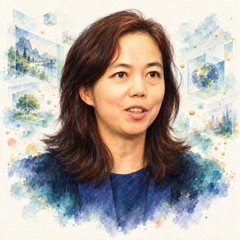
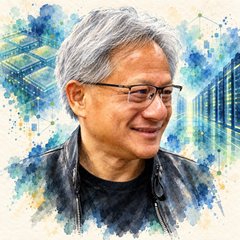
- TIME 100 Most Influential People Also listed in 2017; in December 2025 he was one of eight people pictured on the cover of TIME's Person of the Year issue honouring "the Architects of AI" collectively, with Sam Altman, Dario Amodei, Jensen Huang, Fei-Fei Li, Elon Musk, Lisa Su and Mark Zuckerberg.
- Albert Medal, Royal Society of Arts For his contribution to advancing artificial intelligence in service of humanity.
Quotes
"the reason I spent my whole career on AI is because I believe it could be the ultimate tool to help with science."
"There are some root node problems that, if you solve them, you unlock entire new branches of research."
"It's moving incredibly fast. I think we are on some kind of exponential curve of improvement."
"I think we have to start with something like the IPCC, where it's a scientific and research agreement with reports, and then build up from there."
"If I'd had my way, we would have left it in the lab for longer and done more things like AlphaFold, maybe cured cancer or something like that"
"In another universe, I might have been a professional gamer."
"so that I have the time and space to focus on the big picture and help influence what is to come to the best of my ability"
Related leaders
-
David Silver
Cambridge friend and Elixir Studios partner whom Hassabis recruited to DeepMind, where Silver led AlphaGo and the reinforcement learning group before leaving to found Ineffable Intelligence.
-
Geoffrey Hinton
Co-recipient of the 2022 Princess of Asturias Award and fellow 2024 Nobel laureate; both signed the 2023 statement on AI risk, though Hinton backs binding regulation where Hassabis proposes industry-funded review.
-
Yoshua Bengio
Co-recipient of the 2022 Princess of Asturias Award; both argue for international scientific oversight of AI, with Bengio favouring statutory rules.
-
Yann LeCun
Co-recipient of the 2022 Princess of Asturias Award; the two agreed at Davos in January 2026 that current systems are far from AGI but disagree on open models and on whether language models are a path to it.
-
Dario Amodei
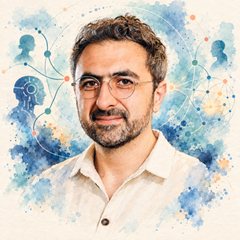
Fellow signatory of the 2023 statement on AI risk and fellow face on TIME's 2025 Person of the Year cover; the two set out sharply different AGI timelines on the same Davos stage in January 2026, and in September 2026 Hassabis endorsed Amodei's "pace the frontier" essay on X.
-
Fei-Fei Li
Fellow face on TIME's 2025 Person of the Year cover; Google DeepMind's Genie video world models are the leading rival to the explicit 3D world models of her company World Labs.
-
Sam Altman
Fellow frontier-lab chief and 2023 statement signatory; Hassabis has said AGI should not be "turned into a marketing term", a remark aimed at claims that it has effectively arrived.
-
Mustafa Suleyman
Co-founded DeepMind with Hassabis and Shane Legg in 2010, after a school friendship with Hassabis's younger brother; ran the lab's applied and product work until 2019 and since 2024 has led Microsoft AI.
-
Ilya Sutskever
Co-author of the 2016 AlphaGo paper in Nature, of which Hassabis was senior author; later OpenAI's chief scientist and now chief executive of Safe Superintelligence Inc.
-
Gary Marcus
Says he shares Hassabis's strict definition of AGI, but criticized his move from "nowhere near" at Davos in January 2026 to "2030 plus or minus a year" at Stanford that May.
-
Jensen Huang
Fellow face on TIME's December 2025 "Architects of AI" cover; rejected the September 2026 call to pace frontier AI that Hassabis endorsed.
-
Emily M. Bender
Her 2025 essay with Alex Hanna, "The Myth of AGI," cites his suggestion that autonomous AI scientists could cure cancer and eliminate disease within five to ten years as an example of what AGI promises are used to justify.
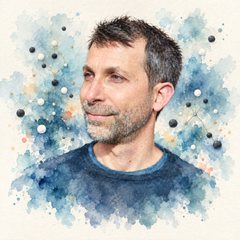
Details and links
Organizations
- DeepMind Co-founder; Chair of Google DeepMind and Chief Scientist of Alphabet, 2010-present
Education
- PhD in Cognitive NeuroscienceUniversity College London, 2009
- Computer Science Tripos (double first)Queens' College, University of Cambridge, 1997
Affiliations
- Google DeepMind (Co-founder; Chair since August 2026; CEO 2010-2026)
- Alphabet (Chief Scientist)
- Isomorphic Labs (Founder and CEO)
- Royal Society (Fellow)
- Royal Academy of Engineering (Fellow)
- Pontifical Academy of Sciences (Ordinary Member, appointed 2024)
- Francis Crick Institute (Scientific Advisory Board, since 2016)
- Elixir Studios (Founder, 1998-2005)
Social
Areas of focus
Sources
- Demis Hassabis - Facts - NobelPrize.org
- Transcript from an interview with Demis Hassabis, 6 December 2024 - NobelPrize.org
- Demis Hassabis - Telephone interview, October 2024 - NobelPrize.org
- Accelerating scientific discovery with AI - Nobel Prize lecture slides (PDF)
- Demis Hassabis on our AI future: 'It'll be 10 times bigger than the Industrial Revolution' - The Guardian
- AI risk must be treated as seriously as climate crisis, says Google DeepMind chief - The Guardian
- DeepMind's CEO Helped Take AI Mainstream. Now He's Urging Caution - Time
- Artificial intelligence could end disease, lead to radical abundance - CBS News 60 Minutes transcript
- AI as the Ultimate Tool for Science - Daedalus (archived copy)
- Google DeepMind CEO warns AI is at species-level transition - The Stanford Daily
- DeepMind CEO calls for an independent standards body to regulate frontier AI - TechCrunch
- Inside Google DeepMind's Reshuffle After CEO Demis Hassabis Steps Aside - Time
- Demis Hassabis steps down from Google DeepMind CEO role amid a major AI leadership shake-up - Fortune
- AI luminaries at Davos clash over how close human-level intelligence really is - Fortune
- The Architects of AI are Time's 2025 Person of the Year - CBS News Colorado
- Trump opposition to AI rules undercuts industry's calls for a slowdown - CNBC (15 September 2026)
- Isomorphic Labs announces Series B investment round - Isomorphic Labs
- Isomorphic Labs announces $600m external investment round - Isomorphic Labs
- Five years after its debut, AlphaFold shows why science may be AI's killer app - Fortune
- Google owner drops promise not to use AI for weapons - BBC News
- Google buys UK artificial intelligence start-up DeepMind - BBC News
- 2023 Albert Lasker Basic Medical Research Award - Lasker Foundation
- 2023 Canada Gairdner Award winners announced - Gairdner Foundation
- 2022 Princess of Asturias Award for Technical and Scientific Research - Fundacion Princesa de Asturias
- Sir Demis Hassabis receives the Royal Society of Arts' Albert Medal (archived copy)
- Demis Hassabis - Wikipedia
Reading this to shape your organization's AI plans? Through EMX, I help leadership teams decide where AI fits, what to ignore, and what to build next—using the same vendor-neutral research behind this profile. Put the research to work