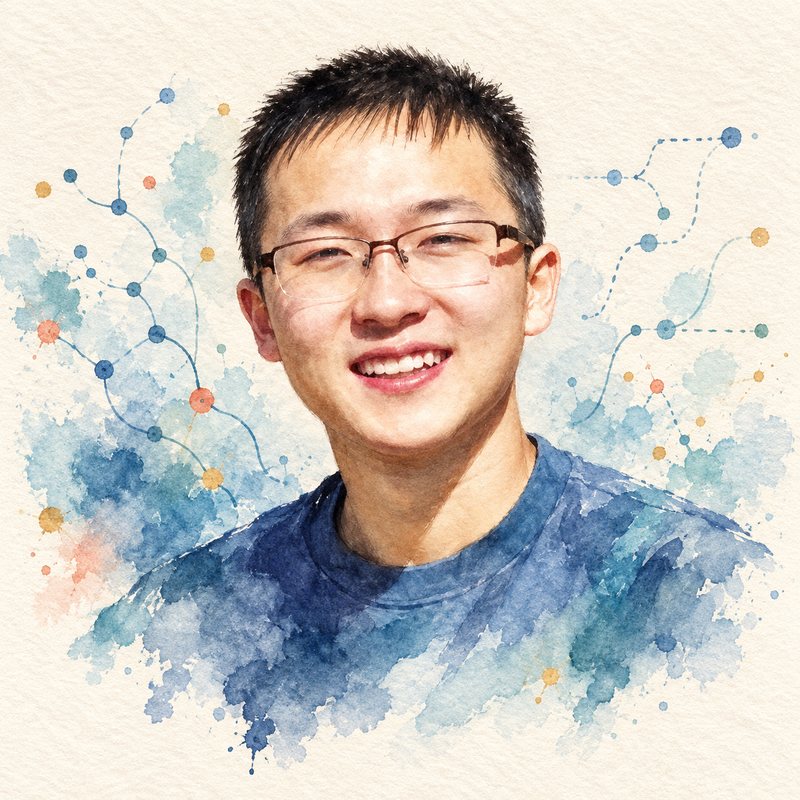
Shengjia Zhao
Chief Scientist, Meta Superintelligence Labs
OpenAI researcher on ChatGPT, GPT-4 and o3 who became chief scientist of Meta Superintelligence Labs in 2025.
Shengjia Zhao took a PhD in computer science at Stanford in Stefano Ermon's group, working on generative models and probabilistic machine learning. An early paper, InfoVAE (2017), proposed a way to stop variational autoencoders from ignoring their latent variables, a common failure of the method.
After Stanford, Zhao joined OpenAI and worked on the models that made the company's name: Mark Zuckerberg's list of credits called Zhao a "co-creator of ChatGPT, GPT-4, all mini models, 4.1 and o3" who had led OpenAI's synthetic data work, and TechCrunch reported that Zhao had also contributed to o1, the first OpenAI model trained to reason at length before answering.
Meta hired Zhao in June 2025 as one of the first recruits to Meta Superintelligence Labs, and on 25 July Zuckerberg named Zhao its chief scientist, writing that Zhao had "co-founded the new lab and has been our lead scientist from day one." The appointment has two accounts. The Financial Times reported in August 2025 that within days of arriving Zhao had threatened to go back to OpenAI, even signing the paperwork, and was then given the chief scientist title. Meta said Zhao had been slated for the role from the outset.
As chief scientist Zhao sets MSL's research agenda under Alexandr Wang. When the lab's first model, Muse Spark, was released in April 2026, Zhao posted "Meta is back!" and pointed to its token efficiency on third-party evaluations. In September 2026 Zhao announced the Muse personal agent, stressing a security design in which each agent runs in its own virtual machine and a separate monitor checks every action.
Known for
ChatGPT, GPT-4 and OpenAI's reasoning models
At OpenAI Zhao worked on ChatGPT, GPT-4 and its smaller "mini" versions, GPT-4.1, o1 and o3, and led the team producing synthetic training data.
Muse Spark
The first model built by Meta Superintelligence Labs under Zhao's research direction, released in April 2026 as a closed-weight multimodal reasoning model powering Meta AI.
Career
Sources
- People, Stefano Ermon Group (Stanford University)
- InfoVAE: Information Maximizing Variational Autoencoders (Zhao, Song and Ermon, arXiv, 2017)
- GPT-4 Technical Report (OpenAI, arXiv, March 2023)
- Mark Zuckerberg announces creation of Meta Superintelligence Labs. Read the memo (CNBC, June 2025)
- Meta names Shengjia Zhao as chief scientist of AI superintelligence unit (TechCrunch, July 2025)
- Some Meta AI hires quit after short stays, summarising the Financial Times (Silicon UK, September 2025)
- Shengjia Zhao on X on the launch of Muse Spark (April 2026)
- Shengjia Zhao on X on the launch of the Muse agent (September 2026)
Brief profiles cover a person's professional record: roles, work and public statements, each from a source listed here. Full profiles, with positions across the debates, are kept for the people the site follows most closely.