Meta
Meta's AI effort began as FAIR, the research lab Mark Zuckerberg asked Yann LeCun to build in 2013, and became the main corporate champion of open-weight models with the Llama releases of 2023 to 2025. After Llama 4 disappointed in April 2025, Zuckerberg put all of Meta's AI teams into Meta Superintelligence Labs under Alexandr Wang, hired researchers from rival labs with very large pay offers, and in April 2026 released Muse Spark without open weights. Meta is a public company controlled by Zuckerberg; in August 2026 he gave its independent directors authority to approve the safety criteria for model releases.
History
FAIR and the open research bargain
In December 2013 Facebook hired Yann LeCun, the NYU professor who had developed convolutional neural networks, to build an artificial intelligence lab with offices in Menlo Park, New York and London. LeCun ran it with Rob Fergus, his NYU colleague and a co-founder, on terms borrowed from academia: researchers kept university posts, published their papers and released their code. Joëlle Pineau opened a Montreal lab in 2017. The lab, Facebook AI Research, later renamed Fundamental AI Research, produced the PyTorch framework, which Meta handed to a new PyTorch Foundation under the Linux Foundation in September 2022, and a steady stream of open work in vision, translation and speech. In 2018 LeCun stepped back from running FAIR to become chief AI scientist.
The open approach had limits and critics. In May 2022 FAIR gave researchers OPT-175B, a model the size of GPT-3, with its code and a logbook of every crash during training; Pineau told MIT Technology Review, "I believe the only way to build trust is extreme transparency." In November 2022 Meta put up a demo of Galactica, a model trained on scientific papers, and took it down after three days when users showed it producing confident, fabricated science. ChatGPT appeared two weeks later.
Llama and the open-weights bet
On 24 February 2023 Meta announced LLaMA, four language models up to 65 billion parameters, offered case by case to researchers under a noncommercial license. On 3 March the weights appeared on 4chan and spread by BitTorrent. Meta told Motherboard that "some have tried to circumvent the approval process" but that its release strategy balanced "responsibility and openness." In June Senators Richard Blumenthal and Josh Hawley wrote to Zuckerberg that Meta "appears to have failed to conduct any meaningful risk assessment in advance of release."
Meta answered by opening further. Llama 2, released on 18 July 2023 with Microsoft as launch partner, could be downloaded by anyone and used commercially, except by companies with more than 700 million monthly users, who needed Meta's permission. The Open Source Initiative said the license was not open source because it restricted some users and uses. In September 2023 LeCun told the Senate Intelligence Committee that "it is better if AI is developed openly, rather than behind closed doors by a handful of companies." In July 2024, with the 405-billion-parameter Llama 3.1, which Meta called "the first frontier-level open source AI model," Zuckerberg published "Open Source AI is the Path Forward," arguing that open models would become the standard as Linux had.
Openness had critics outside Meta, among them Geoffrey Hinton and Yoshua Bengio, who argued that released weights of powerful models could not be recalled. Meta's reply, in LeCun's words and Zuckerberg's, was that many eyes make open systems safer than a few closed ones.
Llama 4 and the superintelligence reset
In February 2025 Meta published a Frontier AI Framework setting risk thresholds for cyber and chemical and biological threats. On 1 April Pineau announced she would leave FAIR; Fergus returned from Google DeepMind to replace her. Llama 4 arrived on 5 April 2025 and was received poorly by developers. Researchers noticed that the version ranked second on the LM Arena leaderboard was an "experimental chat version" that differed from the one released. Ahmad Al-Dahle, Meta's head of generative AI, called claims that Meta had trained on benchmark test sets "simply not true." In January 2026 LeCun, on his way out, told the Financial Times that the "results were fudged a little bit" and that the team had "used different models for different benchmarks"; he said Zuckerberg "basically lost confidence in everyone who was involved."
Zuckerberg rebuilt. In June 2025 Meta invested 14.3 billion dollars in Scale AI and hired its founder, Alexandr Wang, as chief AI officer. On 30 June he announced Meta Superintelligence Labs, bringing FAIR, product teams and a new frontier-model group, TBD Lab, under Wang, with Nat Friedman running products; a July memo named the former OpenAI researcher Shengjia Zhao chief scientist. Zuckerberg recruited many researchers personally. Sam Altman said Meta had offered some OpenAI staff signing bonuses of 100 million dollars; Meta's chief technology officer, Andrew Bosworth, said the market was "setting a rate here for a level of talent which is really incredible." When the Wall Street Journal reported an offer to Andrew Tulloch worth up to 1.5 billion dollars over six years, a Meta spokesperson called the description "inaccurate and ridiculous." Several hires left within weeks, and in October Wang cut about 600 jobs across FAIR, product and infrastructure teams while sparing TBD Lab.
LeCun leaves and Muse Spark ships closed
On 19 November 2025 LeCun announced he would leave at the end of the year to found AMI Labs, a company pursuing the world models he had championed at FAIR; Meta agreed to be a partner. In interviews he said Meta had been less successful at turning FAIR's research into products and that the new hires were "completely LLM-pilled." Meta did not respond publicly to his account of Llama 4.
In March 2026 Zuckerberg created an Applied AI Engineering organization of roughly 6,500 engineers under Reality Labs executive Maher Saba, reporting to Bosworth, to build the data and evaluation pipeline for Meta's models. Staff described the work to TechCrunch as "soul-crushing," and more than 1,600 employees petitioned against a program that recorded their keystrokes and mouse movements to train AI agents; Zuckerberg wrote in a memo that Meta had "made mistakes."
On 8 April 2026 MSL released Muse Spark, a multimodal reasoning model that Meta called "the first product of a ground-up overhaul of our AI efforts." It powered Meta AI and was offered to partners by API, without downloadable weights. The same day Meta replaced its Frontier AI Framework with an Advanced AI Scaling Framework that added loss of control as a risk category and promised a Safety and Preparedness Report for each frontier release. In May Meta began cutting about 8,000 jobs, 10 percent of its staff, while raising its 2026 capital spending forecast to as much as 145 billion dollars. CNBC reported in June that Zuckerberg could give Bosworth a larger AI role if the newcomers were seen to fail; Wang dismissed reports of internal conflict.
Muse, and open weights again
On 10 August 2026 Meta released Muse Glimmer, a 30-billion-parameter model distilled from Muse Spark, with open weights under Apache 2.0, and Zuckerberg promised open weights for Muse Spark 1.2. The same day he published "The Future is for Everyone," a 6,500-word essay arguing that superintelligence should be distributed to individuals rather than held by a few labs, that "balance of power" is "the foundation of safety," and that the US should help American open models compete with Chinese ones. He wrote that it was "surprising that the discourse from many developing AI is so filled with doom." In the same essay he gave Meta's independent board authority to approve the safety criteria for model releases and to review whether each release meets them, saying he did not want that decision to rest with him or any single person.
Meta launched Muse, a personal agent that acts across a user's apps and accounts, in early September. Users found that its configuration files closely matched those of OpenClaw, an open-source agent, and Friedman replied that Muse was "built from scratch" but "definitely heavily inspired as a product by OpenClaw." At Meta Connect on 23 September Zuckerberg said Meta was "going all in on Muse" and expected it to "grow into the personal superintelligence that billions of people around the world are going to use." Semafor reported that month that Tulloch, the TBD Lab researcher whose pay had become a symbol of the hiring drive, had left Meta.
Timeline
-
Dec 2013
Facebook hires Yann LeCun to found FAIR
The new lab opens with offices in Menlo Park, New York and London and a policy of open publication. Source
-
May 2022
OPT-175B is shared with researchers
A GPT-3-sized model is released for research with its code and full training logbook. Source
-
Sep 2022
PyTorch moves to the Linux Foundation
Meta hands its machine learning framework to a new independent PyTorch Foundation. Source
-
Nov 2022
Galactica demo pulled after three days
Meta withdraws a science language model after users show it inventing plausible but false papers and facts. Source
-
Feb 2023
LLaMA is released to researchers
Four models up to 65 billion parameters are offered case by case under a noncommercial license. Source
-
Mar 2023
LLaMA weights leak
The full weights appear on 4chan and BitTorrent a week after the announcement. Source
-
Jul 2023
Llama 2 allows commercial use
Anyone can download the weights; companies with over 700 million monthly users need Meta's permission. Source
-
Sep 2023
LeCun testifies for open AI
Meta's chief AI scientist tells the Senate Intelligence Committee that AI should be developed openly. Source
-
Jul 2024
Llama 3.1 405B and "Open Source AI is the Path Forward"
Zuckerberg's letter accompanies what Meta calls the first frontier-level open model. Source
-
Feb 2025
Frontier AI Framework published
Meta sets risk thresholds for cyber and chemical and biological threats. Source
-
Apr 2025
Llama 4 launches to a poor reception
A tuned, unreleased variant of Maverick is used on the LM Arena leaderboard; Meta denies training on test sets. Source
-
Jun 2025
Meta invests in Scale AI and hires Alexandr Wang
The deal values Scale at more than 29 billion dollars; Wang becomes chief AI officer. Source
-
Jun 2025
Meta Superintelligence Labs is created
Zuckerberg's memo puts all AI teams under Wang, with Nat Friedman on products, and lists 11 new hires. Source
-
Jul 2025
"Personal Superintelligence" letter
Zuckerberg writes that superintelligence is "now in sight" and that Meta will be careful about what it open-sources. Source
-
Oct 2025
About 600 AI jobs cut
FAIR, product and infrastructure teams lose staff; the TBD Lab frontier group is spared. Source
-
Nov 2025
Yann LeCun announces his departure
He leaves at the end of 2025 to found AMI Labs, with Meta as a partner. Source
-
Jan 2026
LeCun says Llama 4 results were "fudged a little bit"
In a Financial Times interview he says the team used different models for different benchmarks. Source
-
Apr 2026
Muse Spark and the Advanced AI Scaling Framework
MSL's first model ships without open weights, alongside a revised safety framework that adds loss of control. Source
-
May 2026
About 8,000 jobs cut
Meta reduces its workforce by about 10 percent while raising its capital spending forecast. Source
-
Aug 2026
Muse Glimmer and "The Future is for Everyone"
An open-weight 30-billion-parameter model ships as Zuckerberg promises open weights for Muse Spark 1.2. Source
-
Sep 2026
"Going all in on Muse"
At Meta Connect Zuckerberg presents the Muse agent as Meta's route to personal superintelligence. Source
-
Oct 2026
Superintelligence Scaling Framework
Meta revises and renames its safety framework, applying loss-of-control safeguards during training and evaluation, requiring open-weight releases to account for later modification, and creating a board committee to review future changes. Source
-
Oct 2026
Muse Wonder
Meta Superintelligence Labs releases Muse Wonder and Muse Wonder Full, its first frontier models, with closed weights. Source
What it built
The main models and products to come out of Meta, oldest first.
-
PyTorch
The machine learning framework Meta researchers started in 2016, used by more than 80 percent of researchers submitting to NeurIPS and ICML by 2022, when Meta moved it to the Linux Foundation.
-
OPT-175B
A GPT-3-sized model shared with researchers along with its code and full training logbook.
-
LLaMA
Four models up to 65 billion parameters offered to researchers under a noncommercial license; the weights leaked within a week.
-
Llama 2
The first Llama models anyone could download and use commercially, with a carve-out for companies above 700 million monthly users.
-
Llama 3.1 405B
What Meta called the first frontier-level open model, released with Zuckerberg's letter "Open Source AI is the Path Forward."
-
Llama 4
Open-weight mixture-of-experts models, Scout with a 10-million-token context and the 400-billion-parameter Maverick; LeCun later said the benchmark results were "fudged a little bit."
-
Muse Spark
The first model from Meta Superintelligence Labs, released without open weights.
-
Muse Glimmer
A 30-billion-parameter open-weight model under Apache 2.0, built to run agents locally on consumer devices.
-
Muse
Meta's personal AI agent, presented at Meta Connect as its route to "personal superintelligence."
-
Muse Wonder
Meta's first frontier models, Muse Wonder and the larger Muse Wonder Full, built for agentic tasks and released with closed weights.
Where it stands
The lab's own stated positions, from its charters, policies and official statements.
In July 2024 Meta, through Zuckerberg, committed to open-weight models as the company's strategy and argued they are good for the world; its July 2025 letter added that it would be careful about what it open-sources, and in August 2026 it resumed open-weight releases.
“I believe that open source is necessary for a positive AI future.”
Open Source AI is the Path Forward (Mark Zuckerberg, Meta, July 2024), 2024 · Compare the people on this
Meta's July 2025 statement of its AI mission says superintelligence is close enough to plan for, and that AI systems have begun to improve themselves.
“Developing superintelligence is now in sight.”
Personal Superintelligence (Mark Zuckerberg, Meta, July 2025), 2025 · Compare the people on this
Meta's Superintelligence Scaling Framework (version 2.1, October 2026), which replaced the Advanced AI Scaling Framework of April 2026, tests frontier models for chemical and biological, cyber and loss-of-control risks and extends its safety requirements from deployment to training and evaluation; a new committee of Meta's board reviews changes to it.
“Recent events show that major AI risks can emerge before deployment.”
Developing Capable Models Responsibly (Meta, October 2026), 2026 · Compare the people on this
Zuckerberg's August 2026 essay opposes rules that delay model releases, proposing instead that the US government get early access to frontier models through close collaboration with the labs.
“Any policy that slows American model releases -- even by a month -- could add significant risk to American leadership while letting foreign models race ahead.”
The Future is for Everyone (Mark Zuckerberg, Meta, August 2026), 2026 · Compare the people on this
People
Here now
-
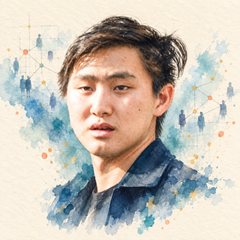
Alexandr Wang Brief profile
Chief AI Officer, leading Meta Superintelligence Labs, 2025-present
Founded the data-labeling company Scale AI at 19, then became Meta's first chief AI officer in June 2025.
-
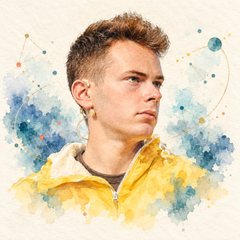
Daniel Gross Brief profile
Meta Superintelligence Labs; co-lead of Meta Compute from January 2026, 2025-present
Co-founded Safe Superintelligence with Ilya Sutskever and was its first CEO, then left for Meta in June 2025.
-
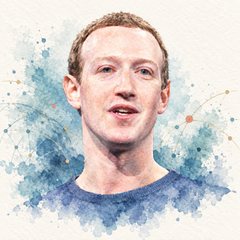
Mark Zuckerberg Brief profile
Co-founder, Chairman and Chief Executive Officer, 2004-present
Founded Facebook, hired Yann LeCun to start FAIR, backed open-weight Llama, then rebuilt Meta's AI effort in 2025.
-
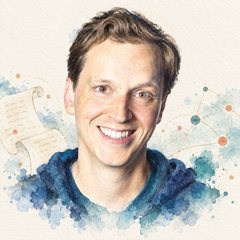
Nat Friedman Brief profile
Member of the Meta Advisory Group (2024); head of products and applied research, Meta Superintelligence Labs (from June 2025), 2024-present
Ran GitHub when it launched Copilot, co-funded the Vesuvius Challenge, and has led Meta's AI products since 2025.
-
Rob Fergus Brief profile
Head of FAIR, within Meta Superintelligence Labs, 2025-present
Co-founded Facebook AI Research with Yann LeCun, spent five years at DeepMind, and returned to run FAIR in 2025.
-
Shengjia Zhao Brief profile
Co-founder and Chief Scientist, Meta Superintelligence Labs, 2025-present
OpenAI researcher on ChatGPT, GPT-4 and o3 who became chief scientist of Meta Superintelligence Labs in 2025.
Formerly here
-
Yann LeCun
Founding Director of FAIR, then Vice President and Chief AI Scientist, 2013-2025
Inventor of convolutional neural networks and founding director of Meta's FAIR lab, LeCun shared the 2018 Turing Award and now chairs AMI...
-
Andrew Tulloch Brief profile
Researcher, TBD Lab in Meta Superintelligence Labs, 2025-2026
Training-systems engineer who helped train GPT-4o and o3 at OpenAI, then co-founded Thinking Machines Lab.
-
Andrew Tulloch Brief profile
Engineer on machine learning systems, until 2023
Training-systems engineer who helped train GPT-4o and o3 at OpenAI, then co-founded Thinking Machines Lab.
-
Guillaume Lample Brief profile
Research scientist, Facebook AI Research (Paris), until 2023
FAIR researcher behind unsupervised translation and the first LLaMA models, now Mistral AI's chief scientist.
-
Joëlle Pineau Brief profile
Head of FAIR Montreal (2017), then Vice President of AI Research leading FAIR (2023 to 2025), 2017-2025
Ran Meta's FAIR lab from 2023 to 2025 and pushed its open releases; now chief AI officer at Cohere.
-
Rob Fergus Brief profile
Co-founder and research scientist, Facebook AI Research, 2013-2020
Co-founded Facebook AI Research with Yann LeCun, spent five years at DeepMind, and returned to run FAIR in 2025.
-
Timothée Lacroix Brief profile
Engineer and doctoral researcher, Facebook AI Research (New York), then research engineer at Meta, 2015-2023
Meta engineer and LLaMA co-author who co-founded Mistral AI in 2023 and runs its engineering as CTO.
Where its people went
Organizations founded by people who left Meta.
-
Guillaume Lample, Timothée Lacroix
Lample and Lacroix, FAIR researchers who worked on LLaMA, left weeks after its release to found the Paris company with Arthur Mensch of Google DeepMind. Source
-
EvolutionaryScale
Alexander Rives, Tom Sercu, Sal Candido
The three had built FAIR's ESM protein language models from 2019; after Meta disbanded their team they left and launched the company with the ESM3 model and a 142 million dollar round in June 2024. Source
-
LeCun left after twelve years to pursue world models outside Meta, which he said had become focused on language models; Meta agreed to partner with the company without investing. Source
-
Warp Sciences
Manohar Paluri
Paluri, a former vice president at Meta Superintelligence Labs, co-founded the drug-development automation company with Kevin Weil, formerly of OpenAI; it launched in October with 215 million dollars led by Lightspeed. Source
Sources
- MediaNama: Mark Zuckerberg proposes sharing AI checkpoints with US government (11 August 2026)
- Facebook's 'Deep Learning' Guru Reveals the Future of AI (Wired, December 2013)
- Meta has built a massive new language AI, and it's giving it away for free (MIT Technology Review, May 2022)
- Why Meta's latest large language model survived only three days online (MIT Technology Review, November 2022)
- Facebook's powerful large language model leaks online (Motherboard, March 2023)
- Hawley and Blumenthal demand answers from Meta after 'leak' of Meta's AI model (Senator Hawley, June 2023)
- Meta's LLaMa license is not Open Source (Open Source Initiative, July 2023)
- Testimony of Yann LeCun, Senate Select Committee on Intelligence (September 2023)
- Open Source AI is the Path Forward (Mark Zuckerberg, Meta, July 2024)
- Meta's approach to frontier AI (Meta, February 2025)
- Meta exec denies the company artificially boosted Llama 4's benchmark scores (TechCrunch, April 2025)
- Mark Zuckerberg announces creation of Meta Superintelligence Labs. Read the memo (CNBC, June 2025)
- Personal Superintelligence (Mark Zuckerberg, Meta, July 2025)
- Thinking Machines Lab co-founder Andrew Tulloch heads to Meta (TechCrunch, October 2025)
- Meta lays off 600 from 'bloated' AI unit as Wang cements leadership (CNBC, October 2025)
- Meta chief AI scientist Yann LeCun is leaving to create his own startup (CNBC, November 2025)
- Results were fudged, departing Meta AI chief confirms Llama 4 benchmark manipulation, summarising the Financial Times (Slashdot, January 2026)
- Meta's months-old AI unit is a soul-crushing gulag, say the engineers stuck inside it (TechCrunch, June 2026)
- Scaling How We Build and Test Our Most Advanced AI (Meta, April 2026)
- Meta layoffs starting this week stress harsh AI reality inside Zuckerberg's company (CNBC, May 2026)
- The Future is for Everyone (Mark Zuckerberg, Meta, August 2026)
- Meta, Developing Capable Models Responsibly (October 2, 2026)
- Meta, Introducing Muse Wonder and Muse Wonder Full (October 12, 2026)