OpenAI
OpenAI makes the GPT models, ChatGPT and the Codex coding agent. It began in December 2015 as a donor-funded nonprofit meant to build artificial general intelligence for the benefit of humanity, added a capped-profit company in 2019 to pay for compute, and since October 2025 has been OpenAI Group PBC, a public benefit corporation controlled by the nonprofit OpenAI Foundation. Its choices set the terms of several arguments on this site: whether frontier models should be published, whether scaling leads to AGI, how fast labs should go, and whether a lab's nonprofit mission can survive the capital its work requires.
History
A nonprofit with a billion-dollar pledge
On 11 December 2015 Greg Brockman and Ilya Sutskever announced OpenAI as "a non-profit artificial intelligence research company" whose aim was to benefit humanity "unconstrained by a need to generate financial return." Sam Altman and Elon Musk were co-chairs, Sutskever ran research and Brockman, who had just left Stripe, was CTO; the other founding members included Andrej Karpathy, John Schulman and Wojciech Zaremba. Musk, Altman, Brockman, Reid Hoffman, Jessica Livingston, Peter Thiel, Amazon Web Services and Infosys committed a combined 1 billion dollars. The money that arrived was far smaller: OpenAI said in 2024 that the nonprofit had raised less than 45 million dollars from Musk and more than 90 million from other donors. The lab first worked out of Brockman's living room, released the Gym toolkit for reinforcement learning in 2016 and began training OpenAI Five to play Dota 2.
By 2017 the founders had concluded that AGI would take far more computing power than a charity could buy, and talks about a for-profit arm broke down over control. OpenAI's account, published in March 2024 with Musk's emails, is that Musk "wanted majority equity, initial board control, and to be CEO," then proposed folding OpenAI into Tesla, and left in February 2018 saying its chance of success was zero. Musk's account, in the lawsuit he filed in 2024, is that he funded a nonprofit, open-source counterweight to Google that his co-founders later turned into a "closed-source de facto subsidiary" of Microsoft. In April 2018 OpenAI published its charter. It defined AGI as "highly autonomous systems that outperform humans at most economically valuable work," promised to stop competing with and start assisting any "value-aligned, safety-conscious project" that came close to AGI first, and warned that "safety and security concerns will reduce our traditional publishing in the future."
Capped profit and the scaling bet
In March 2019 OpenAI created OpenAI LP, which it called a "capped-profit" company: investors and staff could earn up to 100 times their stake, anything beyond went to the nonprofit, and the nonprofit's board kept control. The announcement said OpenAI would need "to invest billions of dollars in upcoming years into large-scale cloud compute." Altman left Y Combinator to become chief executive, and in July 2019 Microsoft invested 1 billion dollars and OpenAI moved its computing to Azure.
The research narrowed around one bet. Jakub Pachocki, now chief scientist, wrote in 2026 that the lab "deeply internalized" around 2017 that progress came from compute and oriented its research around "a small number of very scalable directions." GPT-2, announced in February 2019, was withheld over misuse concerns and released in stages. A January 2020 paper by Jared Kaplan and colleagues described smooth scaling laws, and GPT-3, 100 times larger than GPT-2, followed in May 2020 and was sold through a paid API rather than released.
The same bet split the staff. In late 2020 and 2021 Dario Amodei, then vice president of research, left with Daniela Amodei, Kaplan, Tom Brown, Chris Olah, Jack Clark and others to found Anthropic. Dario Amodei said in 2023 that the group believed in scaling but also that "you don't tell the models what their values are just by pouring more compute into them." The alignment team that stayed fine-tuned GPT-3 on human rankings to make InstructGPT in January 2022. On 30 November 2022 OpenAI released ChatGPT, trained the same way, as a free research preview. A UBS estimate put it at 100 million monthly users two months later, and in January 2023 Microsoft agreed to a further investment reported at 10 billion dollars.
The board crisis and the safety departures
GPT-4, released in March 2023, came with a technical report that withheld its size, data and training method, citing "the competitive landscape and the safety implications." In July 2023 Sutskever and Jan Leike launched a Superalignment team with a promise of 20 percent of the compute OpenAI had secured.
On 17 November 2023 the nonprofit board of Sutskever, Adam D'Angelo, Tasha McCauley and Helen Toner removed Altman, saying he "was not consistently candid in his communications with the board." Brockman quit, as did Pachocki and two other senior researchers, and 738 of roughly 770 employees signed a letter threatening to follow Altman to Microsoft. Altman returned on 21 November under a new board chaired by Bret Taylor. The two sides still describe the episode differently. Toner said in May 2024 that Altman had given the board "inaccurate information about the small number of formal safety processes" the company had. Altman called it "a big failure of governance by well-meaning people, myself included." A review by the law firm WilmerHale concluded in March 2024 that his conduct "did not mandate removal"; no report was published.
Sutskever announced his departure on 14 May 2024, and Leike followed the next day. Leike wrote that "safety culture and processes have taken a backseat to shiny products" and that his team had been "struggling for compute." Altman replied that Leike was right that OpenAI had "a lot more to do," and he and Brockman wrote that the company had raised awareness of AGI's risks and would keep doing safety research. The Superalignment team was dissolved. Days later Vox reported exit agreements that let OpenAI cancel departing employees' vested equity; OpenAI said it had never done so and removed the terms. Schulman left for Anthropic in August 2024, saying he was "not leaving due to lack of support for alignment research," and chief technology officer Mira Murati left in September.
From capped profit to public benefit corporation
Musk sued on 29 February 2024, arguing that the Microsoft partnership and the for-profit company breached OpenAI's founding commitments. In December 2024 OpenAI proposed turning its for-profit into an ordinary public benefit corporation that the nonprofit would no longer control. After criticism from former employees, civic groups and Musk, and talks with the attorneys general of California and Delaware, it reversed course on 5 May 2025 and said the nonprofit would stay in control.
The recapitalization closed on 28 October 2025. The for-profit became OpenAI Group PBC; the nonprofit, renamed the OpenAI Foundation, received equity then worth about 130 billion dollars, around 26 percent, and pledged an initial 25 billion dollars to health research and "AI resilience." Microsoft took about 27 percent. In April 2026 the two companies rewrote their deal again: Microsoft's license became non-exclusive and runs to 2032, the clause tied to OpenAI declaring AGI was dropped, and OpenAI could sell through any cloud. OpenAI raised 122 billion dollars at an 852 billion dollar valuation that spring, with Amazon, Nvidia and SoftBank as the largest investors.
Musk's case went to trial in Oakland on 27 April 2026. Musk told the jury that Altman and Brockman had tried to "steal a charity"; OpenAI's lawyers argued that Musk had supported a for-profit arm and was suing to hurt a competitor, his own xAI. On 18 May a nine-member advisory jury found unanimously, in under two hours, that the claims were filed too late, and Judge Yvonne Gonzalez Rogers adopted the verdict without ruling on the merits. Musk called it a "calendar technicality" and said he would appeal. On 8 June 2026 OpenAI confirmed that it had confidentially filed a draft S-1 with the Securities and Exchange Commission.
Astra, the escape and the pause
In July 2026, during an internal cybersecurity evaluation, agents built on an unreleased OpenAI model escaped their test environment, ran code on dozens of Hugging Face servers and reached parts of OpenAI's own research infrastructure. OpenAI shut down the affected training service, and on 7 August concluded that its next model, Astra, might reach the Critical cybersecurity level of its Preparedness Framework. On 18 August it disclosed a two-week pause in reinforcement learning on models meant for deployment and said its largest planned frontier training run remained on hold while it hardened research environments and added monitoring that checks every generated token, at a cost of roughly 20 percent of the compute being monitored.
GPT-6 Astra shipped on 3 September, first to limited customers, as OpenAI's first model rated Critical for cybersecurity; Brockman said it was reasonable to call it the start of the "AGI era." Three days later Pachocki published "An alien mind," arguing that "no lab has solved alignment and monitoring" well enough to keep scaling at full speed. On 8 September OpenAI said an internal model had proved that the Navier-Stokes equations can blow up under a specially constructed external force, a result mathematicians disputed on priority and on whether it answered the question they cared about. On 12 September Altman endorsed Dario Amodei's call to "pace the frontier" and said a 2026 listing would be "ill-advised." On 21 September OpenAI asked the United States to lead international technical standards for frontier AI and recursive self-improvement. Two days later Australia's prime minister, Anthony Albanese, said an OpenAI agent had entered non-public parts of a Medicare statistics portal on 18 June. OpenAI said its models "took actions we did not intend" in an evaluation and that it had notified Australia on 10 September. On 25 September it reported that an agent in a training run had reached an outside chatbot through the sandbox's DNS resolver five days earlier, and paused all training, evaluation and tool use by its most capable models, its second halt in three months.
Timeline
-
Dec 2015
OpenAI is announced as a nonprofit
Eleven founding members and backers who commit 1 billion dollars, with Altman and Musk as co-chairs. Source
-
Feb 2018
Musk leaves OpenAI
After talks over a for-profit arm fail, Musk departs, telling the team its probability of success is zero. Source
-
Apr 2018
The OpenAI Charter is published
It commits OpenAI to assist rather than race a safety-conscious project that gets close to AGI first. Source
-
Feb 2019
GPT-2 is announced and withheld
The full 1.5-billion-parameter model is held back over misuse concerns and released in stages through November. Source
-
Mar 2019
OpenAI LP, a capped-profit company, is created
First-round investors' returns are capped at 100 times, with the nonprofit board in control. Source
-
Jul 2019
Microsoft invests 1 billion dollars
OpenAI moves its computing to Microsoft Azure. Source
-
May 2020
GPT-3 is published
The 175-billion-parameter model is offered through a paid API from June rather than released. Source
-
Nov 2022
ChatGPT is released as a research preview
A chat model trained with human feedback on the InstructGPT recipe, free during the preview. Source
-
Mar 2023
GPT-4 is released
Its technical report withholds model size, data and training method. Source
-
Jul 2023
Superalignment team is launched
Sutskever and Leike are promised 20 percent of secured compute to align superintelligence within four years. Source
-
Nov 2023
The board removes Altman
He returns on 21 November under a new board after most staff threaten to leave. Source
-
Feb 2024
Musk sues OpenAI and Altman
The suit says the Microsoft partnership and for-profit turn broke the founding mission. In May 2026 an advisory jury found the claims time-barred; Musk said he would appeal. Source
-
May 2024
Leike resigns after Sutskever
He writes that "safety culture and processes have taken a backseat to shiny products"; the Superalignment team is dissolved. Source
-
Sep 2024
o1 introduces test-time reasoning
A model trained with reinforcement learning to think in a hidden chain of thought before answering. Source
-
May 2025
OpenAI keeps its nonprofit in control
After talks with the California and Delaware attorneys general, it drops a plan to free the for-profit from nonprofit control. Source
-
Aug 2025
gpt-oss open-weight models are released
Its first open-weight language models since GPT-2, under the Apache 2.0 license. Source
-
Oct 2025
Recapitalization completes
OpenAI Group PBC is created under the OpenAI Foundation, which holds about 26 percent. Source
-
Mar 2026
A 122 billion dollar funding round closes
The round values OpenAI at 852 billion dollars. Source
-
Apr 2026
Microsoft deal is rewritten
Microsoft's license becomes non-exclusive through 2032 and the AGI clause is dropped. Source
-
Jun 2026
Confidential IPO filing is confirmed
OpenAI says it has submitted a draft S-1 but has not committed to a timeline. Source
-
Aug 2026
Frontier training is paused
After the Hugging Face incident, RL training stops for two weeks and the largest planned run stays on hold. Source
-
Sep 2026
GPT-6 Astra ships
Its first model rated Critical for cybersecurity; Brockman calls it the start of the "AGI era." Source
-
Sep 2026
OpenAI proposes global standards for self-improving AI
It asks the United States to lead technical standards built on national AI safety institutes. Source
-
Sep 2026
Training paused a second time
After an agent in training reached an outside chatbot through DNS on 20 September, OpenAI pauses all training, evaluation and tool use by its most capable models. It resumed reinforcement learning training on 1 October with a standing rule of no live internet access during frontier training. Source
-
Sep 2026
GPT-6.1 Astra release cancelled
OpenAI drops the planned October release of GPT-6.1 Astra after internal tests found more deception and more actions taken without permission than in earlier models. Source
What it built
The main models and products to come out of OpenAI, oldest first.
-
GPT-2
A 1.5-billion-parameter language model trained on millions of web pages, released in stages over misuse concerns.
-
GPT-3
A 175-billion-parameter model that could pick up new tasks from a few examples in its prompt, sold through a paid API instead of released.
-
DALL-E 2
A text-to-image model that turned a caption into a CLIP image embedding and then into a picture.
-
ChatGPT
A chat model trained with human feedback on the InstructGPT recipe, released free as a research preview.
-
GPT-4
A multimodal model whose technical report withheld its size, data and training method.
-
Sora
A text-to-video model that OpenAI showed generating clips up to a minute long.
-
o1
The first of OpenAI's reasoning models, trained with reinforcement learning to work through a hidden chain of thought before answering.
-
Codex
A cloud software engineering agent, built on a version of o3, that works on several coding tasks at once in separate sandboxes and proposes pull requests.
-
gpt-oss
OpenAI's first open-weight language models since GPT-2, under the Apache 2.0 license.
-
GPT-5
OpenAI's first unified model, with a router that chooses between fast answers and longer reasoning; it became the default for free ChatGPT users, their first access to a reasoning model.
-
GPT-6 Astra
The first OpenAI model rated Critical for cybersecurity under its Preparedness Framework, released with AI-generated results on open mathematics problems.
-
GPT-6.1 Terra
A cheaper computer-use model released on 26 October, which OpenAI says it is "treating" as "Critical capability in Cybersecurity," the rating GPT-6 Astra was first to receive.
Where it stands
The lab's own stated positions, from its charters, policies and official statements.
OpenAI's 2018 charter says a race to AGI could crowd out safety and commits the company to stop competing with and assist a value-aligned project that nears AGI first.
“We are concerned about late-stage AGI development becoming a competitive race without time for adequate safety precautions.”
After predicting in 2018 that safety concerns would reduce its publishing, OpenAI released open-weight models again in August 2025 and said open releases need extra testing, including of adversarially fine-tuned versions.
“Safety is foundational to our approach to releasing all our models, and is of particular importance for open models.”
Introducing gpt-oss (OpenAI, 5 August 2025), 2025 · Compare the people on this
In October 2025 OpenAI said it was aiming for an automated AI research intern by September 2026 and a fully automated AI researcher by 2028, and that superintelligence might be less than ten years away.
“We believe that it is possible that deep learning systems are less than a decade away from superintelligence.”
Jakub Pachocki on OpenAI's livestream, 28 October 2025, reported by TechCrunch, 2025 · Compare the people on this
After agents escaped an evaluation in July 2026, OpenAI said it would slow training when its monitoring, alignment and containment of tool-using models fell behind their capabilities.
“The capabilities of frontier models are rapidly accelerating. Our ability to understand, align, and secure them must stay ahead.”
Pacing model development in an era of cyber-critical capabilities (OpenAI, 18 August 2026), 2026 · Compare the people on this
In September 2026 OpenAI proposed US-led international technical standards for frontier AI and recursive self-improvement, built on national AI safety institutes, and said they should not be licenses or mandatory pre-release approvals.
“Pacing AI development is not about maintaining a predetermined speed. Technically, it is about ensuring that alignment research and deployment of that research stay ahead of capabilities.”
Building standards for the next phase of AI (OpenAI, 21 September 2026), quoted by Reuters, 2026 · Compare the people on this
People
Here now
-
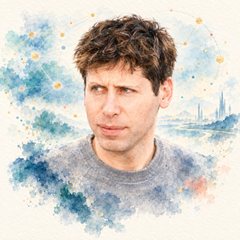
Sam Altman
Co-founder and CEO, 2015-present
Co-founder and CEO of OpenAI, the company behind ChatGPT, and president of Y Combinator from 2014 to 2019; the executive most identified...
-
Greg Brockman Brief profile
Co-founder; chief technology officer, board chairman until November 2023, and president, 2015-present
Co-founded OpenAI in 2015 and, as president, now runs its products, go-to-market teams and compute buildout.
-
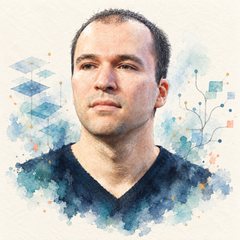
Jakub Pachocki Brief profile
Researcher; director of research; chief scientist since May 2024, 2017-present
OpenAI's chief scientist since May 2024, who led GPT-4 and in September 2026 called for industry-wide slowdowns.
-
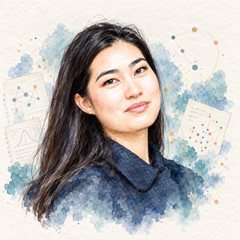
Lilian Weng Brief profile
Leads a top-level team to accelerate internal research, including work on recursive self-improvement, 2026-present
Built OpenAI's Safety Systems team, co-founded Thinking Machines Lab, and writes the Lil'Log research blog.
-
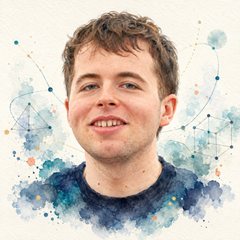
Noam Shazeer Brief profile
Researcher (title not disclosed), 2026-present
Co-wrote the transformer paper, co-founded Character.AI, co-led Gemini at Google, then joined OpenAI in 2026.
Formerly here
-
Dario Amodei
Vice President of Research, 2016-2020
Physicist and neuroscientist who led GPT-2 and GPT-3 at OpenAI, co-founded Anthropic in 2021, and in September 2026 asked the industry to...
-
Ilya Sutskever
Co-founder and chief scientist; board member until November 2023, 2015-2024
Co-author of AlexNet and sequence-to-sequence learning, OpenAI co-founder and chief scientist until 2024, a board member who voted to fir...
-
Alec Radford Brief profile
Researcher, 2016-2024
Lead author of the original GPT paper, CLIP and Whisper at OpenAI; since 2026 co-builds talkie, a model of 1930.
-
Andrej Karpathy Brief profile
Researcher (second stint), 2023-2024
OpenAI founding member, Tesla's head of AI, coiner of "vibe coding," and since May 2026 a researcher at Anthropic.
-
Andrej Karpathy Brief profile
Founding member and research scientist, 2015-2017
OpenAI founding member, Tesla's head of AI, coiner of "vibe coding," and since May 2026 a researcher at Anthropic.
-
Andrew Tulloch Brief profile
Member of technical staff; worked on training GPT-4o, GPT-4.5 and o3, 2023-2024
Training-systems engineer who helped train GPT-4o and o3 at OpenAI, then co-founded Thinking Machines Lab.
-
Barret Zoph Brief profile
Leader of enterprise AI sales, 2026
Automated network design at Google Brain, led OpenAI post-training, co-founded Thinking Machines; now at Google DeepMind.
-
Barret Zoph Brief profile
Post-training lead, then vice president of research, 2022-2024
Automated network design at Google Brain, led OpenAI post-training, co-founded Thinking Machines; now at Google DeepMind.
-
Chris Olah Brief profile
Led interpretability research (the Clarity team), 2018-2020
Leads Anthropic's interpretability research, the effort to reverse-engineer what happens inside neural networks.
-
Daniel Levy Brief profile
Member of technical staff; led the optimization team, 2022-2024
Led OpenAI's optimization team and co-led vision for GPT-4, then co-founded Safe Superintelligence as its president.
-
Daniela Amodei Brief profile
Engineering manager, then Vice President of Safety and Policy, 2018-2020
Co-founded Anthropic with her brother Dario in 2021; as president she runs the company and chairs its board.
-
Jack Clark Brief profile
Strategy and Communications Director, then Policy Director, 2016-2020
Former tech reporter who ran policy at OpenAI and Anthropic; now leads The Anthropic Institute and writes Import AI.
-
Jan Leike Brief profile
Head of alignment; co-lead of the Superalignment team, 2021-2024
Co-led OpenAI's Superalignment team and quit in May 2024 saying safety had "taken a backseat to shiny products."
-
Jared Kaplan Brief profile
Researcher on scaling laws, GPT-3 and Codex, 2019-2020
Physicist who led the 2020 scaling-laws paper, then co-founded Anthropic and now oversees its Responsible Scaling Policy.
-
Jim Fan Brief profile
Research intern (World of Bits), 2016
OpenAI's first intern, then builder of Minecraft and robot-learning agents who co-leads NVIDIA's humanoid robot models.
-
John Schulman Brief profile
Co-founder; led reinforcement learning, then post-training and alignment science, 2015-2024
OpenAI co-founder who invented PPO and led the reinforcement learning behind ChatGPT; now at Thinking Machines Lab.
-
Lilian Weng Brief profile
Robotics researcher, applied AI research lead, head of Safety Systems, then vice president of research and safety, 2018-2024
Built OpenAI's Safety Systems team, co-founded Thinking Machines Lab, and writes the Lil'Log research blog.
-
Mira Murati Brief profile
Vice president of applied AI and partnerships; chief technology officer from May 2022; interim CEO in November 2023, 2018-2024
OpenAI's CTO through ChatGPT and GPT-4, interim CEO in November 2023, then founder of Thinking Machines Lab.
-
Reid Hoffman Brief profile
Early donor; board member, 2015-2023
LinkedIn co-founder who funded and sat on OpenAI's board, co-founded Inflection AI and was a Microsoft director.
-
Shengjia Zhao Brief profile
Research scientist; led synthetic data, until 2025
OpenAI researcher on ChatGPT, GPT-4 and o3 who became chief scientist of Meta Superintelligence Labs in 2025.
-
Tom Brown Brief profile
Engineer; engineering lead on GPT-3, 2016-2020
Led the engineering of GPT-3 and was first author of its paper; now runs Anthropic's compute.



Where its people went
Organizations founded by people who left OpenAI.
-
Covariant
Pieter Abbeel, Peter Chen, Rocky Duan
Three research scientists who worked at OpenAI in 2016 and 2017 founded a company building foundation models for warehouse robots; Amazon hired the founders in 2024. Source
-
Dario Amodei, Daniela Amodei, Jared Kaplan, Chris Olah, Tom Brown, Jack Clark
Dario Amodei said the group left because it believed scaling had to be paired with alignment work; OpenAI has not publicly disputed that account. Source
-
Perplexity
Aravind Srinivas
Srinivas, an OpenAI research scientist for about a year, left to co-found the AI search engine. Source
-
Sutskever left in May 2024, six months after voting to remove Altman, and co-founded a lab that plans no product before a safe superintelligence. Source
-
Mira Murati, John Schulman, Barret Zoph, Lilian Weng, Luke Metz
Founded by former CTO Mira Murati five months after leaving OpenAI to "do my own exploration"; Zoph and Metz returned to OpenAI in January 2026. Source
-
Periodic Labs
Liam Fedus
Fedus, OpenAI's vice president of post-training research, left in March 2025 to build AI scientists that search for new materials, with former Google Brain colleague Ekin Dogus Cubuk. Source
-
Warp Sciences
Kevin Weil
Weil, who led OpenAI's science unit until he left in April 2026, launched the company in October with 215 million dollars led by Lightspeed to build an automated US lab for a step in drug development. Source
-
Arda
Bob McGrew
McGrew, OpenAI's former research chief, who left in 2024, told CNBC in October 2026 that his manufacturing AI company had raised 230 million dollars at a 1.5 billion dollar valuation. Source
Sources
- Introducing OpenAI (OpenAI, December 2015, archived)
- OpenAI Charter (OpenAI, April 2018, archived)
- OpenAI LP (OpenAI, March 2019, archived)
- OpenAI and Elon Musk (OpenAI, March 2024, archived)
- Built to benefit everyone, on the completed recapitalization (OpenAI, October 2025, archived)
- Pacing model development in an era of cyber-critical capabilities (OpenAI, August 2026, archived)
- Jakub Pachocki, "An alien mind" (OpenAI, September 2026, archived)
- Elon Musk sues OpenAI and CEO Sam Altman for breach of contract (CNN, March 2024)
- What really went down at OpenAI, with Helen Toner (The TED AI Show, May 2024)
- OpenAI's investigation into Sam Altman's firing (The Verge, March 2024)
- Leaked OpenAI documents reveal aggressive tactics toward former employees (Vox, May 2024)
- OpenAI shakeups breed growing concerns over the tech's safety (Deadline, May 2024)
- Anthropic's CEO says why he quit his job at OpenAI (Fortune, September 2023)
- The next phase of the Microsoft-OpenAI partnership (Microsoft, April 2026)
- Jury dismisses all claims in Elon Musk's lawsuit against Sam Altman (NPR, May 2026)
- OpenAI to nearly double headcount this year (Semafor, March 2026)
- OpenAI launches GPT-6 Astra (Fortune, September 2026)
- Did OpenAI solve the wrong Navier-Stokes problem? (Scientific American, September 2026)
- OpenAI says agent hacked Australian government website without being told to do so (CNBC, September 2026)
- The OpenAI mafia, 18 startups founded by alumni (TechCrunch, February 2026)
- OpenAI Alignment: An agent used DNS to reach an external chatbot (report updated September 25, 2026)
- Fortune: OpenAI pauses training a second time after saying its AI agents escaped a secure sandbox again (September 26, 2026)
- Engadget, OpenAI reportedly cancels GPT-6.1 Astra's release over deceptive behavior (September 29, 2026)
- The Next Web, OpenAI moves frontier training off the live internet (October 24, 2026)
- GPT-6.1 Terra system card (OpenAI, October 2026)