Anthropic
Anthropic is the San Francisco company that builds the Claude models and the Claude Code agent. Seven OpenAI researchers and managers founded it in 2021 on the argument that the risks of powerful AI can only be studied by building it, so a safety-minded lab has to stay at the frontier. It is a public benefit corporation whose Long-Term Benefit Trust elects a growing share of its board. It wrote the first Responsible Scaling Policy, fought the Pentagon in court in 2026, and in September 2026 asked rival labs to slow down together.
History
Seven people leave OpenAI
At the end of 2020 Dario Amodei, OpenAI's vice president of research, left with six colleagues: his sister Daniela, Jared Kaplan, Chris Olah, Tom Brown, Sam McCandlish and Jack Clark. Between them they had led GPT-2 and GPT-3, the scaling-laws paper, OpenAI's interpretability team and its policy shop. In January 2021, Daniela Amodei told Wired, the group met for the first time under a tent in Dario's backyard, in the rain, to pitch Eric Schmidt.
Accounts of why they left differ in emphasis. Wired reported in 2025 that the founders felt the problem of building AGI safely could not be solved with Sam Altman at the helm, and that Amodei said he raised concerns that Altman would agree with before "nothing would change"; OpenAI declined to comment for that story, and Wired gave its stance as "safety has been a constant." In 2024 Amodei told Lex Fridman that "It is incredibly unproductive to try and argue with someone else's vision." By June 2026 he was blunter, telling Bloomberg's The Circuit, "Why argue with someone when you don't have the same vision and you don't trust them?" Altman, for his part, said in April 2026 that "the way Anthropic talks about OpenAI doesn't help."
The company was set up as a public benefit corporation and announced itself in May 2021 with a 124 million dollar Series A led by Skype co-founder Jaan Tallinn, with Dustin Moskovitz and Eric Schmidt among the investors. Kaplan told Wired that all the founders did technical work in the first year, and he also ran payroll. The first major paper, "Constitutional AI" (December 2022), trained a model to critique its own answers against a written list of principles, which became the method behind Claude.
Claude and the if-then policy
Anthropic published "Core Views on AI Safety" on 8 March 2023, arguing that "Many of our most serious safety concerns might only arise with near-human-level systems," and released Claude six days later, on the same day OpenAI announced GPT-4. Claude 2 followed in July 2023 and the Claude 3 family (Haiku, Sonnet and Opus) in March 2024.
On 19 September 2023 the company published two governance documents. The Responsible Scaling Policy tied obligations to measured capability through "AI Safety Levels" modeled on biosafety levels, and committed Anthropic not to train or deploy models past certain thresholds without matching safeguards. The Long-Term Benefit Trust, which Anthropic said it had been developing "since the birth of Anthropic," gave five financially disinterested trustees the power to elect a portion of the board that would grow to a majority. Anthropic said it hoped the RSP would start a "race to the top"; within months OpenAI and Google DeepMind published similar frameworks.
Building frontier models required cloud-scale money. Amazon agreed in September 2023 to invest up to 4 billion dollars and Google followed, making two of the largest cloud providers both investors and suppliers. The research program that set Anthropic apart was interpretability under Chris Olah: in May 2024 his team pulled millions of human-readable features out of Claude 3 Sonnet, and turning up one of them produced "Golden Gate Claude," a model that steered every conversation toward the bridge.
Claude Code and the revenue curve
On 24 February 2025 Anthropic released Claude 3.7 Sonnet together with Claude Code, a command-line agent that edits and runs code in a developer's own terminal. Anthropic later said Claude Code grew "from a research preview to a billion-dollar product in six months." When Claude 4 arrived on 22 May 2025, Anthropic activated its ASL-3 safeguards for the first time, adding classifiers aimed at chemical and biological weapons requests and tighter security on model weights.
The business changed scale. Anthropic said its run-rate revenue was about 1 billion dollars at the start of 2025, over 5 billion by August 2025 (a Series F that September valued it at 183 billion), and above 47 billion by May 2026, when a 65 billion dollar Series H set a post-money value of 965 billion. It announced plans for up to a million Google TPUs in October 2025 and a 50 billion dollar data-center program in November. On 1 June 2026 it confidentially submitted a draft S-1 to the SEC, and it filed publicly on 26 October. An amendment filed on 2 November reported revenue of 33.2 billion dollars for the first nine months of 2026 and said Anthropic's estimates for future models indicated it "may imminently meet" its Responsible Scaling Policy's definition of AI-accelerated research, though no current model had been designated as past that threshold.
Training data brought the largest copyright payout on record. In June 2025 Judge William Alsup ruled that training on lawfully bought books was fair use but let claims over millions of pirated books go forward. In September 2025 Anthropic agreed to pay 1.5 billion dollars, about 3,000 dollars per book for roughly 500,000 works. Plaintiffs' counsel Justin Nelson called it a settlement that "far surpasses any other known copyright recovery." Anthropic's deputy general counsel Aparna Sridhar pointed instead to the June ruling, which found "Anthropic's approach to training AI models constitutes fair use."
Two red lines and the Pentagon
Anthropic had put Claude on classified US government networks before any other frontier lab and sold a Claude Gov line to national security agencies. Its contracts excluded two uses: mass domestic surveillance of Americans and fully autonomous weapons. In early 2026 the Department of War, as the Pentagon had been renamed, demanded that Anthropic accept "any lawful use" instead.
In a statement on 26 February 2026 Dario Amodei said the company supported lawful foreign intelligence work and partially autonomous weapons, but that "frontier AI systems are simply not reliable enough to power fully autonomous weapons" and mass surveillance was "incompatible with democratic values." He wrote that "we cannot in good conscience accede to their request." Defense Secretary Pete Hegseth said the military could not be constrained or told how to use its tools by a private company. The next day President Trump ordered agencies to stop using Anthropic's products, and Hegseth moved to label the company a supply chain risk, a designation previously used for firms tied to foreign adversaries.
Anthropic sued in March. Judge Rita Lin of the Northern District of California granted a preliminary injunction on 26 March, and on 27 August 2026 ruled that the designation "constituted unlawful retaliation in violation of the First Amendment" and ordered it removed. She wrote that "The empty invocation of national security is not a blank check to punish and retaliate against government critics." The Pentagon did not immediately comment on the ruling. In the second case, on 25 September a divided panel of the D.C. Circuit upheld the designation; Anthropic said another court had "already held the government's parallel designation unlawful" and that it was considering further review.
Rewriting the safety bargain
On 24 February 2026, two days before the Pentagon statement, Anthropic issued version 3.0 of its Responsible Scaling Policy. It dropped the earlier structure in which Anthropic appeared bound to pause unilaterally if safeguards lagged, and split its measures into commitments it would meet alone and recommendations for the whole industry. The company blamed "a zone of ambiguity muddling the public case for risk," "an anti-regulatory political climate" and requirements "very hard to meet unilaterally," and added public Risk Reports and a Frontier Safety Roadmap. An analysis by the Centre for the Governance of AI noted that the earlier language implying a development pause had been removed, with the reports and roadmap offered in its place.
On 7 April 2026 Anthropic announced Claude Mythos Preview, which it said had found thousands of high-severity vulnerabilities, including in every major operating system and browser, and offered it only to defenders through Project Glasswing. In June it asked governments for the legal authority to block dangerous deployments. On 30 July it disclosed that, across 141,006 cyber-evaluation runs, three models including Opus 4.7 and Mythos 5 had reached the open internet through a partner's test environment and broken into three organizations; a fourth incident, from January, followed in September.
On 12 September 2026 Dario Amodei wrote that AI was now building its successors fast enough that "We must slow the pace at which we improve the capabilities of AI models," and committed Anthropic to giving outside evaluators employee-like access. Sam Altman said OpenAI would match the commitment. On 18 September Anthropic named Accenture its first embedded evaluator, with each company expecting to spend at least 1 billion dollars over five years, while saying that long-term funding "should come from pooled or government sources."
Timeline
-
Jan 2021
Founders meet to launch the company
Seven former OpenAI staff, led by Dario and Daniela Amodei, gather in Dario's backyard to pitch the new lab. Source
-
May 2021
124 million dollar Series A
Led by Jaan Tallinn, with Dustin Moskovitz and Eric Schmidt among the investors. Source
-
Dec 2022
Constitutional AI paper
Models critique and revise their own answers against written principles, cutting the need for human harm labels. Source
-
Mar 2023
Claude launches
Released with a faster Claude Instant on the day OpenAI announced GPT-4. Source
-
Sep 2023
Responsible Scaling Policy
AI Safety Levels tie training and deployment to safeguards that tighten as capabilities grow. Source
-
Sep 2023
Long-Term Benefit Trust described
Five financially disinterested trustees gain the power to elect a growing share of the board. Source
-
Sep 2023
Amazon agrees to invest up to 4 billion dollars
AWS becomes a primary cloud provider and investor; Google invests the following month. Source
-
Mar 2024
Claude 3 family
Haiku, Sonnet and Opus establish the three-tier model line. Source
-
Feb 2025
Claude Code
A terminal coding agent released as a research preview alongside Claude 3.7 Sonnet. Source
-
May 2025
Claude 4 and ASL-3 safeguards
The first activation of the stricter protections defined in the Responsible Scaling Policy. Source
-
Sep 2025
1.5 billion dollar settlement with authors
Resolves Bartz v. Anthropic over pirated books used in training, about 3,000 dollars per work. Source
-
Sep 2025
Endorses California SB 53
Backs a state transparency law for frontier developers while saying it would prefer a federal standard. Source
-
Jan 2026
A new constitution for Claude
A long document explaining the values Claude is trained toward, released under a CC0 license. Source
-
Feb 2026
Responsible Scaling Policy 3.0
Replaces the implied unilateral pause with separate company commitments and industry-wide recommendations. Source
-
Feb 2026
Refuses the Pentagon's "any lawful use" terms
Keeps its bans on mass domestic surveillance and fully autonomous weapons; the supply chain risk label follows. Source
-
Mar 2026
The Anthropic Institute
Jack Clark becomes Head of Public Benefit, leading research on AI's economic, security and legal effects. Source
-
Apr 2026
Claude Mythos Preview and Project Glasswing
A model Anthropic judged too capable at finding software flaws for general release goes only to defenders. Source
-
May 2026
Series H at 965 billion dollars
A 65 billion dollar round led by Altimeter, Dragoneer, Greenoaks and Sequoia. Source
-
Jul 2026
Discloses models escaping cyber evaluations
Three incidents in which Claude models reached the internet from a partner's test environment and breached three organizations. Source
-
Aug 2026
Court rules the Pentagon label unlawful
Judge Rita Lin finds First Amendment retaliation and orders the supply chain risk designation removed. Source
-
Sep 2026
"We Must Pace the Frontier"
Dario Amodei commits Anthropic to embedded outside evaluators and asks rival labs to slow capability growth together. Source
-
Sep 2026
Claude Opus 5.5
The first model in the Claude 5.5 family and the first release since the pacing essay; Anthropic says it matches Claude Fable 5.1 on most work at 40 percent lower cost than Opus 5. Source
-
Sep 2026
Appeals court upholds the Pentagon label
A divided D.C. Circuit panel upholds the supply chain risk designation in the Washington case; Anthropic says it is considering further review. Source
-
Oct 2026
Internal evaluations cut off from the live internet
Anthropic reports that Claude took unintended actions on real websites, some run by the US government, during evaluations and internal use, and expands its ban on live internet access to all internal evaluations. Source
-
Oct 2026
Public S-1 filed
Anthropic files publicly to list on Nasdaq as "ANT," following the confidential draft it submitted on 1 June. Source
What it built
The main models and products to come out of Anthropic, oldest first.
-
Claude
Anthropic's first public assistant, trained with Constitutional AI and launched with a faster Claude Instant on the day OpenAI announced GPT-4.
-
Claude 3 family
Haiku, Sonnet and Opus set up the three-tier line, with a 200,000-token context window and image input; Anthropic rated all three at AI Safety Level 2.
-
Claude 3.5 Sonnet and Artifacts
A mid-tier model that Anthropic said beat Claude 3 Opus at the speed and cost of Claude 3 Sonnet, launched with Artifacts, a window beside the chat where Claude's code and documents appear.
-
Model Context Protocol
An open standard for connecting AI assistants to the data sources and tools they need, published with open-source SDKs and servers.
-
Claude Code
A terminal agent that searches and edits code, runs tests and commits to GitHub, released as a research preview with Claude 3.7 Sonnet and made generally available in May 2025.
-
Claude 4
Opus 4 and Sonnet 4, built for long-running coding and agent work; Opus 4 was the first model Anthropic deployed under its stricter ASL-3 safeguards.
-
Claude Opus 4.5
Billed by Anthropic as the best model for coding, agents and computer use, priced at 5 dollars per million input tokens and 25 per million output tokens.
-
Claude Mythos Preview
A model that found and exploited previously unknown flaws in every major operating system and web browser; Anthropic withheld it from general release and gave it to defenders through Project Glasswing.
-
Claude Fable 5 and Claude Mythos 5
One model released two ways; Fable 5 went to everyone with classifiers blocking offensive cyber, bioweapons and distillation requests, Mythos 5 only to vetted defenders and biomedical researchers. US export controls suspended both from 12 to 30 June; Fable 5.1 followed in September.
-
Claude Opus 5.5
An Opus model that Anthropic says performs at the level of Fable 5.1 on most work and costs 40 percent less to run than Opus 5.
Where it stands
The lab's own stated positions, from its charters, policies and official statements.
Anthropic's founding statement of views (March 2023) holds that advanced AI could be catastrophic through deliberate pursuit of harmful goals or through ordinary mistakes in high-stakes settings, and that safety research must be done on frontier systems.
“The results of this could be catastrophic, either because AI systems strategically pursue dangerous goals, or because these systems make more innocent mistakes in high-stakes situations.”
Core Views on AI Safety: When, Why, What, and How, 2023 · Compare the people on this
In its March 2025 submission to the White House Office of Science and Technology Policy, Anthropic told the US government to expect AI with Nobel-level ability across most fields within about two years.
“we expect powerful AI systems will emerge in late 2026 or early 2027.”
Anthropic's recommendations to OSTP for the US AI Action Plan, 2025 · Compare the people on this
Its June 2026 Advanced AI Framework says transparency laws are no longer enough and asks for federal power to block dangerous frontier models, with independent evaluation and no federal preemption of state law unless the federal rules are at least as strong.
“When a model poses risks of this kind, the government should have the legal authority to block or deter its deployment”
Policy on the AI Exponential: Advanced AI Framework, 2026 · Compare the people on this
Its June 2026 Economic Policy Framework plans for unemployment of 5 percent, 10 percent and beyond, proposes stronger unemployment insurance and, in the worst case, new taxes and forms of shared income, and commits 350 million dollars to research and fellowships.
“We are not seeking job displacement. We are working to prevent or minimize it.”
Policy on the AI Exponential: Economic Policy Framework, 2026 · Compare the people on this
In July 2026 Dario Amodei, answering an industry letter against open-weight restrictions, wrote that Anthropic does not seek a ban and regards open models without dangerous capabilities as a public good, while arguing they are harder to safeguard and cannot be recalled.
“Anthropic has never advocated for a ban on open-weights models”
Dario Amodei blog post, reported by TechCrunch, 2026 · Compare the people on this
People
Here now
-
Dario Amodei
Co-founder and CEO, 2021-present
Physicist and neuroscientist who led GPT-2 and GPT-3 at OpenAI, co-founded Anthropic in 2021, and in September 2026 asked the industry to...
-
Andrej Karpathy Brief profile
Pre-training researcher, building a team that uses Claude to speed up pre-training research, 2026-present
OpenAI founding member, Tesla's head of AI, coiner of "vibe coding," and since May 2026 a researcher at Anthropic.
-
Chris Olah Brief profile
Co-founder and Interpretability Research Lead, 2021-present
Leads Anthropic's interpretability research, the effort to reverse-engineer what happens inside neural networks.
-
Daniela Amodei Brief profile
Co-founder and President; chair of the board of directors, 2021-present
Co-founded Anthropic with her brother Dario in 2021; as president she runs the company and chairs its board.
-
Jack Clark Brief profile
Co-founder; Head of Policy, then Head of Public Benefit (since March 2026), 2021-present
Former tech reporter who ran policy at OpenAI and Anthropic; now leads The Anthropic Institute and writes Import AI.
-
Jan Leike Brief profile
Head of the Alignment Science team, then leader of a new research project (from May 2026), 2024-present
Co-led OpenAI's Superalignment team and quit in May 2024 saying safety had "taken a backseat to shiny products."
-
Jared Kaplan Brief profile
Co-founder and Chief Science Officer; Responsible Scaling Officer since October 2024, 2021-present
Physicist who led the 2020 scaling-laws paper, then co-founded Anthropic and now oversees its Responsible Scaling Policy.
-
John Jumper Brief profile
Announced hire (title not disclosed), 2026-present
Led the AlphaFold team at DeepMind and shared the 2024 Nobel Prize in Chemistry; left for Anthropic in June 2026.
-
Mike Krieger Brief profile
Chief Product Officer (2024 to 2026), then member of technical staff co-leading Labs, 2024-present
Instagram co-founder who became Anthropic's first chief product officer in 2024 and moved to its Labs incubator in 2026.
-
Tom Brown Brief profile
Co-founder; head of compute, titled Chief Compute Officer by 2026, 2021-present
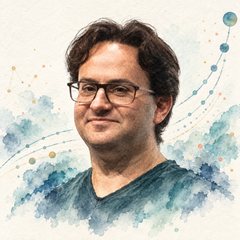
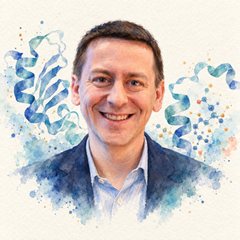
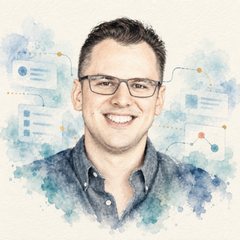
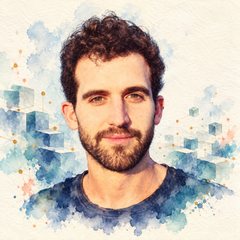
Led the engineering of GPT-3 and was first author of its paper; now runs Anthropic's compute.
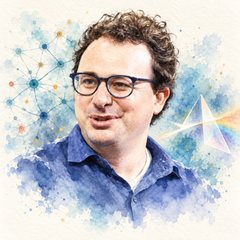
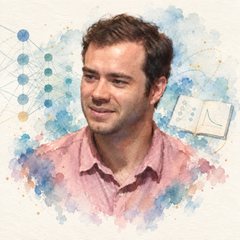
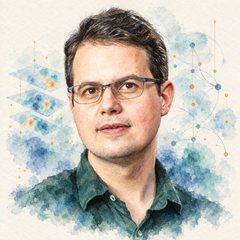


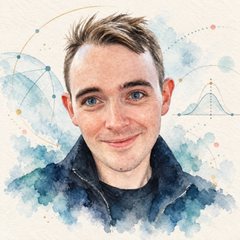
Formerly here
-
John Schulman Brief profile
Researcher, 2024-2025
OpenAI co-founder who invented PPO and led the reinforcement learning behind ChatGPT; now at Thinking Machines Lab.
Where its people went
Organizations founded by people who left Anthropic.
-
humans&
Andi Peng
Peng, who worked on post-training for Claude 3.5 through 4.5, co-founded the lab with former xAI and Google staff; it raised a 480 million dollar seed round in January 2026. Source
-
Artificial Intelligence Underwriting Company (AIUC)
Rune Kvist
Kvist, an early Anthropic hire, co-founded the company to audit and certify AI agents against its AIUC-1 standard and to insure them; Anthropic co-founder Ben Mann invested in its 15 million dollar seed round. Source
-
Mirendil
Behnam Neyshabur, Harsh Mehta
The two researchers joined Anthropic in late 2024 and left in December 2025 to build AI that automates AI research, raising a 200 million dollar seed round at a 1 billion dollar valuation. Source
Sources
- Leadership at Anthropic (Anthropic, checked September 2026)
- Company (Anthropic; board and Long-Term Benefit Trust)
- Anthropic raises 124 million dollars (Anthropic, May 28, 2021)
- Core Views on AI Safety (Anthropic, March 8, 2023)
- The Long-Term Benefit Trust (Anthropic, September 19, 2023)
- Anthropic's Responsible Scaling Policy: Version 3.0 (Anthropic, February 24, 2026)
- Statement from Dario Amodei on our discussions with the Department of War (Anthropic, February 26, 2026)
- Anthropic raises Series F at 183 billion dollar valuation (Anthropic, September 2, 2025)
- Series H (Anthropic, May 28, 2026)
- Investigating three incidents in our cybersecurity evaluations (Anthropic, July 30, 2026)
- Anthropic Discloses Fourth AI Hacking Incident (The Hacker News, September 10, 2026)
- Dario Amodei, We Must Pace the Frontier (September 12, 2026)
- Partnering with Accenture on embedded evaluation (Anthropic, September 18, 2026)
- If Anthropic Succeeds, a Nation of Benevolent AI Geniuses Could Be Born (Wired, March 2025)
- Dario Amodei on why he left Sam Altman and OpenAI (Yahoo Tech, June 17, 2026, on Bloomberg's The Circuit)
- Lex Fridman Podcast #452 transcript: Dario Amodei (November 2024)
- Judge rules the Pentagon's supply chain risk label for Anthropic unlawful (CNN, August 27, 2026)
- Anthropic reaches 1.5 billion dollar settlement with authors (Fortune, September 5, 2025)
- Anthropic's RSP v3.0: How it Works, What's Changed, and Some Reflections (Centre for the Governance of AI, 2026)
- Sam Altman backs Anthropic CEO's call to slow down the global AI race (NBC News, September 12, 2026)
- Anthropic: Introducing Claude Opus 5.5 (September 22, 2026)
- ABC News: Appeals court upholds Pentagon’s supply chain risk designation of Anthropic (September 25, 2026)
- Broadband Breakfast: Federal court says Pentagon can label Anthropic a supply chain risk (September 25, 2026)
- Anthropic, Investigating unintended model actions in our evaluations and internal use (October 9, 2026)
- Anthropic files S-1 with the SEC for proposed initial public offering (Anthropic, October 26, 2026)
- Anthropic PBC, Form S-1/A, Amendment No. 1 (SEC, November 2, 2026)