Google DeepMind
Google DeepMind is Alphabet's frontier AI lab, formed in April 2023 when Google merged DeepMind, the London lab it bought in 2014, with its own Google Brain team. It builds the Gemini models behind Google's chatbot and products, releases smaller open-weight Gemma models, and runs science programs whose AlphaFold won a share of the 2024 Nobel Prize in Chemistry. It has no independent board: it is a unit of Google, run since August 2026 by Koray Kavukcuoglu, who reports to Sundar Pichai, with co-founder Demis Hassabis as Chair.
History
A London start-up with a mission to build AGI
DeepMind Technologies was incorporated in London on 23 September 2010 by Demis Hassabis, a former games designer with a neuroscience PhD, Shane Legg, who had written his thesis on machine super intelligence, and Mustafa Suleyman, who had worked in policy and conflict resolution. Hassabis and Legg had met as researchers at UCL's Gatsby Computational Neuroscience Unit. The company's stated aim was to build artificial general intelligence, and its method was to train learning agents on games, where progress could be measured by a score. Its backers included Founders Fund, Horizons Ventures and the Skype developer Jaan Tallinn.
By late 2013 DeepMind had about 75 employees and a system that learned to play Atari games from screen pixels. Google announced on 26 January 2014 that it was buying the company, after Facebook had also held talks. Reports of the price ranged from 400 million dollars (Re/code) to more than 500 million (TechCrunch), and British outlets reported about 400 million pounds; Google did not disclose it. The Information reported that Google had agreed as a condition of the sale to set up an ethics board to ensure the technology was not abused. Google and DeepMind never named its members. Hassabis insisted the lab stay in London.
The Atari agent, the Deep Q-Network, was published in Nature in February 2015. It used one network and one set of settings to learn dozens of games from pixels and the score, and it became the template for the lab's next decade: reinforcement learning, a clear objective and large amounts of simulated experience.
Google Brain
Google's own deep learning group began in 2011 as a project at Google X, started by Jeff Dean, Andrew Ng and Greg Corrado. In June 2012 Dean and Ng reported that a network spread across 16,000 processor cores had learned to recognize cats from unlabeled YouTube frames. In March 2013 Google bought DNNresearch, Geoffrey Hinton's three-person company with his students Ilya Sutskever and Alex Krizhevsky, and Hinton split his time between Toronto and Google.
Brain worked on a different axis from DeepMind: infrastructure and scale inside Google's products. It open-sourced TensorFlow in November 2015 and produced sequence-to-sequence learning (2014), knowledge distillation (2015), sparse mixture-of-experts layers (January 2017) and, with colleagues in Google Research, the June 2017 transformer paper, "Attention Is All You Need," whose architecture underlies GPT and Gemini. Google published most of this openly, and much of the talent left. Sutskever departed in 2015 to co-found OpenAI; all eight transformer authors had left Google by 2024, most of them to found companies.
Brain also sat inside the Google Research organization where the December 2020 dispute over Timnit Gebru's departure took place. Dean, then head of Google AI, wrote that her co-authored paper on the risks of large language models "didn't meet our bar for publication"; Gebru said she had been forced out.
Games, proteins and the limits of independence
AlphaGo beat Lee Sedol 4-1 in Seoul in March 2016, and AlphaGo Zero learned the game without human examples the next year. The lab's applied arm, run by Suleyman, cut the energy used to cool Google's data centers and built a kidney-injury alert app with London's Royal Free Hospital; in July 2017 the UK Information Commissioner ruled that the hospital had broken data protection law in sharing records on about 1.6 million patients, and DeepMind said it had "underestimated the complexity of the NHS." In August 2019 Suleyman was placed on leave; a spokesperson said he was "taking some time out right now after 10 hectic years." In January 2021 the Wall Street Journal reported that he had been stripped of management duties after complaints of bullying, and Google and DeepMind said an external lawyer had looked into "concerns that were raised about Mustafa's management style." Suleyman later apologized for his conduct.
The science bet paid off first. AlphaFold 2 predicted protein structures close to experimental accuracy at CASP14 in November 2020, and in July 2022 DeepMind and EMBL-EBI released predicted structures for about 200 million proteins. In November 2021 Alphabet set up Isomorphic Labs, with Hassabis as chief executive, to turn the work into drugs.
The independence DeepMind's founders wanted did not come. According to the Wall Street Journal, senior managers spent years negotiating for a legal structure, possibly modeled on a nonprofit, that would keep powerful AI out of the control of a single company. In April 2021 Hassabis told staff that Google had ended those talks and that DeepMind's research would be reviewed by an ethics board made up mostly of senior Google executives. Alphabet had written off about 1.1 billion pounds of DeepMind debt in 2019.
The merger and Gemini
ChatGPT's release in November 2022 left Google's research lead looking like a product deficit. On 20 April 2023 Sundar Pichai merged Brain and DeepMind into Google DeepMind under Hassabis, to "accelerate our progress in AI"; Dean became Google's Chief Scientist, and Koray Kavukcuoglu led a new Scientific Board. The unit's first model family, Gemini, launched on 6 December 2023 with Hassabis and Kavukcuoglu as program leads and Dean and Oriol Vinyals as overall technical leads. A launch video that appeared to show live voice conversation had been assembled from still frames and text prompts, which Google acknowledged.
To add talent Google used licensing deals. In August 2024 it paid Character.AI for a non-exclusive license to its models and hired back its founders, Noam Shazeer and Daniel De Freitas, who had left Google in 2021 after, the Wall Street Journal reported, it declined to release their chatbot. The Journal put the deal at about 2.7 billion dollars; in May 2025 Bloomberg reported that the Justice Department was examining whether it had been structured to avoid merger review, and Google said Character.AI remained "a separate company." Shazeer became a Gemini co-lead.
In May 2024 the lab published its Frontier Safety Framework. In October 2024 Hassabis and John Jumper shared the Nobel Prize in Chemistry. In February 2025 Google rewrote its AI principles, in a post co-signed by Hassabis, dropping its pledge not to build AI for weapons or surveillance. Gemini with Deep Think reached gold-medal standard at the International Mathematical Olympiad in July 2025, and Gemini 3 launched in November 2025.
Departures and a new chief
In January 2026 David Silver, who had led AlphaGo, left to run Ineffable Intelligence. In April 2026 Google agreed to let the US Defense Department use Gemini on classified networks for any lawful purpose; more than 600 employees signed a letter asking Pichai to refuse, and in May unions asked Google to recognize them for DeepMind's roughly 1,000 London staff. Google said there had been "no vote to unionize." Gemini 3.5 Pro, announced at Google I/O on 19 May, missed its June release while Google worked on its coding ability. In June Shazeer left for OpenAI and Jumper, with AlphaFold colleagues Jonas Adler and Alexander Pritzel, for Anthropic.
On 5 August 2026 Pichai announced that Hassabis would hand over day-to-day control, becoming Chair of Google DeepMind and Alphabet's Chief Scientist, and that Kavukcuoglu, the chief technology officer, would run the lab as a senior vice president reporting to Pichai, without a chief executive title. The same day Dean and Vinyals left to co-found Discovery Loop. Fortune, citing engineers, described missed model deadlines, 60-hour weeks and pressure as work shifted toward Mountain View; a Google spokesperson told it the lab would keep separate leadership and research autonomy. Semafor reported that Hassabis had not been pushed. TIME reported that some safety teams might move to report to Kent Walker, Google's president of global affairs, and quoted Google: "in terms of frontier AI safety, this transition changes absolutely nothing."
On 16 September 2026 Hassabis, Legg and James Manyika launched the DeepMind Institute, a platform for essays on AGI's effects on society. Days later Kavukcuoglu said Gemini 4 was in post-training.
Timeline
-
Sep 2010
DeepMind Technologies is incorporated in London
Registered by Hassabis, Legg and Suleyman to build general AI through learning agents trained on games. Source
-
Jun 2012
Google Brain's network learns to recognize cats
A year after Jeff Dean, Andrew Ng and Greg Corrado started Google's large-scale neural network project at Google X, its 16,000-processor network learned to recognize cats in YouTube frames without labels. Source
-
Mar 2013
Google buys Geoffrey Hinton's DNNresearch
Hinton, Ilya Sutskever and Alex Krizhevsky join Google's deep learning work. Source
-
Jan 2014
Google acquires DeepMind
The reported price is 400 to 500 million dollars; Google agrees to set up an ethics board. Source
-
Feb 2015
The Deep Q-Network is published in Nature
One agent learns dozens of Atari games from pixels and the score. Source
-
Nov 2015
Google open-sources TensorFlow
Brain's machine learning software becomes freely available. Source
-
Mar 2016
AlphaGo beats Lee Sedol 4-1
The five-game match in Seoul comes about a decade before Go programmers expected. Source
-
Jun 2017
The transformer paper is posted
Eight Google Brain and Google Research authors publish "Attention Is All You Need." Source
-
Aug 2019
Mustafa Suleyman is placed on leave
DeepMind says he is taking time out; later reports cite complaints about his management. Source
-
Nov 2020
AlphaFold 2 at CASP14
Protein structure predictions close to experimental accuracy in the blind assessment. Source
-
Apr 2021
Google ends DeepMind's autonomy talks
Hassabis tells staff that years of negotiation for an independent legal structure are over, the Wall Street Journal reports. Source
-
Nov 2021
Isomorphic Labs is founded
Alphabet spins out a drug-discovery company built on AlphaFold, led by Hassabis. Source
-
Apr 2023
Google DeepMind is formed
Brain and DeepMind merge under Hassabis; Jeff Dean becomes Google's Chief Scientist. Source
-
Dec 2023
Gemini 1.0 launches
The merged lab's first model family arrives in Ultra, Pro and Nano sizes. Source
-
May 2024
Frontier Safety Framework published
Protocols to detect and mitigate capabilities that could cause severe harm. Source
-
Aug 2024
Character.AI licensing deal brings back Noam Shazeer
Google licenses the start-up's models and rehires its founders, in a deal reported at 2.7 billion dollars. Source
-
Oct 2024
Nobel Prize in Chemistry for AlphaFold
Hassabis and John Jumper share half the prize "for protein structure prediction." Source
-
Feb 2025
Google drops its weapons pledge
Revised AI principles, in a post co-signed by Hassabis, remove the 2018 commitment not to build AI for weapons. Source
-
Jul 2025
Gold-medal standard at the Maths Olympiad
An advanced Gemini with Deep Think solves five of six International Mathematical Olympiad problems. Source
-
Apr 2026
Pentagon may use Gemini on classified networks
Google agrees to "any lawful" government use; more than 600 employees sign a letter against it. Source
-
May 2026
London staff seek union recognition
The Communication Workers Union and Unite ask Google to recognize them for DeepMind's UK staff. Source
-
Jun 2026
Jumper and Shazeer leave
The AlphaFold lead goes to Anthropic and the Gemini co-lead to OpenAI within two days. Source
-
Aug 2026
Kavukcuoglu takes charge; Hassabis becomes Chair
Jeff Dean and Oriol Vinyals leave the same day to co-found Discovery Loop. Source
-
Sep 2026
DeepMind Institute launches
Legg, Hassabis and James Manyika open a platform for essays on AGI and society. Source
-
Sep 2026
Gemini 4 Argon
Google DeepMind releases Gemini 4 Argon first to cyber defenders, saying "Safely releasing frontier capabilities at this level requires a phased approach." Source
What it built
The main models and products to come out of Google DeepMind, oldest first.
-
Deep Q-Network
One reinforcement learning agent that learned dozens of Atari games from the screen pixels and the score.
-
TensorFlow
Google Brain's machine learning software, released as open source.
-
AlphaGo
A Go program combining deep networks with tree search, which beat Lee Sedol 4-1 in Seoul.
-
WaveNet
A network that generated raw audio one sample at a time, producing more natural synthetic speech than earlier systems.
-
The transformer
The attention-based architecture behind nearly every later large language model, from Google Brain and Google Research authors, whose teams merged into Google DeepMind in 2023.
-
AlphaFold 2
Predicted protein structures close to experimental accuracy at CASP14, work recognized with the 2024 Nobel Prize in Chemistry.
-
Gemini
The merged lab's first model family, released in Ultra, Pro and Nano sizes.
-
AlphaFold 3
Extended structure prediction to how proteins bind DNA, RNA and small molecules; its code was withheld at first and released for non-commercial use in November 2024.
-
Gemini 3
Google's flagship model family of late 2025, released with a Deep Think reasoning mode and Antigravity, an agentic coding platform.
-
Gemini 4 Carbon
Announced on 28 October as "our strongest model with state-of-the-art cybersecurity and long horizon capabilities," with access starting with "a subset of cyber defenders."
Where it stands
The lab's own stated positions, from its charters, policies and official statements.
Its Frontier Safety Framework (version 3, September 2025) treats misaligned models that resist human control as a risk to be tested for, and requires safety case reviews before launches that reach critical capability levels.
“to address potential future scenarios where misaligned AI models might interfere with operators' ability to direct, modify or shut down their operations”
Strengthening our Frontier Safety Framework (Google DeepMind, September 2025), 2025 · Compare the people on this
Its April 2025 paper on AGI safety says AGI, defined as AI at least as capable as humans at most cognitive tasks, could arrive within years, and plans its safety work on that basis.
“Artificial general intelligence (AGI), AI that's at least as capable as humans at most cognitive tasks, could be here within the coming years.”
Taking a responsible path to AGI (Google DeepMind, April 2025), 2025 · Compare the people on this
The same April 2025 paper calls for international coordination on governing advanced AI, alongside industry bodies such as the Frontier Model Forum.
“a coordinated international approach to governance is critical to ensure society benefits from advanced AI systems.”
Taking a responsible path to AGI (Google DeepMind, April 2025), 2025 · Compare the people on this
Google releases smaller open-weight Gemma models, developed by Google DeepMind and other Google teams, while keeping its frontier Gemini weights closed.
“Developed by Google DeepMind and other teams across Google, Gemma is inspired by Gemini.”
Gemma, introducing new state-of-the-art open models (Google, February 2024), 2024 · Compare the people on this
People
Here now
-
Demis Hassabis
Co-founder; Chair of Google DeepMind and Chief Scientist of Alphabet, 2010-present
Co-founder of DeepMind and 2024 Nobel laureate in chemistry for AlphaFold; since August 2026 Chair of Google DeepMind, Chief Scientist of...
-
Barret Zoph Brief profile
Vice president of research, 2026-present
Automated network design at Google Brain, led OpenAI post-training, co-founded Thinking Machines; now at Google DeepMind.
-
Koray Kavukcuoglu Brief profile
Research scientist, then VP of Research, CTO and, since August 2026, Senior Vice President, 2012-present
Built DeepMind's deep learning team behind DQN and WaveNet, and has run Google DeepMind day to day since August 2026.
-
Pushmeet Kohli Brief profile
Head of Safe and Reliable AI, then Vice President of Research and head of AI for Science and Strategic Initiatives, 2017-present
Leads Google DeepMind's AI for Science unit, whose work spans AlphaFold, AlphaTensor, SynthID and AlphaEvolve.
-
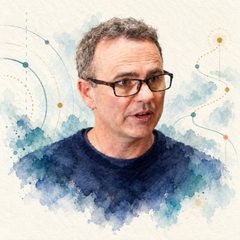
Shane Legg Brief profile
Co-founder; Chief Scientist, then Chief AGI Scientist, 2010-present
Co-founded DeepMind, proposed the name "artificial general intelligence" and has given AGI even odds by 2028 since 2011.
Formerly here
-
David Silver
Principal Research Scientist, then VP of Reinforcement Learning, 2013-2026
Led AlphaGo, AlphaZero and MuZero at DeepMind, co-wrote Reward is enough and The Era of Experience, and in 2026 founded Ineffable Intelli...
-
Mustafa Suleyman
Co-founder; chief product officer, then head of applied AI, 2010-2019
Co-founder of DeepMind and Inflection AI, author of The Coming Wave, and since March 2024 CEO of Microsoft AI, where since March 2026 he...
-
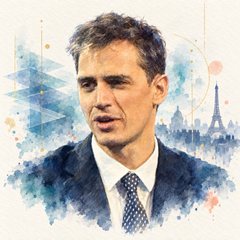
Arthur Mensch Brief profile
Research scientist, Paris, 2020-2023
DeepMind co-author of the Chinchilla scaling paper who co-founded Mistral AI in 2023 and runs it as CEO.
-
Jan Leike Brief profile
Research scientist, technical AI safety team, 2016-2020
Co-led OpenAI's Superalignment team and quit in May 2024 saying safety had "taken a backseat to shiny products."
-
Jeff Dean Brief profile
Chief Scientist, Google Research and Google DeepMind; Gemini co-technical lead, 2023-2026
Built much of Google's infrastructure, co-founded Google Brain and co-led Gemini; left Google in August 2026.
-
John Jumper Brief profile
Research scientist, then AlphaFold lead and Distinguished Scientist, 2017-2026
Led the AlphaFold team at DeepMind and shared the 2024 Nobel Prize in Chemistry; left for Anthropic in June 2026.
-
Karén Simonyan Brief profile
Research scientist, 2014-2022
Co-created the VGG networks, worked on AlphaZero at DeepMind, co-founded Inflection; now Microsoft AI's chief scientist.
-
Noam Shazeer Brief profile
Vice President of Engineering and Gemini co-lead, 2024-2026
Co-wrote the transformer paper, co-founded Character.AI, co-led Gemini at Google, then joined OpenAI in 2026.
-
Oriol Vinyals Brief profile
Research scientist, then VP of Research and Gemini co-lead, 2016-2026
Co-invented sequence-to-sequence learning, led AlphaStar and co-led Gemini before co-founding Discovery Loop in 2026.
-
Rob Fergus Brief profile
Research director, 2020-2025
Co-founded Facebook AI Research with Yann LeCun, spent five years at DeepMind, and returned to run FAIR in 2025.
Where its people went
Organizations founded by people who left Google DeepMind.
-
Sutskever left Google Brain to co-found OpenAI as research director after Elon Musk and Sam Altman recruited him with the pitch of an open, nonprofit lab. Source
-
Cohere
Aidan Gomez, Nick Frosst, Ivan Zhang
Gomez, a transformer co-author as a Google Brain intern, co-founded the Toronto company to sell language models to businesses. Source
-
Character.AI
Noam Shazeer, Daniel De Freitas
The pair left after Google declined to release their chatbot, the Wall Street Journal reported; Google rehired both in an August 2024 licensing deal. Source
-
Inflection AI
Mustafa Suleyman, Karén Simonyan
Suleyman left Google in January 2022, after his 2019 leave from DeepMind, and co-founded Inflection with Hoffman and the former DeepMind researcher Simonyan; Microsoft hired most of its staff in March 2024. Source
-
Sakana AI
David Ha, Llion Jones, Ren Ito
Ha, who had led Google Brain's research team in Japan, and Jones, a transformer co-author, founded a Tokyo lab working on nature-inspired methods such as model merging. Source
-
Mensch left Google DeepMind to co-found the Paris company with two former Meta researchers; it raised a 113 million dollar seed round in June 2023. Source
-
Reflection AI
Misha Laskin, Ioannis Antonoglou
Laskin led reward modeling for Gemini and Antonoglou co-created AlphaGo; the company raised 2 billion dollars in October 2025 to build open frontier models. Source
-
Physical Intelligence
Karol Hausman, Brian Ichter, Sergey Levine, Chelsea Finn
Hausman, a robotics scientist at Google, co-founded the company with Berkeley and Stanford researchers to build general models for controlling robots. Source
-
Metis Reasoning
Thore Graepel
Graepel, a co-creator of AlphaGo at DeepMind, launched the London company in October with Piers Ingram and others to pursue what it calls a compute-efficient alternative to frontier language models. Source
-
Emulate
Jack Parker-Holder, Matthew McGill, Philip Ball
Three researchers from DeepMind's world-model team, including one of the principal researchers on Genie 3, founded the startup in August 2026 to build world models. Source
-
Discovery Loop
Jeff Dean, Oriol Vinyals, Sanjay Ghemawat, Quoc Le
The four left on 5 August 2026, the day Hassabis stepped back, to automate the research loop; Google is a founding investor and cloud partner. Source
-
Silver, who led AlphaGo and the reinforcement learning group, left in January 2026 to build a system that learns from its own experience rather than human data. Source
Sources
- DeepMind Technologies Limited, company record (Companies House)
- Google acquires artificial intelligence startup DeepMind for more than 500 million dollars (TechCrunch, January 2014)
- Google DeepMind, bringing together two world-class AI teams (Sundar Pichai, Google, April 2023)
- Google consolidates AI research divisions into Google DeepMind (TechCrunch, April 2023)
- Google unit DeepMind tried and failed to win AI autonomy from parent (Slashdot, summarising the Wall Street Journal, May 2021)
- DeepMind co-founder was investigated by a law firm following staff complaints (CNBC, January 2021)
- UK data regulator says DeepMind's initial deal with the NHS broke privacy law (TechCrunch, July 2017)
- The Information Commissioner, the Royal Free, and what we've learned (DeepMind, July 2017)
- DeepMind co-founder Mustafa Suleyman, allegations and settlements (Business Insider, August 2021)
- Introducing the Frontier Safety Framework (Google DeepMind, May 2024)
- Strengthening our Frontier Safety Framework (Google DeepMind, September 2025, updated April 2026)
- Taking a responsible path to AGI (Google DeepMind, April 2025)
- US DOJ probing Google over Character.AI deal (Yahoo Finance, May 2025)
- Google DeepMind workers in the UK vote to unionize (Fortune, May 2026)
- The next chapter of our AI momentum (Sundar Pichai, Google, August 2026)
- Inside Google DeepMind's reshuffle after CEO Demis Hassabis steps aside (TIME, August 2026)
- Behind the exit of DeepMind's CEO, low morale, a talent exodus and model delays (Fortune, August 2026)
- Google's new AI boss inherits a race to catch OpenAI and Anthropic (CNBC, August 2026)
- Google DeepMind launches institute to widen the AGI debate (TechCrunch, September 2026)
- Google DeepMind's new chief says Gemini 4 could ship much sooner than planned (Startup Fortune, September 2026)
- The Next Web: DeepMind world-model researchers’ startup Emulate nears 700 million dollar seed round (September 17, 2026)
- Koray Kavukcuoglu, Gemini 4 Argon (Google, September 30, 2026)
- Gemini 4 Carbon: our next frontier model (Google, 28 October 2026)
- Former Google DeepMind top researcher launches London compute-efficient AI company (Tech.eu, 20 October 2026)