"It's going to be monumental, earth-shattering. There will be a before and an after."
Co-author of AlexNet and sequence-to-sequence learning, OpenAI co-founder and chief scientist until 2024, a board member who voted to fire Sam Altman, and now CEO of Safe Superintelligence Inc.
Gorky, Jerusalem and Toronto
Ilya Sutskever was born in 1986 in Gorky, in the Soviet Union (now Nizhny Novgorod), and moved with his family to Jerusalem at the age of five. He told U of T Magazine that the first time he saw a computer, at five, "I was utterly enchanted." As a teenager he was already thinking about the question that would define his career: "I felt very strongly that learning was this mysterious thing: humans clearly learn, computers clearly don't." The family emigrated to Canada when he was 16, and the University of Toronto admitted him to its mathematics program out of Grade 11. He took a BSc in mathematics in June 2005 and then an MSc and a PhD in computer science, the last two under Geoffrey Hinton.
He found Hinton by knocking on his office door and asking to join the lab. Hinton gave him a paper to read, and later told the Globe and Mail that "his immediate reaction to things were reactions that had taken experts in the field quite a long time to come up with." At Toronto Sutskever trained recurrent neural networks to generate text one character at a time, a program he described in 2010 as being told, "from this text, keep on producing text that you think looks like Wikipedia." His 2013 thesis, "Training Recurrent Neural Networks," and a 2013 paper on initialization and momentum showed that such networks could be trained with ordinary gradient methods if the details were right. When the university gave him an honorary doctorate in June 2025 he noted it was his fourth Toronto degree and called Hinton's presence there "one of my life's great strokes of luck."
AlexNet, Google Brain and sequence to sequence
In 2012 Sutskever and fellow student Alex Krizhevsky, with Hinton, trained a deep convolutional network on two GPUs and entered it in the ImageNet Large Scale Visual Recognition Challenge, the benchmark built by Fei-Fei Li's group. It won by a margin that moved computer vision to deep learning within a couple of years. The three formed DNNresearch, which Google bought in March 2013, and Sutskever became a research scientist at Google Brain.
There, with Oriol Vinyals and Quoc Le, he wrote "Sequence to Sequence Learning with Neural Networks" (2014), which used one recurrent network to read a sentence and another to write its translation; the approach, and the attention and transformer models that followed it, became the basis of neural machine translation. He was also a co-author of the 2013 word2vec phrase paper, the 2014 dropout paper, the paper that first described adversarial examples, the TensorFlow system paper and DeepMind's 2016 AlphaGo paper in Nature. NeurIPS gave its Test of Time award to papers he co-wrote three years running: AlexNet in 2022, the word2vec paper in 2023 and sequence to sequence in 2024.
Chief scientist at OpenAI
Sutskever left Google at the end of 2015 to co-found OpenAI, announced in December as a nonprofit with Sam Altman, Elon Musk, Greg Brockman, John Schulman and Wojciech Zaremba, and became its research director and later chief scientist. Karen Hao, in "Empire of AI," credits him with establishing the lab's scaling ethos: the conviction that larger networks trained on more data with more compute would keep getting better. OpenAI's GPT-2 (2019) and GPT-3 (2020) papers, both of which he co-wrote, were the test of that idea, and CLIP and DALL-E followed. The University of Toronto credits him with a "central role in the creation of large reasoning models."
His views on openness moved with the models. When OpenAI published almost nothing about GPT-4's design in March 2023, he told The Verge that the lab's earlier openness had been a mistake: "We were wrong. Flat out, we were wrong." He was more speculative than most colleagues about what the systems were; in February 2022 he posted that "it may be that today's large neural networks are slightly conscious." In July 2023 he and Jan Leike announced OpenAI's Superalignment team, which was to receive 20 percent of the compute OpenAI had secured and to "solve the core technical challenges of superintelligence alignment in four years." He told MIT Technology Review that October that AGI would be "monumental, earth-shattering. There will be a before and an after."
The November 2023 board episode
On 17 November 2023 four of OpenAI's six directors, Sutskever, Adam D'Angelo, Tasha McCauley and Helen Toner, removed Altman as CEO, saying he "was not consistently candid in his communications with the board." Brockman was removed as chairman and quit. The board's reasons were not made public at the time. Three days later, as 738 of roughly 770 employees signed a letter threatening to follow Altman to Microsoft, Sutskever added his name and posted, "I deeply regret my participation in the board's actions. I never intended to harm OpenAI." Altman returned on 21 November under a new board, and Sutskever left the board.
The fullest account of his side came two years later. In a deposition taken on 1 October 2025 in Elon Musk's lawsuit against OpenAI, released in early November, he confirmed that he had sent the independent directors a 52-page memo that began, "Sam exhibits a consistent pattern of lying, undermining his execs, and pitting his execs against one another," and said he had been considering Altman's removal for "at least a year." He testified that most of the memo's evidence came from chief technology officer Mira Murati, that he had not checked it with other executives, that "the process was rushed," and that "the board was inexperienced." He also described talks, within two days of the firing, about merging OpenAI with Anthropic under Anthropic's leadership, and said Toner had been "the most supportive" of that idea. Toner replied on X, "This part is false," writing that she had not arranged the call with Anthropic and disagreed "that board members other than him were supportive of a merge." Testifying at the trial in Oakland on 11 May 2026, he said he had spent about a year gathering the evidence at the board's request and that his OpenAI stake was worth about 7 billion dollars.
Altman's account differs. He wrote in January 2025 that he had been "fired by surprise on a video call" and called the episode "a big failure of governance by well-meaning people, myself included." A review by the law firm WilmerHale, commissioned by the new board, concluded in March 2024 that the conduct at issue "did not mandate removal." No written report was released. On winning the Nobel Prize in October 2024, Hinton said he was "particularly proud of the fact that one of my students fired Sam Altman."
Safe Superintelligence
Sutskever was rarely seen at OpenAI after November 2023. Fortune reported in May 2024 that the Superalignment team never received the compute it had been promised. On 14 May 2024 he announced he was leaving for "a project that is very personally meaningful to me," and Leike resigned hours later. Jakub Pachocki succeeded him as chief scientist.
On 19 June 2024 he, Daniel Gross and Daniel Levy announced Safe Superintelligence Inc., "the world's first straight-shot SSI lab, with one goal and one product," with offices in Palo Alto and Tel Aviv. Its founding statement promised to "advance capabilities as fast as possible while making sure our safety always remains ahead" so that "we can scale in peace." In September 2024 the ten-person company raised 1 billion dollars from investors including Sequoia, Andreessen Horowitz and DST Global at a reported 5 billion dollar valuation; Sutskever said he had "identified a mountain that's a bit different from what I was working on." By April 2025 it was reported to be valued at 32 billion dollars. Meta tried to buy the company in June 2025; Sutskever said no, Gross left to join Meta, and on 3 July Sutskever wrote to staff and investors, "I am now formally CEO of SSI, and Daniel Levy is President," adding, "We have the compute, we have the team, and we know what to do."
In a rare long interview with Dwarkesh Patel in November 2025 he said SSI had "a different technical approach," that the industry had moved from an "age of research" (2012 to 2020) through an "age of scaling" (2020 to 2025) and back to research, and that his thinking had shifted toward releasing AI "incrementally and in advance" so that people could see what it could do. In January 2026 the National Academy of Sciences named him the first recipient of its Award for the Industrial Application of Science in artificial intelligence. On 27 July 2026 SSI and Nvidia announced a long-term partnership that gives SSI access to Nvidia's Vera Rubin platform and, in SSI's words, lets it "scale our compute by 10x"; Bloomberg reported Nvidia's investment at about 5 billion dollars. "We have research that is worthy of scaling up," Sutskever said. An investor, Gavin Baker, said on a podcast that SSI planned to release its first model in August 2026; as of 22 September 2026 SSI's own updates page listed no model release.
Timeline
-
BSc in mathematics, University of Toronto
Admitted out of Grade 11, he graduated in the same hall where he would receive an honorary doctorate twenty years later.
-
AlexNet wins ImageNet
With Alex Krizhevsky and Geoffrey Hinton, a convolutional network trained on two GPUs wins the 2012 challenge by a wide margin.
-
Google acquires DNNresearch
Hinton's three-person startup is bought by Google, and Sutskever joins Google Brain as a research scientist.
-
PhD in computer science, University of Toronto
His thesis, "Training Recurrent Neural Networks," was supervised by Hinton.
-
Sequence to sequence learning
With Oriol Vinyals and Quoc Le he posts the paper that applies paired recurrent networks to machine translation.
-
Co-founds OpenAI
He leaves Google to become research director of the new nonprofit lab, later its chief scientist.
-
Posts that large networks may be "slightly conscious"
A single-sentence post sets off a public argument among researchers about machine consciousness.
-
Elected a Fellow of the Royal Society
Britain's national academy of sciences elects him a Fellow.
-
Says OpenAI was wrong to share its research openly
Explaining why the GPT-4 report omitted technical details, he tells The Verge, "Flat out, we were wrong."
-
Signs the Statement on AI Risk
Joined Hinton, Bengio, Altman, Amodei and Hassabis among the signatories of the Center for AI Safety's one-sentence statement that mitigating the risk of extinction from AI should be a global priority.
-
Co-leads OpenAI's Superalignment team
With Jan Leike, a four-year effort promised 20 percent of OpenAI's secured compute.
-
Votes with the OpenAI board to remove Sam Altman
The board says Altman "was not consistently candid"; Sutskever had sent the independent directors a 52-page memo.
-
Says he regrets the board's action
He signs the staff letter demanding the board resign and posts that he deeply regrets his participation.
-
Leaves OpenAI
Announced on 14 May; Jakub Pachocki succeeds him as chief scientist and Jan Leike resigns the same day.
-
Founds Safe Superintelligence Inc.
With Daniel Gross and Daniel Levy, announced on 19 June as a "straight-shot" lab with offices in Palo Alto and Tel Aviv.
-
SSI raises 1 billion dollars
The ten-person company's first round is reported at a 5 billion dollar valuation.
-
Tells NeurIPS that pre-training "will unquestionably end"
Accepting the Test of Time award for sequence to sequence in Vancouver, he says "We've achieved peak data."
-
SSI valued at 32 billion dollars
A 2 billion dollar round, reported by the Financial Times and TechCrunch, values the company with no product at 32 billion dollars.
-
Honorary doctorate from the University of Toronto
In his 6 June convocation speech he tells graduates that AI poses "the greatest challenge of humanity ever."
-
Becomes CEO of SSI
After Meta hires Daniel Gross, Sutskever takes over and names Daniel Levy president.
-
Deposition on the Altman firing is released
His October 2025 testimony in Musk's lawsuit describes the 52-page memo and talks about merging with Anthropic.
-
Declares the "age of scaling" over
In a podcast with Dwarkesh Patel he forecasts human-like learning systems in "5 to 20" years.
-
NAS Award for the Industrial Application of Science
The National Academy of Sciences presents the award in artificial intelligence for the first time.
-
Testifies in Musk v. Altman
On 11 May in Oakland he says he spent about a year gathering evidence about Altman at the board's request.
-
Nvidia partnership
Announced 27 July, it gives SSI access to Nvidia's Vera Rubin platform and a tenfold increase in compute.
Key contributions
AlexNet
With Alex Krizhevsky and Geoffrey Hinton, Sutskever trained the eight-layer convolutional network that won the 2012 ImageNet challenge, cutting the top-5 error rate to about 15 percent against 26 percent for the runner-up. The result, obtained on two consumer GPUs, persuaded computer vision and then the technology industry to adopt deep learning, and led to Google's purchase of the trio's company in 2013. NeurIPS gave the paper its Test of Time award in 2022.
Training recurrent networks
Before 2012 most researchers believed recurrent neural networks were too hard to train with gradient descent. Sutskever's Toronto work, including a 2011 character-level text generator trained on Wikipedia and the 2013 paper with James Martens, George Dahl and Hinton on initialization and momentum, showed that careful initialization and momentum schedules made them trainable. It prepared the ground for sequence models of language.
Sequence to sequence learning
The 2014 paper with Oriol Vinyals and Quoc Le used one LSTM network to encode an input sentence into a vector and a second to decode it into another language, and beat a phrase-based translation system on English to French, 34.8 BLEU against 33.3. The encoder-decoder design became the template for neural machine translation, for attention mechanisms and, through them, for the transformer. It received the NeurIPS Test of Time award in 2024.
The scaling program at OpenAI
As OpenAI's chief scientist from its founding until 2024, Sutskever argued that larger models trained on more data would keep improving, and co-wrote the GPT-2 and GPT-3 papers that tested the idea on language. The National Academy of Sciences, in its 2026 award, listed the GPT models, CLIP and DALL-E among his contributions, and the University of Toronto credits him with a central role in OpenAI's reasoning models.
Superalignment
In July 2023 Sutskever and Jan Leike launched a team to find ways for humans to supervise AI systems much smarter than themselves, backed by a promise of 20 percent of OpenAI's secured compute over four years. The team published early work on weak-to-strong generalization, testing whether a small model can supervise a larger one, before both leaders left in May 2024 and the team was folded into other groups.
Safe Superintelligence Inc.
SSI is an attempt to test a different business model for frontier AI: a lab with no products, insulated from quarterly pressure, whose only planned output is a safe superintelligence. It raised about 3 billion dollars in its first year on Sutskever's reputation alone and in July 2026 took an Nvidia investment reported at 5 billion dollars. It had published no research and released no model by September 2026.
How Ilya thinks
The ideas that organize this person's work and public arguments.
What are we scaling?
No one did more than Sutskever to make scale the organizing idea of modern AI. AlexNet showed that a bigger network on more data and faster hardware beat hand-engineered vision; at OpenAI, Karen Hao writes, he established the lab's scaling ethos, and GPT-2 and GPT-3 were built on it. His revision began as soon as he left. "Everyone just says scaling hypothesis. Everyone neglects to ask, what are we scaling?" he said in September 2024, and three months later he told NeurIPS that pre-training on internet text would end because "there's only one internet." By November 2025 he had divided the field's history into an age of research (2012 to 2020), an age of scaling (2020 to 2025) and a return to research, arguing that if you "100x the scale" you would not transform everything and that "scaling sucked out all the air in the room," leaving "more companies than ideas." The idea is contested from both sides. Frontier labs, OpenAI included, kept building larger data centers on the premise that scale still pays, and Sutskever himself allowed that Google's Gemini may have found "a way to get more out of pre-training." Longtime scaling skeptics such as Gary Marcus and Yann LeCun read his turn as a late concession of what they had argued for years.
Generalization is the real problem
Sutskever's diagnosis of current AI is that models do brilliantly on evaluations and then repeat the same bug twice, and that the gap between their test scores and their economic impact comes from how badly they generalize. He compares a model trained intensively on competition programming to a student who practiced ten thousand hours for contests, and contrasts both with a teenager who learns to drive in about ten hours with no explicit reward. His hypothesis is that humans carry something like a value function, shaped by evolution and expressed through emotions, that tells them how well they are doing long before an outcome arrives; he cites a patient who lost emotional processing after brain damage and became unable to decide which socks to wear. From this follows his picture of superintelligence as a "superintelligent 15-year-old" that is deployed and learns each job, rather than a finished system. He has not said how SSI intends to achieve this, only that it has "a different technical approach."
The straight shot, and showing the thing
SSI was founded on the proposition that a lab with "one goal and one product" and no product cycles could keep safety "ahead" of capabilities and "scale in peace," free of the commercial pressures Sutskever had watched reshape OpenAI. The design answers the argument that he and the board lost in November 2023. It also sets SSI against OpenAI's doctrine of iterative deployment, in which releasing weaker systems lets society adapt. By November 2025 he had moved partway toward that doctrine: because future AI is so hard to imagine, he said, "you've got to be showing the thing," and "gradualism would be an inherent component of any plan." What remains distinctive is the order of events. SSI would release its first system when it chose, not to fund the next training run.
AI that cares about sentient life
Asked what a lab should aim to build, Sutskever proposes AI that is reliably aligned to care about sentient life in particular, and argues this may be easier than an AI that cares only about humans, "because the AI itself will be sentient," in the way that people's empathy for animals arises from modeling others with the same circuits used to model oneself. He expects the frontier companies to converge on some version of this goal once AI is visibly powerful. The idea connects to his long-standing openness about machine minds, from the 2022 post that large networks "may be slightly conscious" to his 2023 remark that many people "will choose to become part AI." Critics point out the obvious difficulty, which Dwarkesh Patel raised in the interview itself: if most future sentient beings are AIs, an AI that cares about sentient life in general may not protect humans in particular, and Sutskever conceded "it's possible it's not the best criterion."
Perspectives
Where Ilya stands on the debates shaping the field. Marked lines show how a view has moved.
Risk from superintelligence #
He regards superintelligence as the most powerful and potentially most dangerous technology humanity will build, and frames the core danger as the scale of its power rather than any single failure mode.
"The whole problem is the power."
The 2023 Superalignment announcement he co-wrote warned that superintelligence "could lead to the disempowerment of humanity or even human extinction"; by 2025 he was emphasizing that people, including AI researchers, cannot yet imagine how powerful future systems will be.
Timelines to superintelligence #
He expects a system that learns as well as a human, and therefore becomes superhuman, within roughly five to twenty years, and has said since 2023 that superintelligence could arrive this decade.
"I think like 5 to 20."
In July 2023 he and Leike wrote that superintelligence "seems far off now" but "could arrive this decade."
Open versus closed models #
He argues that once models are powerful enough to cause great harm, publishing their details or weights stops making sense, and has called OpenAI's early openness a mistake.
Shaped by GPT-2 and its staged release, 2019 GPT-4 and its system card, 2023
"I fully expect that in a few years it's going to be completely obvious to everyone that open-sourcing AI is just not wise."
He said then that the competitive reason for secrecy outweighed the safety reason "but it's going to change." SSI has published nothing about its models.
Scaling and the return to research #
Having championed scaling at OpenAI, he now says that simply multiplying compute and data will not transform what models can do, that pre-training on internet text will run out of data, and that progress depends again on new ideas tested on large computers.
Shaped by Scaling laws for neural language models, 2020 GPT-3, 2020
"So it's back to the age of research again, just with big computers."
In September 2024 he said "everyone neglects to ask, what are we scaling?"; in December 2024 he told NeurIPS that "pre-training as we know it will unquestionably end."
Generalization and continual learning #
He considers poor generalization the central weakness of current models, including those trained with reinforcement learning on narrow evaluations, and wants systems that learn on the job the way a person does, guided by something like a human value function.
"these models somehow just generalize dramatically worse than people. It's super obvious. That seems like a very fundamental thing."
He described the goal as a "superintelligent 15-year-old" that is deployed and then learns each job, rather than a finished system that already knows everything.
Reasoning agents #
He expects future systems to be genuinely agentic and to reason, and warns that the more a system reasons, the harder its behavior is to predict.
Shaped by OpenAI o1 and test-time reasoning, 2024
"the more unpredictable it becomes"
He compared reasoning systems to chess engines that "are unpredictable to the best human chess players."
Governments, companies and showing the AI #
He expects that as AI becomes visibly more powerful, rival companies will collaborate on safety and governments and the public will demand action, and that showing people what AI can do is the most effective way to produce that response.
"as AI continues to become more powerful, more visibly powerful, there will also be a desire from governments and the public to do something."
This is a change from SSI's founding plan of building superintelligence without releasing anything first; he said the shift "may back-propagate into the plans of our company."
Jobs and economic growth #
He expects AI eventually to do every job a person can learn, and thinks broad deployment could produce very rapid economic growth, faster in countries with friendlier rules.
"What's going to happen when computers can do all of our jobs?"
In November 2025 he told Dwarkesh Patel that "very rapid economic growth is possible" from broad deployment, unless "some kind of a regulation" stops it.
Predictions
Specific forecasts Ilya has made in public, and how they have turned out so far. See them in the tracker
"I fully expect that in a few years it's going to be completely obvious to everyone that open-sourcing AI is just not wise."
The claim. Within a few years of March 2023 it would be obvious to everyone that open-sourcing powerful AI is unwise.
"While superintelligence seems far off now, we believe it could arrive this decade."
The claim. Superintelligence could arrive before the end of the 2020s.
Their view since. In November 2025 he told Dwarkesh Patel "I think like 5 to 20" years for a human-like learner that would then become superhuman.
"Pre-training as we know it will unquestionably end."
The claim. Pre-training large models on internet data, as practiced in 2024, would end because the supply of human-generated data is finite.
Their view since. In November 2025 he said the field had moved from an "age of scaling" (2020 to 2025) back to an "age of research."
"I think like 5 to 20."
The claim. A system that learns as well as a human, and then becomes superhuman, would arrive within five to twenty years of November 2025.
"I think when that happens, we will see a big change in the way all AI companies approach safety. They'll become much more paranoid. I say this as a prediction that we will see happen."
The claim. Once AI starts to feel powerful, AI companies will change how they approach safety and become much more cautious, and rivals will collaborate on safety.
Critics and counterpoints
The strongest cases against Ilya's positions, and where each argument stands.
Did scaling deliver, and what comes after it?
Scaling carried the field from 2020 to 2025, but multiplying compute and data further will not by itself produce human-like learning; the next advances require new research, though still on very large computers.
From one side, Gary Marcus and Yann LeCun argued for years that scaling large language models would not reach general intelligence and that systems need world models and structured reasoning; they regard his 2024 and 2025 statements as confirming a point the industry resisted while it spent hundreds of billions of dollars. From the other side, Sam Altman has kept arguing that deep learning improves predictably with scale, and OpenAI, Anthropic and Google continued to build larger training clusters on that expectation.
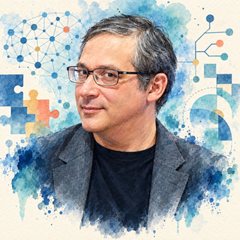 Gary Marcus
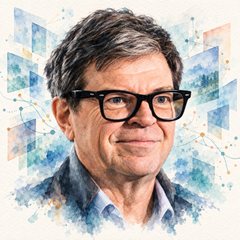 Yann LeCun
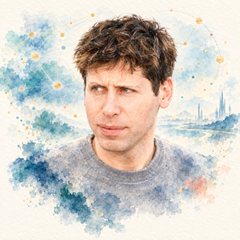 Sam Altman
Where it stands. SSI's own July 2026 deal was for a tenfold increase in compute, and its technical approach remains unpublished, so neither side has yet seen what Sutskever's alternative produces. Source
Open versus closed models
Once models can cause serious harm, releasing their weights or technical details is unwise, and he said in 2023 he expected this to become "completely obvious to everyone" within a few years.
Yann LeCun argues that open models are safer because more people can inspect and correct them, and that closed development concentrates power in a few companies; Andrew Ng argues that restricting open weights protects incumbents. Altman, his former colleague, conceded in January 2025 that OpenAI had been on the wrong side of history on open source, and OpenAI released open-weight models that August.
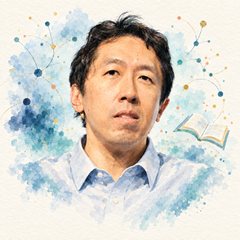 Andrew Ng
Where it stands. OpenAI itself released open-weight models in August 2025, while Hinton and Bengio still argue against releasing frontier weights; there is no consensus of the kind he predicted. Source
The November 2023 firing of Sam Altman
Sutskever testified that he spent about a year gathering evidence of what his memo called Altman's "consistent pattern of lying," at the board's request, while conceding that the process was rushed, the board inexperienced, and much of the evidence second-hand from Mira Murati.
Altman described being "fired by surprise on a video call" and called the episode a governance failure; OpenAI's WilmerHale review found his conduct "did not mandate removal." Employees' letter to the board said that "despite many requests for specific facts for your allegations, you have never provided any written evidence." Helen Toner, who backed the firing, said on X that part of Sutskever's deposition account of her was false.
Where it stands. No written account of the WilmerHale review was released, so the dispute rests on competing testimony from the people involved. Source
Are large neural networks conscious?
He has said it "may be" that large networks are slightly conscious, a possibility he called "very hard to argue against," and argues that future AI will itself be sentient.
Yann LeCun replied to the 2022 post, "Nope. Not even for true for small values of 'slightly conscious' and large values of 'large neural nets'," arguing that consciousness would need an architecture no current network has. Emily Bender and Timnit Gebru's "stochastic parrots" work holds that fluent text is statistical pattern-matching, and that attributing minds to it misleads the public and serves the companies selling it.
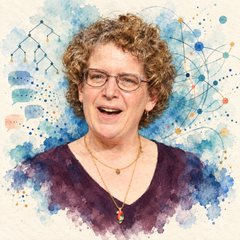 Emily M. Bender
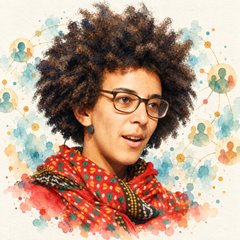 Timnit Gebru
Where it stands. No agreed test of machine consciousness exists, and Sutskever has not retracted the post. Source
Building superintelligence in private
A lab with no products and no commercial deadlines can put safety ahead of capabilities, though he now says any plan must include gradual release so that people can see what AI can do.
Altman's doctrine of iterative deployment holds that "the best way to make an AI system safe is by iteratively and gradually releasing it into the world, giving society time to adapt." On that view a lab that trains in secret and releases a finished system is the riskier path, and the public has no way to assess SSI's safety claims because it publishes nothing.
Where it stands. SSI had released no model or paper by September 2026; Sutskever said in November 2025 that his change of mind "may back-propagate into the plans of our company." Source
Notable works
| Title | Type | Year | Why it matters |
|---|---|---|---|
| Generating Text with Recurrent Neural Networks | paper | 2011 | With James Martens and Hinton; a character-level network trained on Wikipedia, an early ancestor of neural text generation. |
| ImageNet Classification with Deep Convolutional Neural Networks | paper | 2012 | The AlexNet paper, with Krizhevsky and Hinton. |
| On the importance of initialization and momentum in deep learning | paper | 2013 | With Martens, Dahl and Hinton; showed that plain momentum methods can train deep and recurrent networks. |
| Distributed Representations of Words and Phrases and their Compositionality | paper | 2013 | The word2vec phrase paper with Tomas Mikolov and colleagues; NeurIPS Test of Time award, 2023. |
| Training Recurrent Neural Networks (PhD thesis) | paper | 2013 | His University of Toronto dissertation under Hinton. |
| Sequence to Sequence Learning with Neural Networks | paper | 2014 | With Vinyals and Le; the encoder-decoder design behind neural machine translation. |
| Dropout: A Simple Way to Prevent Neural Networks from Overfitting | paper | 2014 | With Srivastava, Hinton, Krizhevsky and Salakhutdinov; a regularization method now used throughout deep learning. |
| Mastering the game of Go with deep neural networks and tree search | paper | 2016 | DeepMind's AlphaGo paper, led by David Silver, with Sutskever among the co-authors from his Google Brain years. |
| Language Models are Few-Shot Learners | paper | 2020 | The GPT-3 paper; showed that a 175-billion-parameter model could do new tasks from a few examples in its prompt. |
| Introducing Superalignment | essay | 2023 | With Jan Leike; argued that superintelligence "could arrive this decade" and set a four-year goal for aligning it. |
| Sequence to sequence learning with neural networks: what a decade (NeurIPS Test of Time talk) | talk | 2024 | The Vancouver talk of 13 December 2024 in which he said "pre-training as we know it will unquestionably end." |
| Ilya Sutskever: We're moving from the age of scaling to the age of research (Dwarkesh Podcast) | podcast | 2025 | His longest interview since founding SSI, on generalization, SSI's strategy and alignment. |
Where to start
A short path into Ilya's work, in order.
-
1
University of Toronto convocation address, June 2025talk
Nine minutes; the shortest complete statement of his outlook, from "accept reality as it is" to why the brain as a biological computer means AI will do every job.
-
2
Twenty minutes; Will Douglas Heaven's profile, published three weeks before the board crisis, covers his childhood, ChatGPT's surprise success, superalignment and becoming "part AI."
-
3
NeurIPS 2024 Test of Time talktalk
About twenty minutes; ten years after sequence to sequence, he explains what the paper got right and why pre-training on internet data has to end.
-
4
Dwarkesh Podcast, November 2025podcast
Ninety minutes, with a full transcript; the only extended account of SSI's thinking, covering generalization, emotions as value functions, the age of research and his timelines.
-
5
Sequence to Sequence Learning with Neural Networks (2014)paper
Nine pages that show his research style, a simple idea pushed hard with scale and careful engineering; readable with a basic grasp of neural networks.
-
6
Inside the Deposition That Showed How OpenAI Nearly Destroyed Itself (Decrypt)essay
Ten minutes; his sworn account of the November 2023 firing, to be read alongside Altman's "Reflections" and Helen Toner's interviews.
Misconceptions
Sutskever fired Sam Altman on his own initiative.
Four directors voted to remove Altman. Sutskever testified in May 2026 that he prepared his 52-page memo at the board's request, and in his 2025 deposition that most of its evidence came from Mira Murati; within three days he said he regretted taking part and signed the letter calling for Altman's return. Source
Meta bought or merged with Safe Superintelligence in 2025.
Meta tried to acquire SSI and Sutskever declined. His co-founder and CEO Daniel Gross left to join Meta, and Sutskever became CEO on 3 July 2025. Source
SSI released its first model in August 2026.
The August date came from investor Gavin Baker's remark on a podcast. SSI never confirmed it, and its updates page, as of September 2026, lists only the Nvidia partnership since July 2025. Source
Sutskever said AI is conscious.
His February 2022 post said "it may be that today's large neural networks are slightly conscious." He later told MIT Technology Review it was a possibility "very hard to argue against," not a finding. Source
Awards
- Fellow of the Royal Society Elected in May 2022.
- NeurIPS Test of Time award (three consecutive years) For AlexNet (2022), the word2vec phrase paper (2023) and sequence to sequence learning (2024).
- TIME100 AI Named in the inaugural list in September 2023 and again in 2024.
- Honorary Doctor of Science, University of Toronto Conferred on 6 June 2025, twenty years after his undergraduate degree.
- NAS Award for the Industrial Application of Science The National Academy of Sciences award, 25,000 dollars, presented in artificial intelligence for the first time "for revolutionary contributions to artificial intelligence and its industrial applications."
Quotes
"I deeply regret my participation in the board's actions. I never intended to harm OpenAI. I love everything we've built together and I will do everything I can to reunite the company."
"We've achieved peak data and there'll be no more. We have to deal with the data that we have. There's only one internet."
"Everyone just says scaling hypothesis. Everyone neglects to ask, what are we scaling?"
"The brain is a biological computer. So why can't the digital computer, a digital brain do the same things?"
"We have the compute, we have the team, and we know what to do. Together we will keep building safe superintelligence."
"We are squarely an 'age of research' company. We are making progress."
"We have research that is worthy of scaling up, and having access to a big NVIDIA computer will let us do so."
Related leaders
-
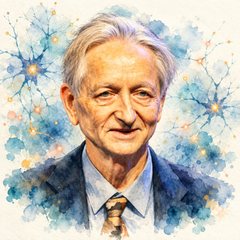
Geoffrey Hinton
His PhD adviser at the University of Toronto and co-author of AlexNet; said on winning the 2024 Nobel Prize that he was "particularly proud" that Sutskever had fired Altman.
-
Sam Altman
Co-founded OpenAI with him in 2015; Sutskever voted to remove Altman as CEO in November 2023, reversed within three days, and testified about the episode in the 2026 Musk v. Altman trial.
-
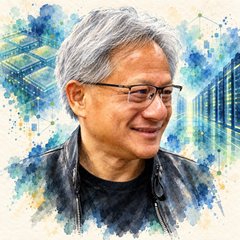
Jensen Huang
Nvidia's CEO signed a long-term partnership with SSI in July 2026, saying Sutskever "has pioneered fundamental breakthroughs at the foundation of modern AI, beginning with AlexNet."
-
Dario Amodei
OpenAI research colleague until Amodei left to found Anthropic in 2021; Sutskever testified that within two days of Altman's firing OpenAI's board discussed a merger with Anthropic under Anthropic's leadership.
-
Fei-Fei Li
Her ImageNet benchmark and challenge were what AlexNet won in 2012.
-
David Silver
Lead author of DeepMind's 2016 AlphaGo paper in Nature, on which Sutskever was a co-author from Google Brain.
-
Demis Hassabis
Senior author of the 2016 AlphaGo paper Sutskever co-wrote; DeepMind and OpenAI were later direct rivals in the race Sutskever's SSI now joins.
-
Yann LeCun
Public critic of his 2022 "slightly conscious" post and a longtime opponent of the scaling thesis and of closed models that Sutskever defended at OpenAI.
-
Gary Marcus
Longtime critic of scaling as a route to general intelligence; treats Sutskever's 2025 "age of research" argument as a concession of the point.
-
Emily M. Bender
Bender and Alex Hanna cite his "Feel the AGI!" chants at OpenAI as the mysticism behind the term they reject, and her "stochastic parrots" argument that fluent text is not evidence of a mind runs against his 2022 "slightly conscious" post.
Details and links
Organizations
- Safe Superintelligence Inc. Co-founder; CEO since July 2025, 2024-present
- OpenAI Co-founder and chief scientist; board member until November 2023, 2015-present
- University of Toronto BSc, MSc and PhD student under Geoffrey Hinton; honorary DSc 2025, until 2013
Education
- BSc in MathematicsUniversity of Toronto, 2005
- MSc in Computer ScienceUniversity of Toronto, 2007
- PhD in Computer Science (adviser Geoffrey Hinton)University of Toronto, 2013
Affiliations
- Safe Superintelligence Inc. (co-founder, 2024; CEO since July 2025)
- OpenAI (co-founder, research director and chief scientist, 2015-2024; board member until November 2023)
- Google Brain (research scientist, 2013-2015)
- DNNresearch (co-founder with Geoffrey Hinton and Alex Krizhevsky, 2012-2013)
- University of Toronto (BSc 2005, MSc 2007, PhD 2013; honorary DSc 2025)
- Royal Society (Fellow, 2022)
Social
Areas of focus
Sources
- Statement on AI Risk, signatories (Center for AI Safety)
- Safe Superintelligence Inc. homepage and founding statement (June 2024)
- Safe Superintelligence Inc. updates page (September 2024 funding, July 2025 CEO message, July 2026 Nvidia partnership)
- NVIDIA Newsroom: Ilya Sutskever's Safe Superintelligence Inc. and NVIDIA Announce Long-Term Strategic Partnership (July 27, 2026)
- TechCrunch: Ilya Sutskever's Safe Superintelligence partners with Nvidia to scale its AI research (July 27, 2026)
- Reuters via Yahoo Finance: Ex-OpenAI exec Sutskever says he spent a year gathering proof of alleged Altman dishonesty (May 11, 2026)
- Decrypt: Inside the Deposition That Showed How OpenAI Nearly Destroyed Itself (November 2025)
- Marketing AI Institute: OpenAI's Bombshell Deposition, with Helen Toner's response (November 14, 2025)
- Dwarkesh Podcast: Ilya Sutskever, We're moving from the age of scaling to the age of research (November 25, 2025; transcript)
- University of Toronto: Ilya Sutskever convocation address on receiving an honorary degree (June 6, 2025; official video)
- University of Toronto News: Ilya Sutskever, a leader in AI and its responsible development, receives U of T honorary degree (June 6, 2025)
- C&EN: National Academy of Sciences honors scientific achievement with 2026 award winners (February 2026)
- CNBC: Ilya Sutskever becomes CEO of Safe Superintelligence after Meta poached Daniel Gross (July 3, 2025)
- TechCrunch: OpenAI co-founder Ilya Sutskever's Safe Superintelligence reportedly valued at $32B (April 12, 2025)
- Business Today: Safe Superintelligence secures $1 billion (September 5, 2024)
- The Verge: OpenAI cofounder Ilya Sutskever says the way AI is built is about to change (December 13, 2024)
- TechCrunch: Ilya Sutskever, OpenAI co-founder and longtime chief scientist, departs (May 14, 2024)
- Fortune: OpenAI promised 20% of its computing power to combat the most dangerous kind of AI, but never delivered, sources say (May 21, 2024)
- The Verge: OpenAI's investigation into Sam Altman's firing concludes (March 8, 2024)
- Wired: OpenAI Staff Threaten to Quit Unless Board Resigns (November 20, 2023)
- MIT Technology Review: Exclusive, Ilya Sutskever, OpenAI's chief scientist, on his hopes and fears for the future of AI (October 26, 2023)
- OpenAI: Introducing Superalignment (Jan Leike and Ilya Sutskever, July 5, 2023; archived copy)
- The Verge: OpenAI co-founder on company's past approach to openly sharing research, 'We were wrong' (March 15, 2023)
- Sam Altman, "Reflections" (January 2025)
- TechCrunch: After winning Nobel, Geoffrey Hinton says he's proud Ilya Sutskever 'fired Sam Altman' (October 9, 2024)
- A trillion dollars is a terrible thing to waste - Gary Marcus
- Yann LeCun on whether large neural networks are conscious (February 2022)
- Ilya Sutskever - Wikipedia
- The Myth of AGI - Alex Hanna and Emily M. Bender, Tech Policy Press (3 June 2025)
Reading this to shape your organization's AI plans? Through EMX, I help leadership teams decide where AI fits, what to ignore, and what to build next—using the same vendor-neutral research behind this profile. Put the research to work