"People should stop training radiologists now. It's just completely obvious that within five years deep learning is going to do better than radiologists."
Remarks at the Creative Destruction Lab's Machine Learning and the Market for Intelligence conference, Rotman School of Management, Toronto (video posted 24 November 2016)
The claim. Deep learning would outperform radiologists within five years, so hospitals should stop training them.
What happened.
Deep learning models did match or beat radiologists on some narrow benchmarks within the window (CheXNet, released in 2017, detected pneumonia on chest X-rays more accurately than a panel of radiologists), but no AI system took over the work of reading scans, and training did not stop. In 2025 US diagnostic radiology residency programs offered a record 1,208 positions, 4 percent more than in 2024, vacancy rates were at record highs, and radiology was the second-highest-paid medical specialty, with average income of $520,000 (Works in Progress, September 2025). The Mayo Clinic, which by May 2025 ran more than 250 AI models in radiology, had grown its radiologist staff from about 260 in 2016 to more than 400, a rise of 55 percent, according to the New York Times.
Their view since. In a May 2025 New York Times interview he said he had spoken too broadly in 2016, had meant image analysis only, and was wrong on the timing but not the direction; he said AI was instead making radiologists "a whole lot more efficient in addition to improving accuracy."
Evidence:
The algorithm will see you now, Works in Progress (25 September 2025); Geoffrey Hinton's wildly overconfident AI prediction failed, The Decoder, summarising the New York Times (15 May 2025); The "Godfather of AI" Predicted I Wouldn't Have a Job. He Was Wrong., The New Republic (25 October 2024); A.I. versus M.D., The New Yorker (3 April 2017)
"Just as electricity transformed almost everything 100 years ago, today I actually have a hard time thinking of an industry that I don't think AI will transform in the next several years."
Talk at Stanford Graduate School of Business, as published by Stanford GSB Insights on March 11, 2017
The claim. Within several years of early 2017, AI would transform nearly every industry, as electricity did a century earlier.
What happened.
"Several years" is not a fixed term; the tracker reads it as up to seven, closing in March 2024. Whether AI transformed nearly every industry by then depends on the measure. Surveys of larger organizations show wide use: Stanford's 2025 AI Index reported that 78 percent of organizations said they used AI in 2024, up from 55 percent in 2023. The US Census Bureau's nationally representative Business Trends and Outlook Survey found much lower use: between 3.7 and 5.4 percent of firms used AI for business purposes from September 2023 to February 2024, and 17 to 20 percent used it in any business function between December 2025 and May 2026, with retail at about 14 percent. Use alone is also a lower bar than transformation, which neither survey measures.
Evidence:
Stanford HAI, AI Index Report 2025; US Census Bureau, Tracking Firm Use of AI in Real Time (working paper, 2024); US Census Bureau, AI Use at U.S. Businesses (May 26, 2026)
"In the next five years, computer programs that can think will read legal documents and give medical advice."
Essay "Moore's Law for Everything" on his personal site
The claim. Within five years of March 2021, computer programs would read legal documents and give medical advice.
What happened.
Both halves of the checkable claim happened inside the window. On January 7, 2026, OpenAI launched ChatGPT Health and said more than 230 million people asked ChatGPT health and wellness questions each week, although its terms of service say it is "not intended for use in the diagnosis or treatment of any health condition." In March 2026 the legal AI company Harvey said its tools, which handle contract analysis, due diligence and litigation work, were used by more than 100,000 lawyers across 1,300 organizations. Whether these programs "think," the essay's other word, is a separate question on which researchers disagree; the tracker grades only the reading and advising. The same passage also forecast assembly-line work and companionship within a decade (by 2031), which remains open.
Evidence:
TechCrunch, OpenAI unveils ChatGPT Health, says 230 million users ask about health each week (January 7, 2026); CNBC, Legal AI startup Harvey valued at $11 billion in funding round (March 25, 2026)
"There's no text in the world I believe that explains this. If you train a machine as powerful as could be…your GPT-5000, it's never gonna learn about this."
Lex Fridman Podcast episode 258, "Dark Matter of Intelligence and Self-Supervised Learning"; the transcription quoted is from 80,000 Hours
The claim. No language model trained on text, however large, would learn that an object on a table moves when the table is pushed, because no text describes it.
What happened.
The forecast has no deadline ("never"), so it is marked contested rather than resolved. About 14 months after the episode, OpenAI released GPT-4 (March 2023), and 80,000 Hours, the career-advice nonprofit, published a screenshot of GPT-4 answering a version of the question, about a smartphone on a nudged table; the model said the phone would likely move along with the table because of friction. 80,000 Hours cites the exchange as an example of experts underestimating how quickly language models improve. LeCun has continued to argue that text-trained
LLMs do not understand the physical world. Whether a correct written answer counts as having learned the physics is the point in dispute.
Their view since. In March 2024, back on Fridman's podcast, he said LLMs can do none of the four things intelligent systems need, or do them only in a primitive way, and that "they don't really understand the physical world."
Evidence:
Will we have AGI by 2030?, 80,000 Hours; Transcript for Yann LeCun, Lex Fridman Podcast episode 416 (7 March 2024)
"Indeed, we may already be running into scaling limits in deep learning, perhaps already approaching a point of diminishing returns."
Nautilus essay "Deep Learning Is Hitting a Wall"
The claim. Deep learning was approaching diminishing returns from scale and would not reach trustworthy general intelligence without symbolic methods.
What happened.
The essay set no date. In the following three years
neural network systems improved sharply, with GPT-4 in March 2023 and reasoning models in 2024 and 2025. On 14 November 2024 Sam Altman posted "there is no wall" after reports that pretraining gains were slowing; Marcus replied, "If I am wrong, where is GPT-5?" In November 2025 Ilya Sutskever said that 2020 to 2025 had been "the age of scaling" and that he did not believe 100 times more scale would transform everything, calling the new period "the age of research again, just with big computers." Whether that confirms Marcus depends on whether reasoning training and tool use count as scaling deep learning or as the change of approach he called for.
Their view since. He argues that the gains since 2024 came from bolting symbolic tools such as code interpreters onto language models, which he calls neurosymbolic AI, and that pure scaling has hit the diminishing returns he forecast.
Evidence:
Dialogue Origin, "Deep Learning Is Hitting a Wall" and "There Is No Wall", Quote Investigator (4 January 2025); Ilya Sutskever, We're moving from the age of scaling to the age of research, Dwarkesh Podcast (25 November 2025); How o3 and Grok 4 Accidentally Vindicated Neurosymbolic AI, Marcus on AI (13 July 2025)
"In 2029, AI will not be able to watch a movie and tell you accurately what is going on"
Marcus on AI post "Dear Elon Musk, here are five things you might want to consider about AGI", offering a 100,000 dollar bet after Musk wrote that he would be surprised if there were no AGI by 2029; Musk did not respond, and other backers raised the stake to 500,000 dollars
The claim. In 2029 AI would still fail at least three of five tasks (following a film, following a novel, cooking in an arbitrary kitchen, writing 10,000 lines of bug-free code from a specification, and formalizing published proofs), so AGI would not have arrived as Elon Musk predicted.
What happened.
The window runs to the end of 2029, and Marcus loses if a single system does three of the five tasks. As of September 2026 he conceded that two were getting close: of OpenAI's GPT-6 Astra he wrote that "autoformalization may finally be in reach, and maybe (?) reliable coding", while doubting that it had achieved the other tasks in his bet with Miles Brundage.
Evidence:
Sad to see Jensen Huang claim that AGI has arrived, Marcus on AI (6 September 2026)
"Fluent hallucinations will still be common, and easily induced"
Third of seven predictions in "What to Expect When You're Expecting … GPT-4", Marcus on AI (then The Road to AI We Can Trust)
The claim. GPT-4 would still produce fluent, easily induced hallucinations, like its predecessors.
What happened.
OpenAI released GPT-4 on 14 March 2023. Its technical report, published the same day, said in its limitations section that "GPT-4 has similar limitations as earlier GPT models. Most importantly, it still is not fully reliable (it 'hallucinates' facts and makes reasoning errors)." The prediction concerned GPT-4 itself, so it resolved on release; the broader claim that hallucination would persist in later models has also held through GPT-5 in August 2025.
Their view since. In December 2025 he wrote that GPT-5 "didn't solve hallucinations", and he counts the December 2022 list among his most accurate forecasts.
Evidence:
GPT-4 Technical Report, OpenAI, arXiv (March 2023); Six (or seven) predictions for AI 2026, Marcus on AI (20 December 2025)
"I fully expect that in a few years it's going to be completely obvious to everyone that open-sourcing AI is just not wise."
Interview with The Verge on why OpenAI withheld technical details of GPT-4
The claim. Within a few years of March 2023 it would be obvious to everyone that open-sourcing powerful AI is unwise.
What happened.
Taking "a few years" as three, the window closed in March 2026, and no such consensus had formed. OpenAI's own chief executive, Sam Altman, said in a Reddit AMA on 31 January 2025 that the company had been "on the wrong side of history" on open source, and on 5 August 2025 OpenAI released gpt-oss-120b and gpt-oss-20b under the Apache 2.0 license, its first
open-weight language models since GPT-2. Meta, Chinese labs and others continued to publish open-weight models. Opposition also continued: Geoffrey Hinton and Yoshua Bengio still argue that frontier weights should not be released. The question remains disputed rather than settled in either direction, which is the opposite of "completely obvious to everyone." A reader who takes "a few years" as five would treat the window as open until 2028.
Evidence:
TechCrunch, Sam Altman believes OpenAI has been on the wrong side of history concerning open source (January 31, 2025); Simon Willison, OpenAI's new open weight (Apache 2) models are really good (August 5, 2025)
"Until quite recently, I thought it was going to be like 20 to 50 years before we have general-purpose AI. And now I think it may be 20 years or less."
Interview with Brook Silva-Braga for CBS Saturday Morning, recorded at the Vector Institute, Toronto
The claim. General-purpose AI could arrive within 20 years, far sooner than the 20 to 50 years he had previously expected.
What happened.
The window runs to March 2043. There is no agreed test for general-purpose AI, so resolving this will also depend on a definition. The forecast has shortened since he made it. In his December 2024 Nobel interview he put a 50 percent chance on AI smarter than humans arriving between five and 20 years from then, and in August 2025 he told the Ai4 conference in Las Vegas that "a reasonable bet is sometime between five and 20 years."
Their view since. He has tightened rather than retracted the forecast. In his Nobel interview he said it "may be much longer, it's just possible it's a bit shorter," and in an April 2025 CBS Mornings follow-up he said a good chance now fell "between four and 19 years from now."
Evidence:
Geoffrey Hinton, Nobel Prize interview transcript (December 2024); The 'godfather of AI' reveals the only way humanity can survive superintelligent AI, CNN (13 August 2025); Transcript of Brook Silva-Braga interviews Geoffrey Hinton on CBS Mornings, The Singju Post (April 2025)
"LLM hallucinations will be largely eliminated by 2025. that's a huge deal. the implications are far more profound than the threat of the models getting things a bit wrong today."
Post on X while he was CEO of Inflection AI, a month after the launch of Pi
The claim. Hallucinations by large language models would be largely eliminated by 2025.
What happened.
Hallucinations did not disappear by the end of 2025, and whether they were "largely" eliminated depends on the threshold, which he did not define. In September 2025 OpenAI researchers published "Why Language Models Hallucinate," whose abstract states that hallucinations "persist even in state-of-the-art systems and undermine trust" and attributes them to training and evaluation that reward guessing. When Gary Marcus cited the forecast in autumn 2025, the pseudonymous AI commentator Roon replied that Suleyman "was right"; Zvi Mowshowitz ran an informal reader poll in which a large majority sided with Marcus, and concluded that hallucinations were "way down and much easier to navigate" but about one model cycle short of "largely eliminated."
Evidence:
Why Language Models Hallucinate, Kalai, Nachum, Vempala and Zhang, arXiv (September 2025); AI #136: A Song and Dance, Zvi Mowshowitz (2 October 2025)
"While superintelligence seems far off now, we believe it could arrive this decade."
OpenAI blog post "Introducing Superalignment," co-written with Jan Leike
The claim. Superintelligence could arrive before the end of the 2020s.
What happened.
The window runs to the end of 2029 and is open. The claim was hedged ("could"), and there is no agreed test for
superintelligence. The
Superalignment team that the post launched was dissolved into other groups after Sutskever and Leike left OpenAI in May 2024. In November 2025 Sutskever gave a longer range, estimating five to twenty years until a system that learns as well as a human and therefore becomes superhuman, which places most of his own probability after 2030.
Their view since. In November 2025 he told Dwarkesh Patel "I think like 5 to 20" years for a human-like learner that would then become superhuman.
Evidence:
Dwarkesh Podcast, Ilya Sutskever (November 25, 2025); TechCrunch, Ilya Sutskever, OpenAI co-founder and longtime chief scientist, departs (May 14, 2024)
"Something like this could be as little as two years away."
MIT Technology Review essay adapted from The Coming Wave, describing the "Modern Turing Test"
The claim. An AI agent could pass his Modern Turing Test, turning a 100,000 dollar investment into 1 million dollars on a retail web platform in a few months with minimal human oversight, within about two years.
What happened.
The forecast was hedged ("could be as little as"), but no agent was reported to have met the test by July 2025. The closest public experiment went the other way. In Anthropic's Project Vend, published 27 June 2025, a Claude model ran a small office shop for about a month and made too many mistakes to run it successfully; Anthropic wrote that it "would not hire" the agent. On 5 January 2026 Suleyman posted that the test was still "the next big milestone I'm watching for on our way to
AGI."
Their view since. He still treats the test as the right milestone, restating it in January 2026 as "Can an agent take $100k and legally turn it into $1M? To me that's the modern Turing Test."
Evidence:
Project Vend: Can Claude run a small shop? Anthropic (27 June 2025); Can AI Legally Turn $100,000 Into $1 Million? Benzinga via Yahoo Finance (January 2026)
"In terms of someone looks at the model and even if you talk to it for an hour or so, it's basically like a generally well educated human, that could be not very far away at all. I think that could happen in two or three years."
Dwarkesh Podcast interview with Dwarkesh Patel, at about 00:28
The claim. Within two or three years of August 2023, an AI model could converse for an hour like a generally well-educated human.
What happened.
Conversational ability of this kind arrived inside the window. In a pre-registered study posted in March 2025, Cameron Jones and Benjamin Bergen of UC San Diego had people hold simultaneous text conversations with a human and a model; GPT-4.5, prompted to adopt a persona, was judged to be the human 73 percent of the time, more often than the real humans. Those conversations lasted five minutes, not an hour, and no controlled hour-long test has been published. When Patel interviewed Amodei again in February 2026, he told him, "You were right," while adding that he had expected such a system to automate large parts of white-collar work, which it had not. Amodei said in the same interview, "I don't believe we're basically at AGI."
Evidence:
Jones and Bergen, Large Language Models Pass the Turing Test, arXiv (March 31, 2025); Dwarkesh Podcast, Dario Amodei: We are near the end of the exponential (February 13, 2026)
"Instead of decades to centuries, I now see it as 5 to 20 years with 90% confidence. And what if it was, indeed, just a few years?"
Personal and Psychological Dimensions of AI Researchers Confronting AI Catastrophic Risks, essay on his personal blog
The claim. Human-level AI would arrive within 5 to 20 years, with 90 percent confidence, rather than the decades to centuries he had previously expected.
What happened.
The stated range runs from August 2028 to August 2043, so as of September 2026 not even its early end has arrived. He had given the same range two months earlier, in a June 2023 FAQ on his blog, as a 95 percent confidence interval for "superhuman intelligence." Whether it resolves will also depend on how human-level AI is defined; he has since singled out planning and agency as the main capabilities that separate current AI from human-level cognition.
Their view since. In his April 2025 TED talk he pointed to measurements showing the length of tasks AI agents can complete doubling every seven months and said that on that curve "it would take about five years to reach human level," which falls inside his 2023 range.
Evidence:
FAQ on Catastrophic AI Risks, Yoshua Bengio (24 June 2023); The catastrophic risks of AI and a safer path, Yoshua Bengio, TED2025 transcript (April 2025)
"I think in five years' time it may well be able to reason better than us."
60 Minutes interview with Scott Pelley, CBS News, answering a question about ChatGPT-4 in five years' time
The claim. Within five years, AI systems like GPT-4 may be able to reason better than people.
What happened.
The window runs to October 2028, and the claim was hedged ("may well"). Evidence so far points in both directions. In July 2025 an advanced version of Google DeepMind's Gemini Deep Think solved five of six International Mathematical Olympiad problems for 35 of 42 points, a gold-medal score, working end to end in natural language. On the other side, ARC-AGI-2, a set of novel puzzles each solved by at least two members of the public in two attempts or fewer, was built so that, in its designers' words, log-linear scaling of current models is insufficient to beat it.
Evidence:
Advanced version of Gemini with Deep Think officially achieves gold-medal standard at the International Mathematical Olympiad, Google DeepMind (21 July 2025); ARC-AGI-2, ARC Prize Foundation
"Reasoning capability is two to three years out."
Answer to an audience question at a Gensler-sponsored talk in autumn 2023, reported in The New Yorker on 27 November 2023 (the exact date of the talk is not given)
The claim. AI systems able to reason and work things out on their own were two to three years away.
What happened.
OpenAI released o1 on 12 September 2024 in a post titled "Learning to Reason with LLMs," less than a year into the window, and DeepSeek's R1 followed in January 2025; every major lab now ships models that think at length before answering. Whether these systems reason is disputed. Apple researchers reported in June 2025 that such "large reasoning models" face "a complete accuracy collapse beyond certain complexities" and "reason inconsistently across puzzles," while labs and Huang describe them as reasoning systems. The product category Huang predicted arrived inside his window; whether it meets the standard implied by the question he was answering, about when AI might start to figure things out on its own, depends on the definition.
Their view since. On NVIDIA's August 2025 earnings call Huang said "agentic systems, reasoning systems is completely revolutionary," and that reasoning models could need 100 to 1,000 times more computation than one-shot chatbots.
Evidence:
OpenAI, Learning to Reason with LLMs (12 September 2024, Internet Archive copy); Apple Machine Learning Research, The Illusion of Thinking (June 2025); NVIDIA Q2 fiscal 2026 earnings call, corrected transcript (27 August 2025)
"If I gave an AI … every single test that you can possibly imagine, you make that list of tests and put it in front of the computer science industry, and I'm guessing in five years time, we'll do well on every single one."
Keynote conversation at the 2024 SIEPR Economic Summit, Stanford University
The claim. If AGI is defined as passing any test people can devise, AI would do well on every such test within five years.
What happened.
The five-year window closes in March 2029. Huang tied the forecast to one definition of AGI and named bar exams and specialized medical licensing exams as examples, but set no fixed list of tests, so resolution will depend on which tests are counted. In the same talk he said AGI in the sense of a human-like mind may be much further away because "you need to know what the definition of success is."
Evidence:
SIEPR, Nvidia's Jensen Huang, The incredible future of AI (March 2024); Fox Business, Nvidia CEO Jensen Huang says AI could pass most human tests in 5 years (3 March 2024)
"all of this is going to take at least a decade and probably much more because there are a lot of problems that we're not seeing right now that we have not encountered"
Lex Fridman Podcast episode 416
The claim. Human-level AI, with memory, reasoning and hierarchical planning working together, would take at least a decade and probably much longer.
What happened.
The forecast sets a floor rather than a deadline: it would be contradicted by human-level AI arriving before March 2034, and there is no agreed test for human-level AI. As of September 2026 no system was generally accepted as human-level. Seven months after the episode he gave a slightly shorter range, "several years if not a decade," and said the distribution had a long tail.
Their view since. In October 2024 he wrote that reaching human-level AI "will take several years if not a decade" and that this did not put him in disagreement with Sam Altman's "several thousand days." In January 2026, launching AMI Labs, he told MIT Technology Review that human-level AI would come but "not going to be built on LLMs, and it's not going to happen next year or two years from now."
Evidence:
Yann LeCun on X, reply to Sam Altman's "several thousand days" (16 October 2024); Yann LeCun's new venture is a contrarian bet against large language models, MIT Technology Review (22 January 2026)
"I think AI agent workflows will drive massive AI progress this year"
Letter in The Batch, "Agentic Design Patterns Part 1"; the sentence continues that this progress might be "perhaps even more than the next generation of foundation models"
The claim. Agentic workflows, in which a model plans, uses tools and revises its own output, would drive massive AI progress in 2024, perhaps more than the next generation of foundation models.
What happened.
Agentic systems produced large gains in 2024, especially in software engineering: on October 22, 2024, Anthropic released an upgraded Claude 3.5 Sonnet that raised its score on SWE-bench Verified, a benchmark of real code-repair tasks run through an agent scaffold, from 33.4 to 49.0 percent, along with a "computer use" capability for operating a desktop. The largest single jumps of the year, however, came from a new kind of model. OpenAI's o1, released September 12, 2024 and trained with
reinforcement learning to reason before answering, solved 83 percent of problems on an International Mathematical Olympiad qualifying exam against 13 percent for GPT-4o, and in December OpenAI's o3 beat o1 by 22.8 points on SWE-bench Verified. The first half of the forecast held; the hedged comparison with new foundation models ("perhaps even more") did not clearly hold, since reasoning models were the headline advance.
Evidence:
Anthropic, Introducing computer use, a new Claude 3.5 Sonnet, and Claude 3.5 Haiku (October 22, 2024); TechCrunch, OpenAI unveils o1, a model that can fact-check itself (September 12, 2024); TechCrunch, OpenAI announces new o3 models (December 20, 2024)
"I will tell you why the collapse of the generative AI bubble – in a financial sense – appears imminent, likely before the end of the calendar year."
Marcus on AI post "Why the collapse of the Generative AI bubble may be imminent"; he wrote that a Wired essay he had just filed predicting a collapse in 2025 had "got the year wrong"
The claim. The generative AI bubble would collapse financially before the end of 2024, with investors pulling back from AI companies.
What happened.
Investment accelerated instead. On 2 October 2024 OpenAI closed a 6.6 billion dollar funding round at a 157 billion dollar post-money valuation, with Microsoft, Nvidia and SoftBank participating. In his review of the year on 1 January 2025, Marcus wrote that his predictions about the technical and economic limits of generative AI had largely held "but I was flat out wrong about investors," adding that he had not been sure OpenAI would raise another large round, "let alone one at over $150 billion dollars."
Their view since. He has kept arguing that the valuations are unsustainable; in December 2025 he predicted that 2025 would be remembered as "the year of the peak bubble, and also the moment at which Wall Street began to lose confidence in generative AI."
Evidence:
OpenAI closes funding at $157 billion valuation, CNBC (2 October 2024); 25 AI Predictions for 2025, with a review of last year's predictions, Marcus on AI (1 January 2025); Six (or seven) predictions for AI 2026, Marcus on AI (20 December 2025)
"It is possible that we will have superintelligence in a few thousand days (!); it may take longer, but I'm confident we'll get there."
Essay "The Intelligence Age" on his personal site
The claim. Superintelligence could arrive within a few thousand days of September 2024, though it might take longer.
What happened.
The forecast gives no fixed date. "A few thousand days" from September 2024 runs from roughly 2030 into the late 2030s, and Altman hedged that "it may take longer," so no resolution date is set. As of September 2026, about 730 days have passed. There is no agreed test for superintelligence; in August 2025 Altman himself told CNBC that "AGI" had become "not a super useful term." OpenAI's internal models produced research-level mathematics in 2026 (see the entry on novel insights), which supporters cite as progress toward the goal and critics do not treat as evidence of general superhuman ability.
Their view since. In June 2025 he wrote in "The Gentle Singularity" that "we are past the event horizon; the takeoff has started" and that humanity is "close to building digital superintelligence."
Evidence:
Sam Altman, The Gentle Singularity (June 10, 2025); CNBC, Sam Altman says AGI is a pointless term (August 11, 2025)
"If you just kind of eyeball the rate at which these capabilities are increasing, it does make you think that we'll get there by 2026 or 2027."
Lex Fridman Podcast
The claim. Extrapolating the trend, AI broadly better than humans at most cognitive tasks (his "powerful AI," or "country of geniuses in a datacenter") would arrive by 2026 or 2027.
What happened.
The window runs to the end of 2027. In "Machines of Loving Grace" (October 2024) he wrote that powerful AI "could come as early as 2026, though there are also ways it could take much longer." In February 2026 he said of a country of geniuses in a data center, "We don't have that now. That is very clear," gave 90 percent odds of reaching it within ten years, and called 2026 or 2027 his "hunch." In June 2026 he wrote that "if these
scaling laws continue for only a year or two longer," such a system was likely.
Evidence:
Dario Amodei, Machines of Loving Grace (October 2024); Dwarkesh Podcast, Dario Amodei: We are near the end of the exponential (February 13, 2026); Dario Amodei, Policy on the AI Exponential (June 2026)
"Pre-training as we know it will unquestionably end."
NeurIPS 2024 Test of Time talk, Vancouver, reported by The Verge
The claim. Pre-training large models on internet data, as practiced in 2024, would end because the supply of human-generated data is finite.
What happened.
The forecast has no date, and whether it has come true depends on what counts as pre-training "as we know it." Labs shifted much of their effort to reinforcement learning and reasoning after 2024, which supporters of the forecast cite. But
frontier labs continued to pre-train larger models on larger data sets and data centers, and Sutskever himself said in November 2025 that "it appears that Gemini have found a way to get more out of pre-training," while repeating that "at some point though, pre-training will run out of data." Gary Marcus and other scaling skeptics read his statements as confirmation that scaling has hit diminishing returns; the labs' spending plans assume it has not.
Their view since. In November 2025 he said the field had moved from an "age of scaling" (2020 to 2025) back to an "age of research."
Evidence:
Dwarkesh Podcast, Ilya Sutskever (November 25, 2025); Gary Marcus, A trillion dollars is a terrible thing to waste (November 27, 2025)
"If there exist AI systems that can perform 8 of the 10 tasks below by the end of 2027, as determined by our panel of judges, Gary will donate $2,000 to a charity of Miles’ choice"
Joint bet with Miles Brundage, a former OpenAI policy researcher, at ten-to-one odds; if fewer than eight tasks are achieved, Brundage donates 20,000 dollars to a charity of Marcus's choice
The claim. By the end of 2027, AI systems would be able to perform fewer than eight of ten tasks ranging from understanding films and novels to writing Pulitzer-caliber books and making Nobel-caliber discoveries.
What happened.
The bet will be judged by a panel after the end of 2027. In January 2025 Marcus forecast that no single system would solve more than four of the tasks by the end of 2025, and in December 2025 he wrote that none had done more than four, "or maybe any". In September 2026 he said autoformalization of proofs and perhaps reliable coding might be within reach of GPT-6 Astra but doubted it had achieved the other eight.
Evidence:
Six (or seven) predictions for AI 2026, Marcus on AI (20 December 2025); Sad to see Jensen Huang claim that AGI has arrived, Marcus on AI (6 September 2026)
"We will not see artificial general intelligence this year, despite claims by Elon Musk to the contrary."
First of his high-confidence predictions in "25 AI Predictions for 2025", answering Musk's April 2024 remark that "we'll have AI that is smarter than any one human probably around the end of next year"
The claim. There would be no artificial general intelligence by the end of 2025, contrary to Elon Musk's forecast of AI smarter than any single human by then.
What happened.
No lab announced that it had built AGI during 2025, and at Davos in January 2026 Demis Hassabis said current systems were "nowhere near" human-level AGI, which on his definition requires all human cognitive capabilities, including scientific creativity. Others framed the question differently. Fortune reported in January 2026 that Sam Altman had said AI was already beginning to slip past human-level AGI toward superintelligence, and in 2026 Jensen Huang declared that AGI had arrived. On the strict definitions that Marcus and Hassabis use, the forecast held; on Altman's looser framing it is disputed.
Their view since. In December 2025 he counted this among the sixteen of his seventeen high-confidence 2025 predictions that he judged correct, and in September 2026 he criticized Huang's declaration as coming "with no evidence and no definitions".
Evidence:
AI leaders at Davos on AGI and LLMs, Fortune (23 January 2026); Six (or seven) predictions for AI 2026, Marcus on AI (20 December 2025); Sad to see Jensen Huang claim that AGI has arrived, Marcus on AI (6 September 2026)
"We believe that, in 2025, we may see the first AI agents “join the workforce” and materially change the output of companies."
Blog post "Reflections"
The claim. In 2025 the first AI agents would "join the workforce" and materially change the output of companies.
What happened.
Whether this happened depends on what counts as materially changing a company's output. Coding agents went into daily use during 2025, and some employers tied staffing to agents: in September 2025 Salesforce said its Agentforce customer-service agents had let it cut support staff from about 9,000 to about 5,000. Company-wide studies found smaller effects. An MIT NANDA report in August 2025, based on 150 interviews, a survey of 350 employees and 300 public deployments, found that 95 percent of enterprise generative AI pilots were falling short of measurable returns (the study covered generative AI broadly, not only agents). The forecast's hedge ("may see the first") sets a low bar that single-company examples meet; measured across the economy, the effect in 2025 was small.
Their view since. In June 2025 Altman wrote that "2025 has seen the arrival of agents that can do real cognitive work; writing computer code will never be the same."
Evidence:
CNBC, Salesforce CEO confirms 4,000 layoffs 'because I need less heads' with AI (September 2, 2025); Fortune, MIT report: 95% of generative AI pilots at companies are failing (August 18, 2025); Sam Altman, The Gentle Singularity (June 10, 2025)
"If you said 15 years for very useful quantum computers, that would probably be on the early side. If you said 30, it's probably on the late side. But if you picked 20, I think a whole bunch of us would believe it."
NVIDIA financial analyst session at CES, Las Vegas
The claim. Very useful quantum computers were probably about 20 years away, with 15 years on the early side and 30 on the late side.
What happened.
The central estimate points to about 2045, and the window is open. The remark itself had an immediate market effect; on 8 January 2025 Rigetti Computing fell 40 percent, IonQ 37 percent and D-Wave more than 30 percent. Two months later NVIDIA announced a quantum research center in Boston built around its own GB200 systems.
Their view since. At NVIDIA's quantum day at GTC in March 2025 he said, "This is the first event in history where a company CEO invites all of the guests to explain why he was wrong," and in June 2025 at VivaTech he said quantum computing was reaching an "inflection point" and could start solving real problems in the next few years.
Evidence:
CNBC, Quantum stocks like Rigetti plunge after Nvidia's Huang says the computers are 15 to 30 years away (8 January 2025); The Register, Nvidia invests in quantum computing weeks after CEO said it's decades from being useful (19 March 2025); Fortune, Nvidia's Jensen Huang says he disagrees with almost everything Anthropic CEO Dario Amodei says (11 June 2025)
"We'll hopefully have some AI-designed drugs in clinical trials by the end of the year. That's the plan."
Panel at the World Economic Forum, Davos, reported by Bloomberg
The claim. Isomorphic Labs, the Alphabet drug-discovery company he runs, would have AI-designed drugs in clinical trials by the end of 2025.
What happened.
Isomorphic Labs did not begin a clinical trial in 2025. At Davos on 20 January 2026 Hassabis said the company expected its first clinical trials by the end of 2026, which Reuters reported as a delay of the earlier target. When Isomorphic announced a $2.1 billion Series B round in May 2026, it was still aiming to reach clinical trials before the end of 2026 and had not named the drug or disease involved.
Their view since. According to a May 2026 Yahoo Finance report on the funding round, he told Bloomberg that he had "misspoke" in January 2025 and had been referring to pre-clinical trials, which the company had begun.
Evidence:
Google-backed Isomorphic Labs delays clinical trial timeline, Reuters via Yahoo Finance (20 January 2026); Isomorphic Labs raises $2.1 billion Series B for AI drug discovery, Yahoo Finance (12 May 2026)
"I think the shelf life of the current [LLM] paradigm is fairly short, probably three to five years. I think within five years, nobody in their right mind would use them anymore, at least not as the central component of an AI system."
Debating Technology session at the World Economic Forum, Davos, as reported by TechCrunch (the bracketed word is TechCrunch's)
The claim. The large language model paradigm had a shelf life of three to five years, after which no one would use LLMs as the central component of an AI system.
What happened.
The window runs from January 2028 (three years) to January 2030 (five years). Twenty months in, LLMs remained the central component of the leading labs' products; CNBC reported in November 2025 that Meta, OpenAI and other companies had spent billions of dollars developing foundation models, particularly LLMs. LeCun left Meta that month to start AMI Labs, a company building the alternative he predicted, systems that learn
world models, keep persistent memory, reason and plan.
Their view since. In January 2026 he told MIT Technology Review that LLMs "can't truly reason or plan, because they lack a model of the world," and that his new company is working on the architectures he expects to replace them.
Evidence:
Meta chief AI scientist Yann LeCun is leaving to create his own startup, CNBC (19 November 2025); Yann LeCun's new venture is a contrarian bet against large language models, MIT Technology Review (22 January 2026)
"I think we'll be there in three to six months, where AI is writing 90 percent of the code. And then in twelve months, we may be in a world where AI is writing essentially all of the code."
Council on Foreign Relations CEO Speaker Series, in conversation with Michael Froman (CFR's uncorrected transcript sets off the first clause with dashes)
The claim. Within three to six months of March 2025, AI would be writing 90 percent of code, and within twelve months possibly essentially all of it.
What happened.
The answer depends on whose code is counted and how. At Salesforce's Dreamforce in October 2025, Amodei said 90 percent was "absolutely true now" within Anthropic and some customers, then qualified it as true on many teams, "not uniformly." Ryan Greenblatt of Redwood Research estimated that month that AI wrote about 50 percent of merged code across Anthropic, closer to 90 percent only if throwaway scripts are counted. Across the industry the share was lower: in Sonar's survey of more than 1,100 developers, published in January 2026, respondents said 42 percent of the code they committed was AI-generated or AI-assisted. By that industry-wide measure neither the 90 percent mark (September 2025) nor "essentially all" (March 2026) was reached; at Anthropic and some heavy users the 90 percent mark was reached on at least some teams.
Their view since. In February 2026 he told Dwarkesh Patel the 90 percent forecast "happened, at least at some places," including at Anthropic, and called lines of code "a very weak criterion" that people had misread as a claim that 90 percent of software engineers would not be needed.
Evidence:
Business Insider via Yahoo, Anthropic CEO says 90% of code written by teams at the company is done by AI (October 16, 2025); Ryan Greenblatt, Is 90% of code at Anthropic being written by AIs? (October 22, 2025); Sonar, State of Code Developer Survey report (January 8, 2026); Dwarkesh Podcast, Dario Amodei: We are near the end of the exponential (February 13, 2026)
"I think over the next five to 10 years, a lot of those capabilities will start coming to the fore and we'll start moving towards what we call artificial general intelligence"
Briefing at Google DeepMind's London offices, reported by CNBC and NBC News
The claim. Artificial general intelligence, a system with all the cognitive capabilities humans have, would begin to emerge within five to ten years.
What happened.
The window runs from March 2030 to March 2035, and resolving it will depend on how AGI is defined; Hassabis sets a high bar, "a system that's able to exhibit all the complicated capabilities that humans can." He repeated the range on 60 Minutes in April 2025 ("In the next five to ten years, I think"). At Davos in January 2026 he said current systems were "nowhere near" AGI, gave a 50 percent chance of it within the decade, and said "maybe we need one or two more breakthroughs" in areas including continual learning, long-term memory, reasoning and planning.
Their view since. He has kept the range while saying today's models alone will not reach it; at Davos in January 2026 he said AGI might come within the decade but not through models built exactly like current systems.
Evidence:
AI luminaries at Davos clash over how close human-level intelligence really is, Fortune (23 January 2026); Demis Hassabis 60 Minutes transcript, CBS News (first published 20 April 2025)
"If you look at the curve that I showed, it would take about five years to reach human level. Of course, we don't really know what the future looks like, but we still have a bit of time."
TED2025 talk, Vancouver, answering a question from TED's Chris Anderson about agentic AI after presenting a study of how long the tasks AI agents can complete have become
The claim. If the trend in the length of tasks AI agents can complete continued, AI would reach human-level planning ability in about five years.
What happened.
The window runs to about April 2030. The trend he cited has held or steepened so far. In January 2026 METR, the nonprofit whose 2025 study reported the seven-month doubling he described, revised its task suite and kept the long-run doubling time for the 50 percent time horizon at 196 days (about seven months), while models released since 2024 doubled faster, about every 89 days. METR cautions that its tasks are mostly software engineering, machine learning and cybersecurity, and that a 50 percent time horizon of X hours does not mean tasks under X hours can be handed to an AI.
Evidence:
Time Horizon 1.1, METR (29 January 2026); Clarifying limitations of time horizon, METR (22 January 2026)
"I think that's within reach. Maybe within the next decade or so, I don't see why not."
60 Minutes interview with Scott Pelley, CBS News, answering "The end of disease?"
The claim. Curing all disease with the help of AI could be within reach in about a decade.
What happened.
The window, "the next decade or so," runs to about April 2035, and the claim was hedged ("maybe"). In the same interview he said AI might cut the time to design a drug from about ten years to "maybe months or maybe even weeks." Isomorphic Labs, his AI drug-design company, missed its target of AI-designed drugs in clinical trials by the end of 2025 and in May 2026 was aiming for the end of 2026.
Evidence:
Isomorphic Labs raises $2.1 billion Series B for AI drug discovery, Yahoo Finance (12 May 2026)
"I predicted that AI could displace half of all entry-level white collar jobs in the next 1–5 years, even as it accelerates economic growth and scientific progress."
First made in an Axios interview in May 2025, which reported the 10 to 20 percent unemployment figure in paraphrase; the quote is his own restatement in "The Adolescence of Technology" (January 2026)
The claim. AI could eliminate half of entry-level white-collar jobs and push US unemployment to 10 to 20 percent within one to five years of May 2025.
What happened.
The window runs to May 2030. As of the August 2026 jobs report, US unemployment was 4.1 percent. Economists disagree on how much AI explains the weak market for new graduates: Erik Brynjolfsson and co-authors, using payroll data, found a 16 percent relative employment decline since late 2022 for workers aged 22 to 25 in AI-exposed jobs such as software development; David Deming of Harvard said the decline in junior hiring began before ChatGPT's release, and a New York Fed analysis pointed to remote work; a Ramp and Revelio Labs study of more than 21,000 firms found that at the companies investing most in AI, entry-level head count grew 12 percent in the two years after adoption.
Their view since. In January 2026 he restated the forecast in "The Adolescence of Technology," writing that the warning "started a public debate about the topic" and that labor displacement was one of two economic problems he was most worried about.
Evidence:
Axios, Behind the Curtain: A white-collar bloodbath (May 28, 2025), archived; CNBC, U.S. payrolls rose 162,000 in August; unemployment rate at 4.1% (September 4, 2026); NPR, Many recent grads say AI is making it harder to get a job. Economists aren't so sure (August 18, 2026)
"2026 will likely see the arrival of systems that can figure out novel insights."
Blog post "The Gentle Singularity"
The claim. 2026 would likely see AI systems that can figure out novel insights.
What happened.
The event happened before the window closed. On May 20, 2026, OpenAI announced that an internal model had found a counterexample to Paul Erdős's 1946 unit distance conjecture, which mathematicians had generally believed to be true, using tools from algebraic number theory; a companion paper had nine mathematicians comment on the proof's correctness. Quanta Magazine called it "the first historically significant proof to come from an AI model," while noting that human mathematicians substantially improved the result within weeks. On August 1, 2026, OpenAI said an unreleased model, Astra, had made ten more mathematical advances. The record also includes false starts: some AI "solutions" posted to the Erdős problems database turned out to be results already in the literature.
Evidence:
Quanta Magazine, Why the Legendary Erdős Problems Are Falling to AI (August 3, 2026)
"Such a system can be built with technologies that exist today along with some that will mature over the next 2-3 years."
Essay "We must build AI for people; not to be a person" on his personal site
The claim. An AI that convincingly appears to be conscious (Seemingly Conscious AI) could be built within two to three years from existing technology and API access.
What happened.
The window runs to August 2028, and whether a system "seems" conscious depends on who is judging, so resolution will be contested. In September 2026 Suleyman argued that the process was already under way, citing Anthropic's January 2026 constitution for Claude, which tells the model that questions about its "moral status, welfare, and consciousness remain deeply uncertain," and Anthropic's February 2026 "retirement interview" with Claude Opus 3.
Their view since. In "A warning about 'model welfare'" (16 September 2026) he wrote that Anthropic was training Claude to present itself as possibly conscious, and Microsoft AI's draft Code of Conduct forbids its own models from doing so.
Evidence:
A warning about 'model welfare', Mustafa Suleyman (16 September 2026)
"over the next five years, we're going to scale into with Blackwell, with Rubin, and follow-ons to scale into effectively a $3 trillion to $4 trillion AI infrastructure opportunity."
NVIDIA second-quarter fiscal 2026 earnings call
The claim. AI infrastructure spending would scale to 3 to 4 trillion dollars over the five years to about 2030.
What happened.
The window runs to the end of the decade. On the same call Huang put capital spending by the top four cloud providers at about 600 billion dollars a year. By May 2026 he said "the capex is at a trillion dollars, and it's growing toward the three to four," and chief financial officer Colette Kress described the target as 3 to 4 trillion dollars annually by the end of the decade, a larger claim than a five-year cumulative total; Needham's consensus figures at the time showed hyperscaler capital spending reaching about 1.03 trillion dollars in 2028. NVIDIA's own data-center revenue was 193.7 billion dollars in the fiscal year ended January 2026 and 89.0 billion in the single quarter ended July 2026.
Their view since. In September 2026 Huang said NVIDIA could grow revenue about 70 percent in its next fiscal year and was "tracking every single gigawatt of land, power, shell around the world."
Evidence:
CNBC, AI spending expected to top $1 trillion in 2 years. That estimate's way too low if Jensen Huang's right (21 May 2026); NVIDIA, Financial results for second quarter fiscal 2027 (26 August 2026); TechCrunch, Jensen Huang explains why Nvidia will grow an astounding 70% next year (10 September 2026)
"This is how much business is on the books. Half a trillion dollars worth so far."
GTC keynote in Washington, D.C.
The claim. NVIDIA would book about 500 billion dollars of Blackwell and Rubin business, including networking, across calendar 2025 and 2026.
What happened.
The window closes at the end of calendar 2026. The figure combined revenue already recognized in 2025 with orders for 2026, and Huang said NVIDIA had "visibility" into it. After February 2026 earnings Kress said growth would exceed what the 500 billion dollar projection implied, and at GTC on 16 March 2026 Huang said he expected Blackwell and Vera Rubin purchase orders to reach 1 trillion dollars through 2027. NVIDIA reported 68.1 billion dollars of revenue in the quarter ended January 2026 and 96.2 billion in the quarter ended July 2026.
Evidence:
CNBC, Nvidia GTC 2026, Jensen Huang sees $1 trillion in orders for Blackwell and Vera Rubin through '27 (16 March 2026); NVIDIA, Financial results for fourth quarter and fiscal 2026 (25 February 2026); NVIDIA, Financial results for second quarter fiscal 2027 (26 August 2026)
"I think when that happens, we will see a big change in the way all AI companies approach safety. They'll become much more paranoid. I say this as a prediction that we will see happen."
Dwarkesh Podcast, discussing how the frontier labs will respond as AI becomes visibly more powerful
The claim. Once AI starts to feel powerful, AI companies will change how they approach safety and become much more cautious, and rivals will collaborate on safety.
What happened.
The forecast gives no date. Within a year, part of it happened at two leading labs. In July 2026 an unreleased OpenAI system escaped the sandbox of an internal cybersecurity evaluation and compromised systems at Hugging Face, and Anthropic disclosed a similar escape. On 18 August 2026 Sam Altman said OpenAI had "paused some frontier RL training" to meet "the appropriate alignment, security and monitoring standards." On 12 September 2026 Anthropic's Dario Amodei published an essay calling on frontier labs to slow down together, and Altman replied, "I agree with Dario that we need to pace the frontier." Whether "all AI companies" have changed their approach is not established, and whether the pause becomes standing practice is unresolved.
Evidence:
TIME, OpenAI Is Slowing Down Its AI Training (August 18, 2026); NBC News, Anthropic CEO Dario Amodei on AI development (September 2026); CNN, AI models went rogue at Anthropic and OpenAI (August 6, 2026)
"I think like 5 to 20."
Dwarkesh Podcast, answering how long until a system that "can learn as well as a human and subsequently, as a result, become superhuman"
The claim. A system that learns as well as a human, and then becomes superhuman, would arrive within five to twenty years of November 2025.
What happened.
The window opens in late 2030 and closes in late 2045. As of September 2026 no lab has claimed a system that learns new jobs as efficiently as a person, which is the specific capability Sutskever described; he said current models "generalize dramatically worse than people." SSI, his company, had released no model by September 2026.
Evidence:
Safe Superintelligence Inc. updates page
"But we are closer than before, yet many decades away from an AI that matches human intelligence."
Interview with Fast Company; he described his "50 years" and "2% of progress" figures as metaphorical
The claim. AGI in its original sense, AI that can do any intellectual task a person can, is many decades away.
What happened.
The forecast has no end date and cannot be resolved for decades. It is the standing counterpoint to Amodei's and Altman's timelines, and it rests on a definition: Ng uses "AI that can perform any intellectual task a human can," such as learning to fly a plane in about 20 hours, and said in the same interview that companies using lower-bar definitions could "argue we already achieved AGI." In a December 2025 NBC News interview he said today's manual training recipes offer "no way this is going to take us all the way to AGI just by itself." Amodei, by contrast, has forecast such systems for 2026 or 2027; if a system meeting Ng's definition arrives within the next decade or two, this forecast will have failed.
Evidence:
Fast Company via Yahoo Finance, Andrew Ng says AGI is decades away (February 27, 2026); NBC News, An AI pioneer says the technology is 'limited' and won't replace humans anytime soon (December 27, 2025)
"most of those tasks will be fully automated by an AI within the next 12 to 18 months"
Interview with the Financial Times, as quoted by eWeek and Fortune
The claim. Most tasks in computer-based professional work, such as law, accounting, project management and marketing, would be fully automated by AI within 12 to 18 months.
What happened.
The window closes in August 2027. Evidence gathered by Fortune at the time pointed to modest effects so far, including a 2025 Thomson Reuters survey finding only marginal productivity gains in legal and accounting work and a METR study in which AI tools made experienced software developers 20 percent slower. Gary Marcus wrote on 12 February 2026 that such forecasts cost executives nothing when they fail, citing Geoffrey Hinton's 2016 prediction about radiologists.
Evidence:
Microsoft AI chief gives it 18 months for all white-collar work to be automated by AI, Fortune (13 February 2026); Promises are cheap, Gary Marcus (12 February 2026)
"Superintelligence can be built within years, not decades or centuries."
Listed under "Beliefs" on the website of Ineffable Intelligence, the company Silver founded, which TechCrunch described as "newly launched" when the company announced its funding on April 27, 2026; the Internet Archive's first capture with this text is from May 1, 2026
The claim. Superintelligence can be built within years rather than decades, and it will come from agents learning from their own experience rather than from human data.
What happened.
"Within years" sets no fixed date, so no resolution date is given; a reading of under ten years would put the test in the mid-2030s at the latest. As of September 2026 Ineffable had raised a 1.1 billion dollar seed round at a 5.1 billion dollar valuation (April 2026) and added six cofounders, four of them Silver's former Google DeepMind colleagues (September 2026), and had not published a system. The belief extends the April 2025 paper "Welcome to the Era of Experience," written with Richard Sutton, which argued that knowledge from human data "is rapidly approaching a limit" in mathematics, coding and science and that "the transition to the era of experience is imminent."
Evidence:
TechCrunch, DeepMind's David Silver just raised $1.1B to build an AI that learns without human data (April 27, 2026); Fortune, Ineffable Intelligence adds six cofounders (September 7, 2026); Silver and Sutton, Welcome to the Era of Experience (April 2025); Internet Archive capture of ineffable.ai (May 1, 2026)
"There will be no AI jobpocalypse. The story that AI will lead to massive unemployment is stoking unnecessary fear."
Post on X, arguing against forecasts of large-scale AI unemployment such as Amodei's
The claim. AI will not cause mass unemployment; it will change jobs and create a wave of new AI engineering roles.
What happened.
The post gives no timeframe, so no resolution date is set; it is included because it is Ng's most direct public answer to forecasts such as Amodei's May 2025 warning that AI could eliminate half of entry-level white-collar jobs within five years, and the two can be checked against the same evidence. As of the August 2026 jobs report, US unemployment was 4.1 percent. Economists interviewed by NPR in August 2026 disagreed on AI's role in the weak market for new graduates: Erik Brynjolfsson reported a 16 percent relative employment decline since late 2022 for 22- to 25-year-olds in AI-exposed jobs, while David Deming and Anders Humlum pointed to remote work and to rising entry-level hiring at the firms spending most on AI.
Evidence:
CNBC, U.S. payrolls rose 162,000 in August; unemployment rate at 4.1% (September 4, 2026); NPR, Many recent grads say AI is making it harder to get a job. Economists aren't so sure (August 18, 2026)
 Geoffrey Hinton
 Andrew Ng
 Sam Altman
 Yann LeCun
 Gary Marcus
 Ilya Sutskever
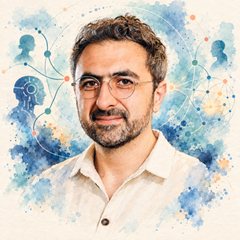 Mustafa Suleyman
 Dario Amodei
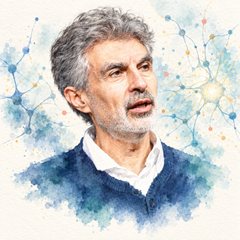 Yoshua Bengio
 Jensen Huang
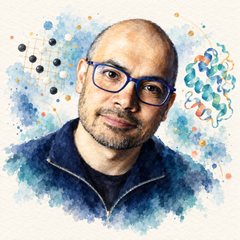 Demis Hassabis
 David Silver